Drop stitch technology uses two parallel textile faces connected by a field of internal yarns. Inflation pressure pushes the faces apart, while the yarns go into tension and limit how far those faces can separate. This is what allows an inflatable panel to stay relatively flat instead of expanding into a rounded tube.
The yarn field is only the geometric core of the system. The outer faces still need a continuous airtight coating or laminate, and the perimeter must be closed with a compatible sidewall and joining process. For a B2B buyer, the real question is therefore not only whether a product “uses drop stitch,” but whether the complete panel can hold its dimensions, retain pressure and repeat the approved result in bulk production.
I. What Is Drop Stitch Technology?
Understanding what drop stitch technology is starts with separating three related parts that are often compressed into one marketing term.
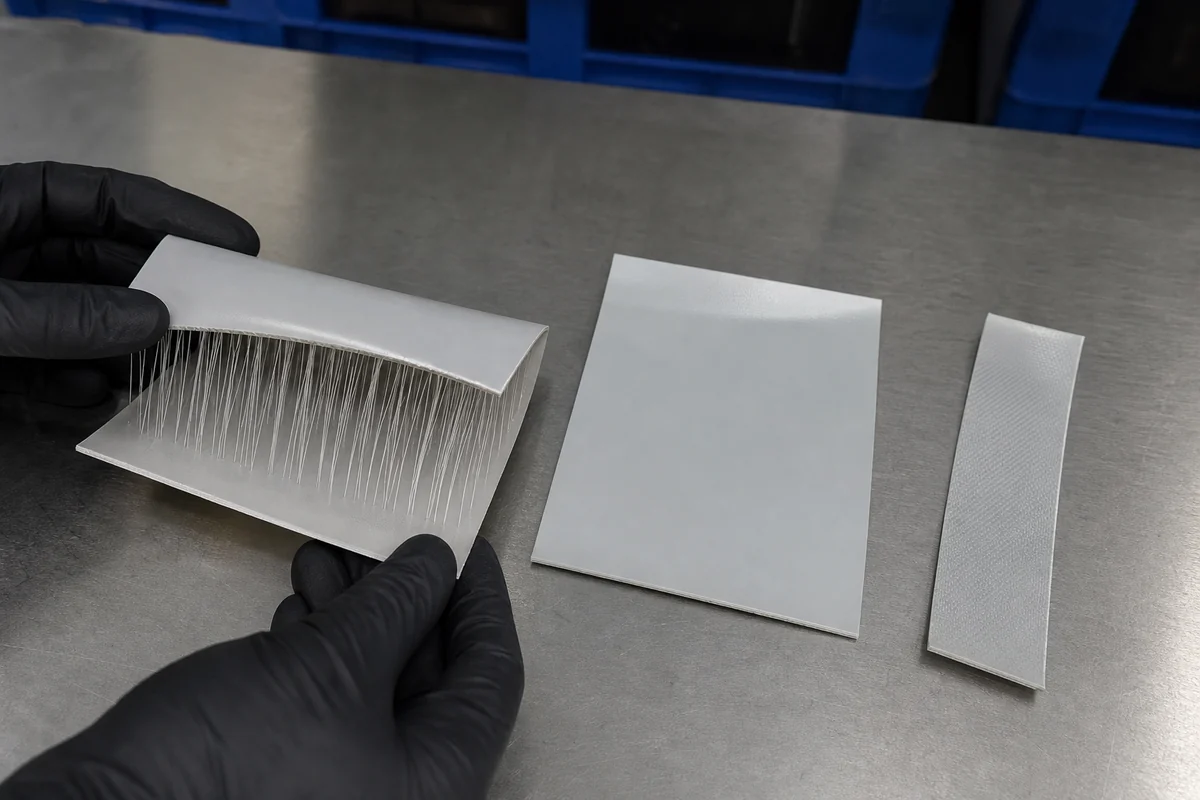
First, the textile core has top and bottom faces connected by yarns of a controlled length. Second, an airtight surface system is added to the outer faces so the material can contain air. Third, a sidewall or rail closes the perimeter after the material is cut into a panel. Only after these parts are joined does the structure become a usable pressure chamber.
The names can be confusing. Drop stitch fabric and double wall fabric usually describe the material form, while “drop stitch technology” describes the construction principle. Neither name, by itself, confirms the coating system, inflated height, joining method, valve design or finished-product test. Those details still belong in the project specification.
Buyers sourcing roll material can review our drop stitch fabric range separately. This article stays with the engineering question: how the structure works and what evidence should support it.
II. How the Drop Stitch Core Keeps a Panel Flat
The drop stitch core does not make the air pressure disappear. It controls the shape that develops under that pressure.
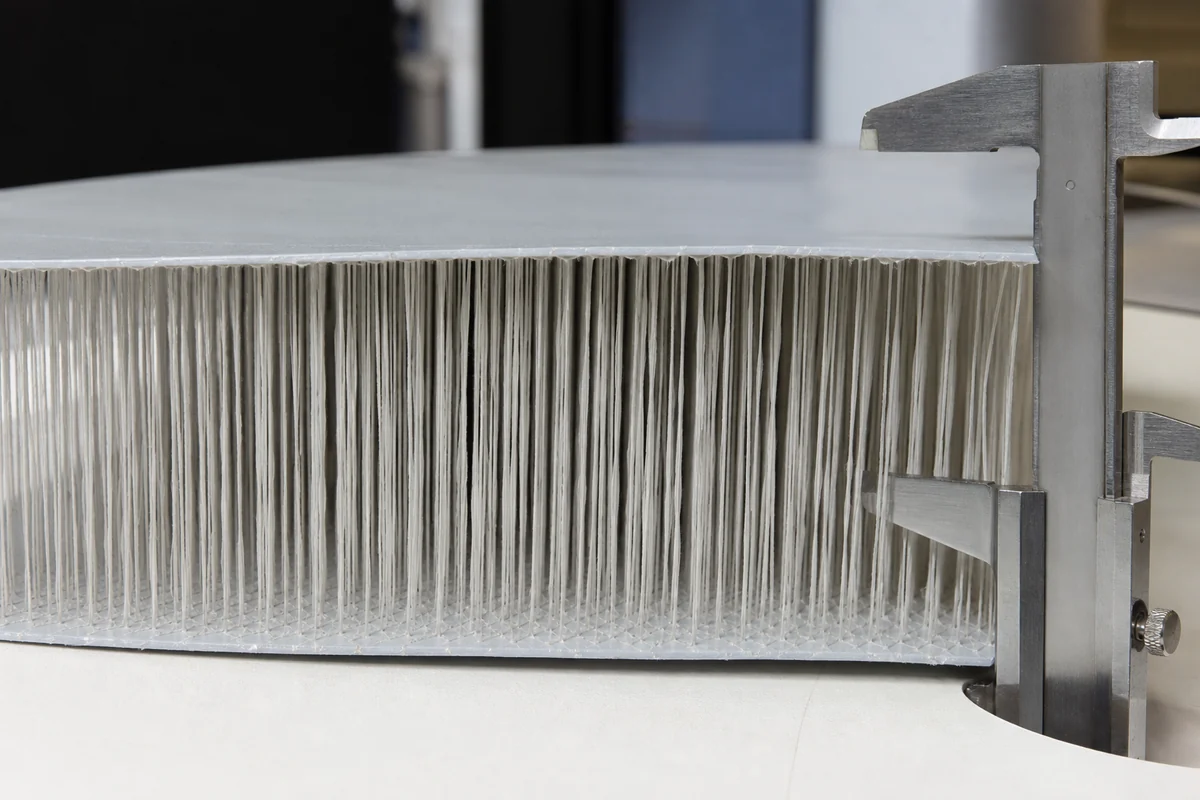
As air acts on the inside of the top and bottom faces, each face tries to move outward. The connecting yarns resist that separation in tension. Because many yarns share the load across the panel, the faces can remain broadly parallel when the yarn field, face construction and pressure condition are suitable for the design.
Yarn length establishes the basic distance between the faces, but uniform height also depends on yarn consistency, attachment to the face textiles, panel geometry and the way the edges are closed. A local yarn failure can release the constraint in one area and appear as a bulge. Uneven yarn length or local distortion can show up as waviness, thickness variation or an inflated panel that does not match the drawing.
This is why I would not approve a material only from a flat sample swatch. The buyer should define the inflated thickness, finished dimensions, acceptable surface variation and test pressure conditions, then compare the sample against those agreed points. A headline yarn count or a photograph of a rigid board is not a substitute for dimensional evidence.
III. How Drop Stitch Manufacturing Builds an Airtight Panel
In drop stitch manufacturing, forming the three-dimensional textile is only the first stage. The production route must turn that structure into a surface that contains air and can be joined without damaging the intended material properties.
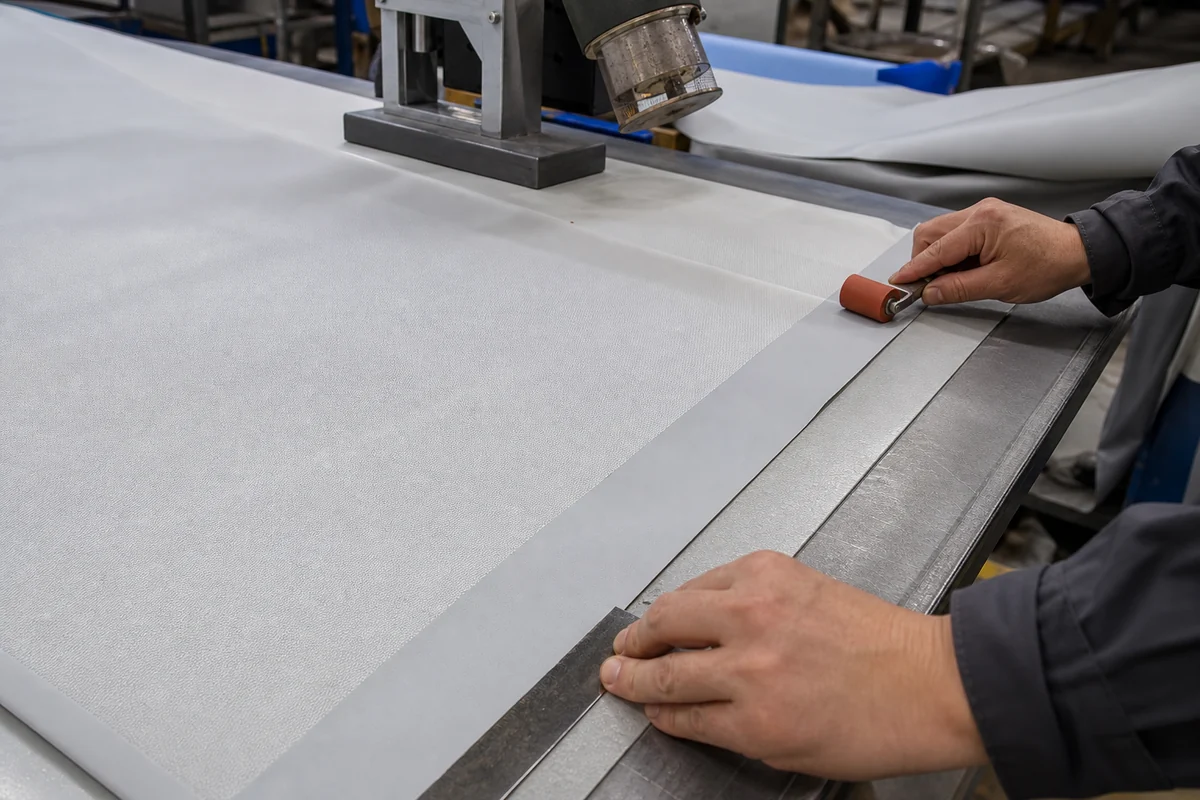
A practical manufacturing chain normally includes the following controls:
- Form and stabilize the textile structure. The two faces and their connecting yarn field establish the basic height, pattern and dimensional behavior.
- Create the airtight faces. A coating or laminated film system is applied to the outer surfaces. Coverage, interface adhesion, pinholes and compatibility with later joining all matter.
- Finish and inspect the roll material. Surface condition, width, thickness, appearance and relevant physical properties are checked against the material reference.
- Convert the material into a panel. Cutting allowances, orientation, sidewall construction, overlap and corner geometry are defined by the finished product rather than by the roll alone.
- Develop the joint on the actual material. Temperature or power, pressure, time, overlap, cleanliness and previous heat exposure can change the result. The process window must match the surface system and joint geometry.
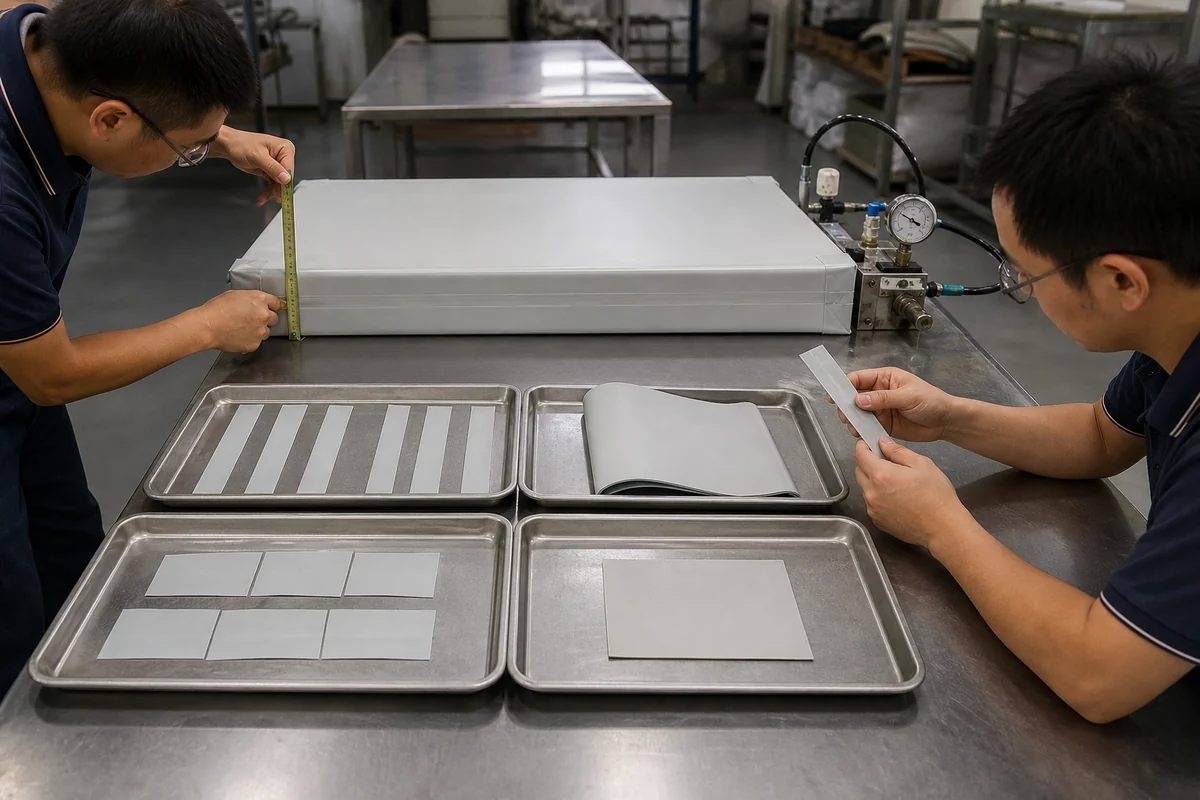
- Validate the finished sample. Dimensions, inflated shape, seams, valve or fitting zones and the agreed pressure-retention method are reviewed together.
In production, the handoff between material and converting is where many simplified product descriptions stop being useful. A roll can meet its material checks while an incorrect sidewall joint still causes a finished panel to leak. The opposite can also happen: a neat-looking seam may hide poor interface strength or a pressure channel that only appears during a defined hold test.
IV. Why the Core Alone Cannot Prove Panel Performance
A drop stitch panel performs as a load path and a sealing system. The core, faces, perimeter, joints and fittings do different jobs, so one successful test cannot prove every part of the system.
| Performance question | What actually controls it | Common warning sign | Evidence a buyer should request |
|---|---|---|---|
| Will the panel stay flat and hold its dimensions? | Yarn geometry, face consistency, panel size, edge restraint and the agreed pressure condition | Local bulge, waviness, height variation or size drift | Inflated dimension record compared with an approved drawing and sample |
| Will it retain air? | Continuous airtight faces, pinhole control, sidewall closure, seams, valve and fitting interfaces | Slow pressure loss, an edge leak or a localized channel | A pressure-retention protocol stating starting pressure, temperature, hold time and allowable change |
| Will the joint remain stable? | Material surface, joint geometry, overlap, cleanliness and the approved joining window | Peeling, channel leakage, uneven fusion or corner lifting | Joint samples plus the relevant peel, shear or leak check for the product |
| Will repeated handling damage it? | Coating or laminate system, interface adhesion, fold path, temperature and abrasion exposure | Whitening, cracking, delamination, tackiness or surface wear | Agreed folding, conditioning, adhesion or durability checks based on the use case |
| Can bulk production repeat the sample? | Material lot control, drawings, process records, inspection frequency and change management | A good sample followed by variable dimensions, seams or fittings in production | Approved reference sample and a batch inspection plan tied to the drawing |
This table is also why a universal pressure claim is weak evidence. Pressure performance changes with material, inflated height, panel dimensions, edge design, seam construction, temperature, test duration and the acceptance limit. A number without those conditions cannot be compared reliably across suppliers.
V. Why Different Applications Need Different Specifications
Products can belong to the same drop stitch family and still need different engineering decisions.

An inflatable SUP may prioritize weight, stiffness, rail workmanship, deck zones and fitting layout. Buyers who need the complete board-level explanation can continue with our article on inflatable paddle board construction. A floating dock or personal-watercraft platform can introduce larger panels, concentrated loads, attachment points, surface wear and repeated contact with equipment. A boat floor must fit the hull outline and work with the surrounding structure. An air track or gym panel sees repeated impact and rebound rather than the same loading pattern as a marine platform.
The specification should therefore begin with the application, panel dimensions, inflated height, working environment, expected pressure condition, folding frequency, attachment zones and acceptance method. “Use the same material as our last product” is only safe when those conditions are genuinely equivalent.
For buyers, this changes the order of discussion. Start with what the finished panel must do, then select the material and joining route. Starting with a familiar material name and forcing every application around it makes sample approval slower and leaves more room for untracked changes.
VI. How B2B Buyers Should Verify a Drop Stitch Panel
Verification should be divided into material evidence and finished-panel evidence. Mixing the two can make a supplier report look complete even when the most important product risks have not been tested.
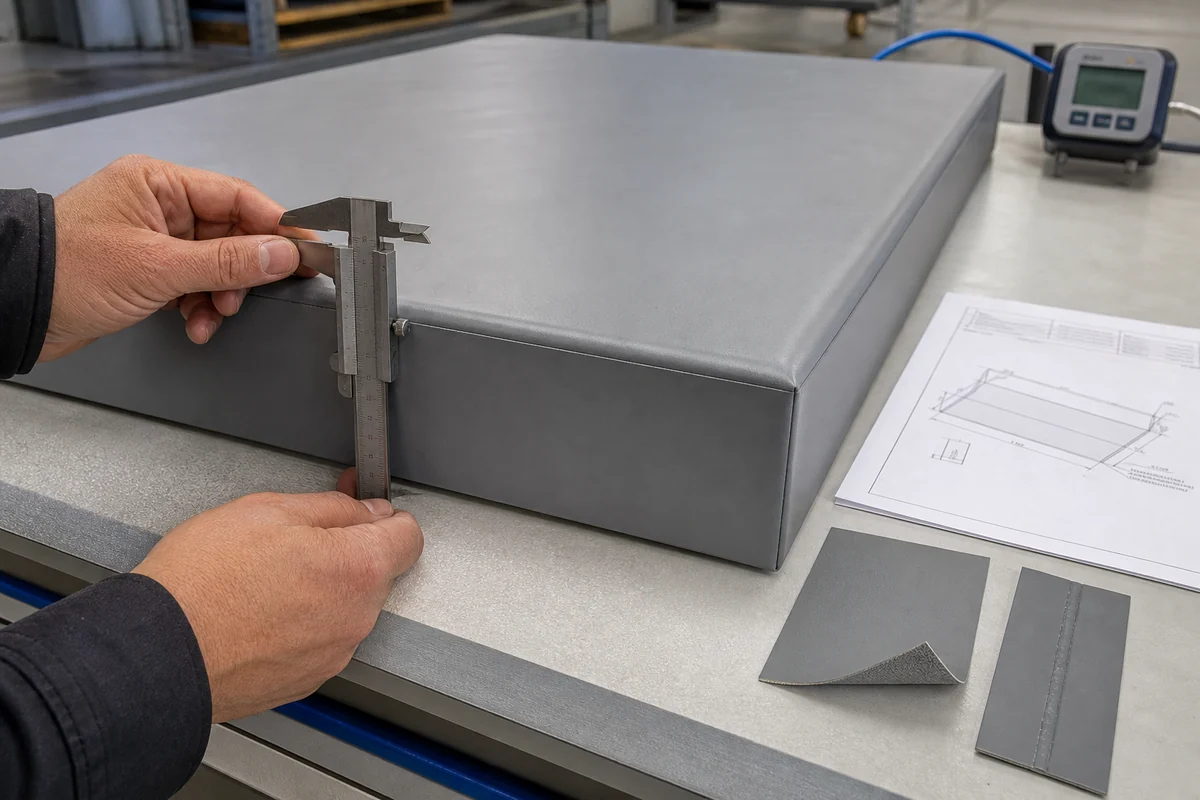
For the material level, confirm the approved construction reference, width, thickness or height definition, surface system, appearance criteria and the properties that matter to the joining process. For the converted panel, confirm the drawing, sidewall and corner construction, joint method, valve or fitting reinforcement, inflated dimensions and pressure-retention conditions.
Before bulk production, the sample approval record should state at least:
- intended application and finished panel dimensions;
- inflated thickness and the pressure condition used for dimensional checks;
- material and surface reference;
- sidewall, overlap, corner and attachment details shown on the drawing;
- starting pressure, temperature, hold time and allowable pressure change;
- checks for leaks, seams, fittings, surface condition and dimensional variation;
- which results must be repeated during batch inspection;
- which material, process or accessory changes require a new approval.
A flat-looking panel at the end of inflation is not enough. When I review a sample, I want the drawing, material reference, test conditions and acceptance result to point to the same version. That traceability is what allows the factory and buyer to discuss a defect without arguing over which sample or specification was approved.
The same logic should continue into the quality-control process. Incoming material checks, in-process joint control and finished-panel testing answer different questions; none of them should be used to erase the others.
VII. Treat Drop Stitch as a System, Then Approve the Evidence
Drop stitch explains how an inflatable structure can become flat and dimensionally controlled, but the technology name does not finish the specification. The yarn field controls separation; the airtight faces contain air; the sidewall and joints close the chamber; and the finished test shows whether those parts work together under defined conditions.
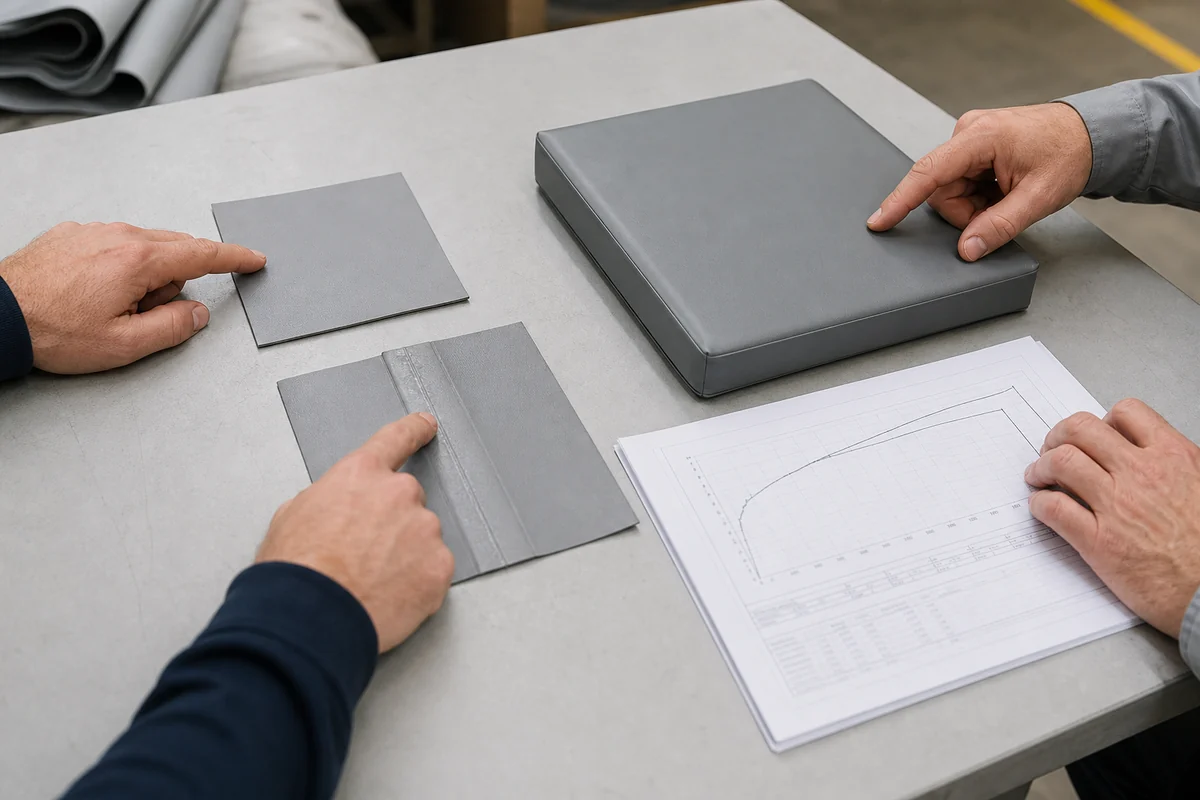
For a new project, begin with the product duty, panel geometry, working environment and acceptance method. Then approve the material reference, joining route and sample evidence as one package. This approach is more useful than choosing the supplier with the largest unsupported pressure number or the most impressive layer name.
For projects involving drop stitch materials or converted inflatable panels, LonaTarp reviews the material, panel construction, joining method and sample test conditions together before bulk requirements are finalized. The purpose is not to make every product use the same specification; it is to make the selected specification reproducible and inspectable.