For a mesh vs solid pool cover decision, commercial buyers should start with the job the cover must do, not only the material name. Mesh is usually easier to handle and allows rainwater to drain through. Solid fabric blocks more debris, sunlight, and dirty water, but it needs a drainage plan and stronger handling during installation. For hotels, schools, apartment pools, municipal facilities, and pool contractors, the better choice depends on climate, season length, pool size, cleaning budget, anchoring design, and whether the cover is only for protection or must also meet a safety requirement.
LonaTarp works on custom B2B pool cover tarp projects. We do not retail standard pool covers. Finished Products: MOQ 30 units. Covers are made to order after size, material, color, seams, edge reinforcement, accessories and sample requirements are confirmed.
I. Start With the Cover’s Real Job
Before comparing materials, define the project requirement in one sentence. A hotel may need a neat-looking seasonal cover that reduces leaves and cleaning work. A school or public facility may care more about access control and documented safety requirements. A pool contractor may need a repeatable specification that can be ordered for several projects with the same edge design and anchor layout.
In production, we usually check five points before recommending a fabric:
| Project question | Why it matters |
|---|---|
| Is the pool indoor, outdoor, heated, or seasonal? | Sunlight, wind, evaporation, and temperature affect fabric choice. |
| Is the main problem leaves, fine dust, rainwater, or algae? | Mesh and solid covers control different types of contamination. |
| Will staff remove the cover often? | Large solid covers are heavier and may need more people or equipment. |
| Does the project require a safety-rated system? | Material type alone does not prove safety performance. |
| Are there stairs, curves, rails, ladders, or unusual edges? | Custom cutting, reinforcement, and anchor layout need to be confirmed before production. |
The answer is rarely “mesh is better” or “solid is better.” The correct answer is the cover that reduces the project’s maintenance risk without creating a new installation problem.
II. When a Mesh Pool Cover Works Better
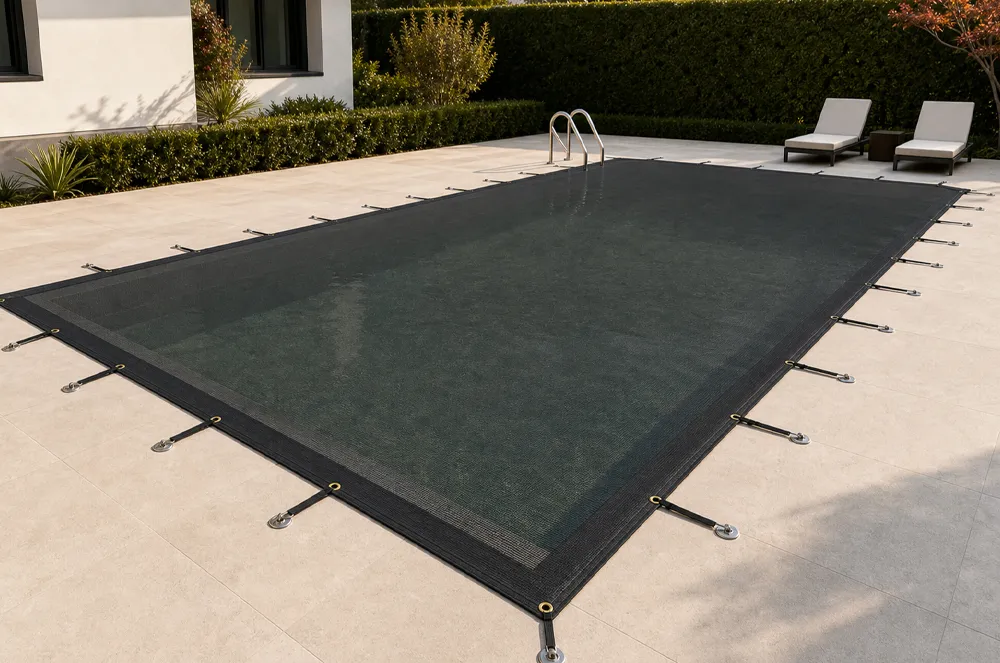
A mesh pool cover is often the practical choice when the project needs drainage, lower handling weight, and easier off-season management. Rainwater and melted snow can pass through the mesh instead of collecting on top. This reduces standing water on the cover and can make removal easier for maintenance teams.
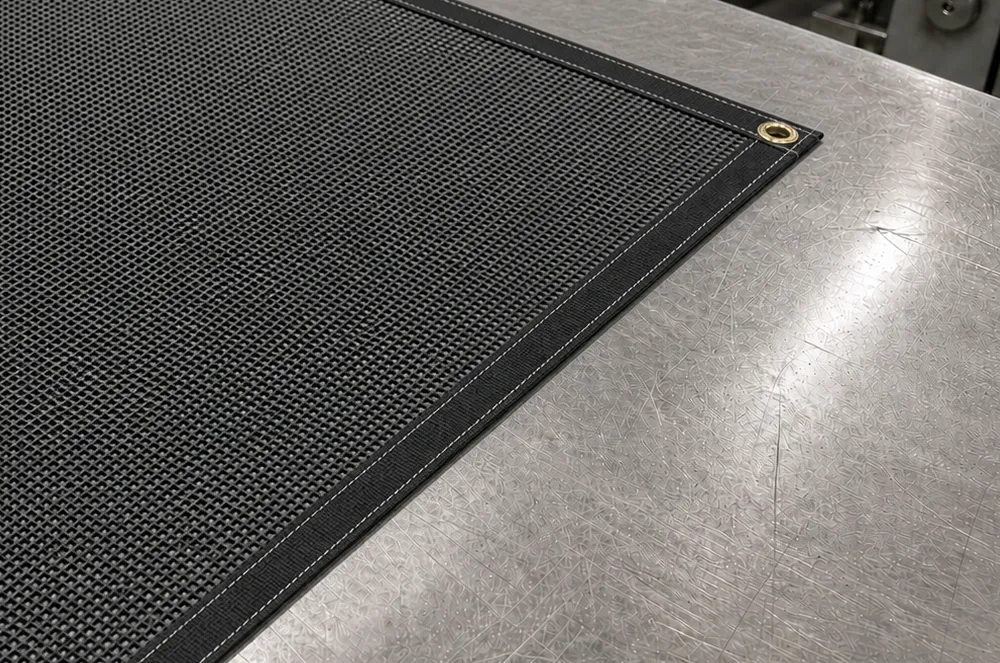
Mesh is also useful for large covers where staff need a material that can be folded, moved, and stored without heavy lifting equipment. For contractors serving several similar pools, a mesh construction can help keep installation routines simpler, especially when the anchor layout is repeated from project to project.
The tradeoff is filtration. Mesh blocks leaves and larger debris, but fine dirt and colored water from decomposed leaves may still pass into the pool. Some sunlight can also reach the water, depending on the mesh density and coating color. That means a mesh cover may require more cleaning when the pool is reopened.
For B2B projects, the key specification points are mesh opening, yarn strength, PVC coating weight, UV resistance, tear strength, edge reinforcement, and welding or sewing method. If the buyer only asks for “mesh” without these details, two suppliers may quote products that look similar but perform very differently.
III. When a Solid Pool Cover Works Better
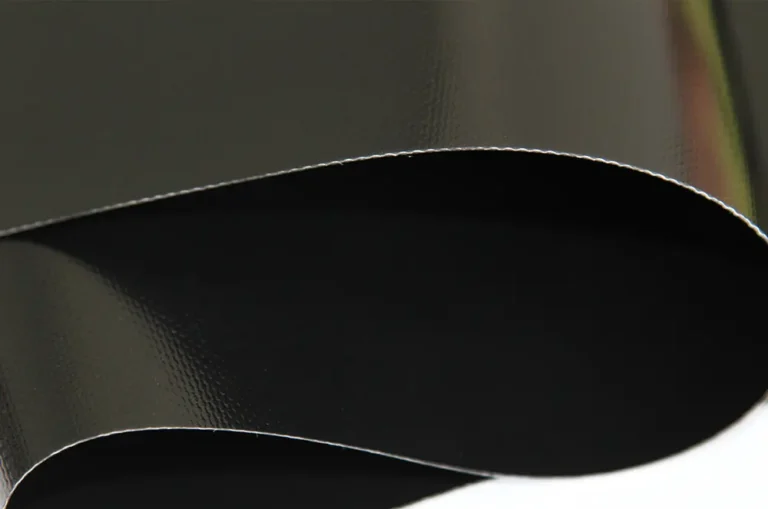
A solid pool cover is usually selected when the buyer wants stronger separation between the covered pool and the outside environment. Solid PVC-coated fabric can block leaves, fine dust, rainwater, and most sunlight more effectively than mesh. For commercial pools that stay closed for a long season, this can help reduce reopening work and protect water quality during storage periods.
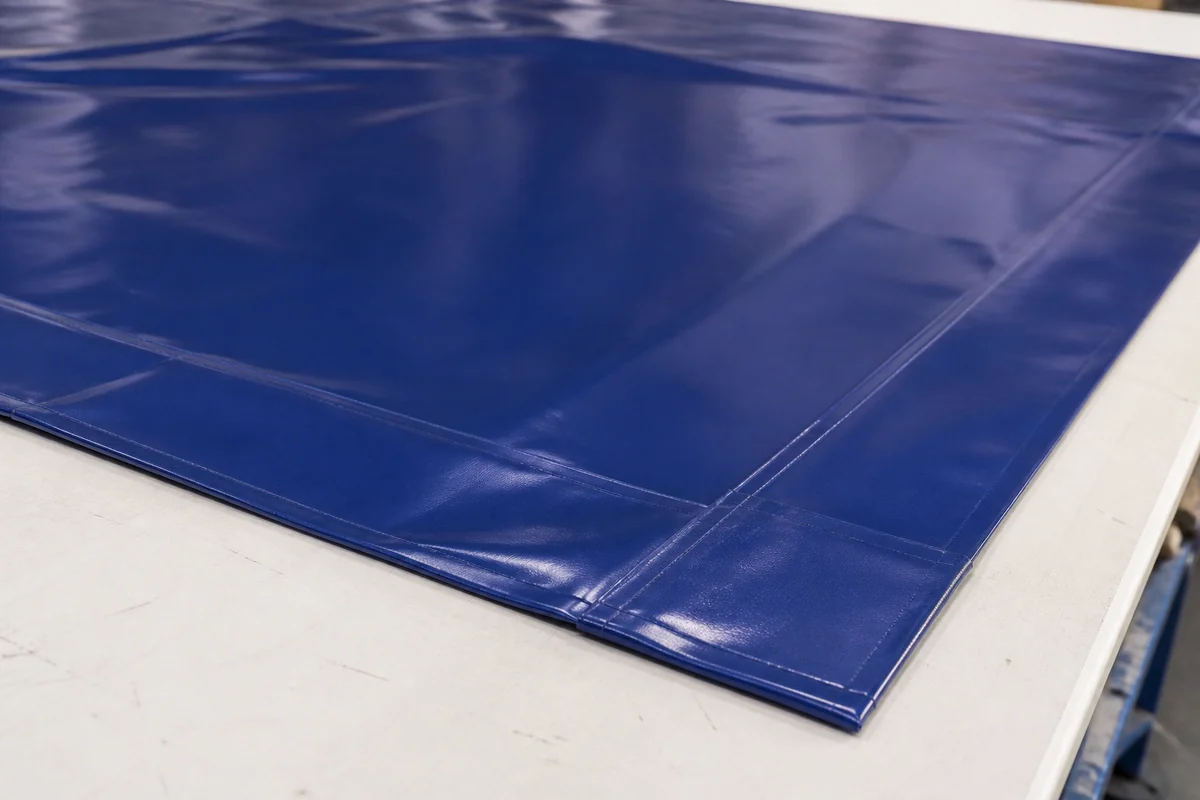
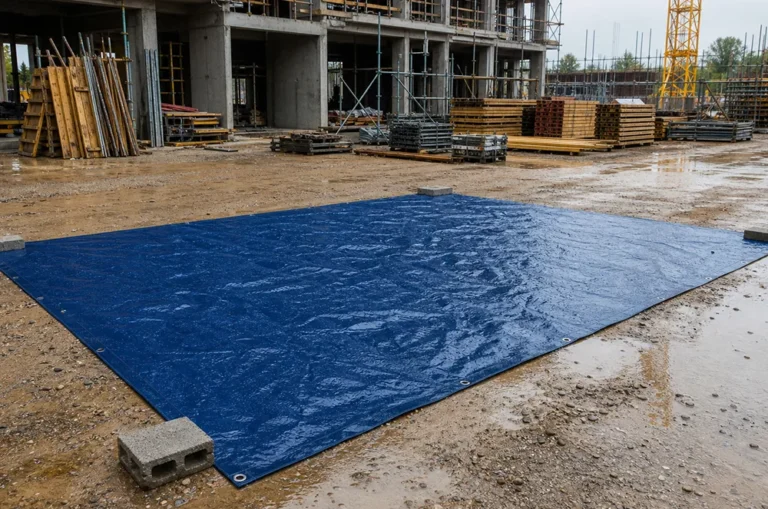
The main design issue is water on top of the cover. If rain or snow cannot pass through, the project needs a drainage method. That may be a cover pump, drain panel, slope design, or a maintenance plan agreed by the pool operator. Without this step, a solid cover can become heavy, harder to remove, and more stressful on anchors and reinforced edges.
Solid covers also need careful packing and handling planning. Large commercial sizes can be heavy after exposure to water and dirt. We normally discuss panel width, welded seams, folding direction, storage space, and edge reinforcement before production, because these details decide whether the cover works smoothly for the maintenance team.
For buyers comparing quotations, do not compare only GSM. Ask about base fabric, coating adhesion, low-temperature flexibility, UV formulation, welding strength, and how the supplier reinforces corners, steps, and irregular shapes.
IV. Safety Cover Questions Are Separate From Mesh or Solid
A safety pool cover should be treated as a system requirement, not just a fabric choice. Mesh and solid materials can both be used in safety-related covers, but the buyer still needs to confirm the target standard, anchoring method, webbing or strap design, labeling, installation instructions, and testing requirement.
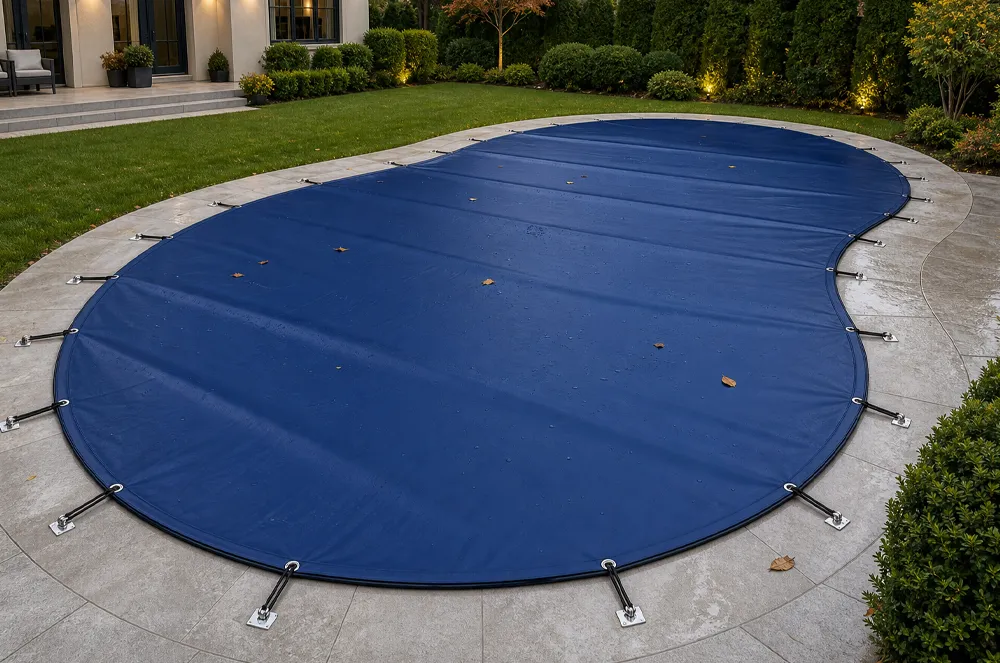
For the U.S. market, many safety cover projects refer to ASTM F1346-23, which covers performance and labeling requirements for safety covers used on pools, spas, hot tubs, and wading pools. If your project requires that standard or another local regulation, tell the supplier before sampling. It affects material selection, reinforcement, hardware, documentation, and acceptance testing.
A mesh safety pool cover may be preferred where drainage and easier handling are important. A solid safety pool cover may be preferred where blocking sunlight, dirty rainwater, and fine debris is more important. A safety mesh pool cover inquiry should still include the pool drawing, anchor layout, expected load requirement, edge condition, and local compliance target. The word “safety” should never be assumed from appearance alone.
LonaTarp can help evaluate fabric and fabrication requirements for custom B2B cover projects, but final safety compliance must be confirmed against the buyer’s local code, installation system, and test documentation.
V. What to Confirm Before Requesting a Commercial Pool Cover Quote
A commercial pool cover quote is only useful when the buyer sends enough project information. Otherwise, the supplier can only give a rough range, and the final cost may change after drawings are checked.
For faster quotation, prepare:
- Pool size, shape, step position, rail position, and any irregular edge.
- Cover purpose: seasonal protection, debris control, heat retention, water conservation, or safety-related use.
- Preferred material direction: mesh, solid PVC-coated fabric, or open to recommendation.
- Required color, GSM, coating, UV resistance, flame retardancy, mildew resistance, or cold resistance.
- Edge design: hem, webbing, reinforced corners, grommets, straps, buckles, or custom anchor interface.
- Quantity, project schedule, sample approval requirement, and destination country.
The U.S. EPA notes that pool covers, when used properly, can help reduce evaporation and retain heat, which supports water and energy savings for pool operators. For commercial buyers, this benefit is strongest when the cover is actually easy for staff to use. A cover that is too heavy, difficult to fold, or poorly matched to the pool edge may stay in storage instead of on the pool.
This is why custom design matters. The material must match the maintenance routine, not only the catalog description.
VI. Quick Selection Table for Project Buyers
| Project priority | Better starting point | Main reason | Point to verify before order |
|---|---|---|---|
| Easy drainage after rain | Mesh | Water passes through the fabric | Mesh opening, debris control, water quality after closure |
| Cleaner water at reopening | Solid | Blocks fine debris, rainwater, and sunlight better | Drainage plan and cover weight |
| Lower handling weight | Mesh | Easier to fold, move, and store | Tear strength and edge reinforcement |
| Long closed season with algae risk | Solid | Better sunlight blocking | Pump/drain panel and maintenance plan |
| Safety-related project | Mesh or solid safety system | Safety depends on full system design | Target standard, anchor layout, labels, testing documents |
| Repeated contractor projects | Custom specification | Same material and edge design can be repeated | Drawing control, sample approval, batch consistency |
For most commercial buyers, the safest procurement path is to request two options first: a mesh construction for easier drainage and handling, and a solid PVC-coated construction for stronger water and debris isolation. After that, compare not only price but also installation labor, maintenance routine, storage, expected season length, and documentation needs.
VII. FAQ
Is a mesh pool cover always a safety cover?
No. Mesh describes the fabric structure, not the safety certification. A safety-related project needs confirmed system design, anchoring, labels, installation instructions, and testing requirements.
Is a solid pool cover better than mesh for commercial pools?
Not always. Solid covers usually block debris, sunlight, and dirty rainwater better, but they need drainage planning and are heavier to handle. Mesh covers are easier for drainage and handling, but may require more pool cleaning after long closure.
Can LonaTarp supply one standard retail pool cover?
No. LonaTarp focuses on B2B custom production. We do not retail single standard pool covers. Finished Products: MOQ 30 units, with the finished cover design and sample confirmed before bulk production.
What information should I send for a custom pool cover quote?
Send the pool drawing, dimensions, edge details, material preference, cover purpose, quantity, color, destination country, and any safety or local standard requirement. Photos of the pool edge and existing anchor layout are also helpful.
Can one project use both mesh and solid materials?
Yes, some projects use hybrid designs or different covers for different zones. The supplier needs to review drainage, seam layout, reinforcement, and handling before confirming whether this is suitable.
Once the mesh-versus-solid direction is chosen, review fabric construction, seam behavior and replacement-fabric evidence in our commercial pool cover material guide.
VIII. Work With LonaTarp on Custom Pool Cover Tarp Projects
If you are sourcing covers for a hotel, school, apartment pool, municipal facility, distributor program, or pool construction project, LonaTarp can help compare mesh and solid PVC-coated fabric options before production.
Our work usually starts with the drawing and intended use. Then we confirm fabric structure, GSM, coating performance, color, welding or sewing method, edge reinforcement, accessories, sample requirement, and packing. For projects that need repeat orders, we can keep the approved specification stable so future batches match the first confirmed sample.
For full product capability, see our custom pool cover tarp application page. For a serious quotation, please send drawings, target quantity, performance requirements, and whether the project has a safety standard or local compliance requirement. LonaTarp is a B2B manufacturer and fabricator; Finished Products: MOQ 30 units. Production is made to order rather than pulled from retail stock.