LonaTarp manufactures PVC tarpaulin rolls and fabricates custom finished tarps for project buyers, importers, distributors, and private-label sellers. The factory reference used in this guide is 20 oz / 22 mil white PVC material at US$1.18/m², together with a preliminary basic fabrication labor allowance of RMB 2.50/m². A 10′ × 20′ simple flat tarp therefore has an estimated known material-and-basic-labor cost of about US$28.90 per piece before accessories, special packaging, other costs, and factory selling margin.
Below, you can compare example costs, estimate the number of pieces corresponding to about 5,000 m² of material, and understand how design and order volume affect the final quotation.
I. How Much Does a Finished Vinyl Tarp Cost?
Wholesale finished vinyl tarps are normally quoted per piece, based on an agreed finished specification. The same dimensions can produce different prices when one design needs welded panels, hems, grommets or individually printed packaging and another is simply cut to size.
Factory Reference for Basic Flat Tarps
| Reference item | Illustrative cost basis |
|---|---|
| Material | White 20 oz / 22 mil PVC tarpaulin |
| PVC fabric reference | US$1.18 per m² |
| Basic fabrication labor | RMB 2.50 per m² of nominal finished processing area, applied once |
| Illustrative exchange rate | RMB 6.66 = US$1.00 |
| Excluded from this base estimate | Added accessories, special fabrication, printing, custom packaging, freight, taxes, selling margin |
| Flat tarp size | Nominal area | Known base cost per piece |
|---|---|---|
| 10′ × 10′ | 9.29 m² | US$14.45 |
| 10′ × 20′ | 18.58 m² | US$28.90 |
| 20′ × 30′ | 55.74 m² | Custom production calculation required |
The first two cases assume a suitable single-panel layout within the available 3.2 m roll width, with no extra joining or hardware. Actual hems and cutting allowances can change material consumption. The 20′ × 30′ size requires joined panels and additional materials or operations, so its finished cost cannot be calculated from nominal area alone.
These figures are not offers or final factory selling prices. They illustrate known material and basic labor costs; confirmed quotations include the specific construction, order volume, accessories, packaging, commercial terms and applicable margins.
II. How Is a Custom Vinyl Tarp Price Calculated?
We calculate a finished tarp from the fabric actually consumed and the work required to make it usable: material + hardware + fabrication + packing and inspection + applicable order costs. This is a cost structure, not a fixed surcharge schedule.
Material Consumption Is Not Always the Finished Area
A flat cover may use close to its nominal area when dimensions fit a single fabric panel. Larger and fitted products can require extra fabric for weld overlaps, folded hems, corner reinforcement, cutting margins and waste. The material itself can vary in price by construction, weight, color and performance. For a full explanation, see our PVC tarpaulin material price and roll-cost guide rather than repeating that material-level analysis here.
Accessories and Hardware
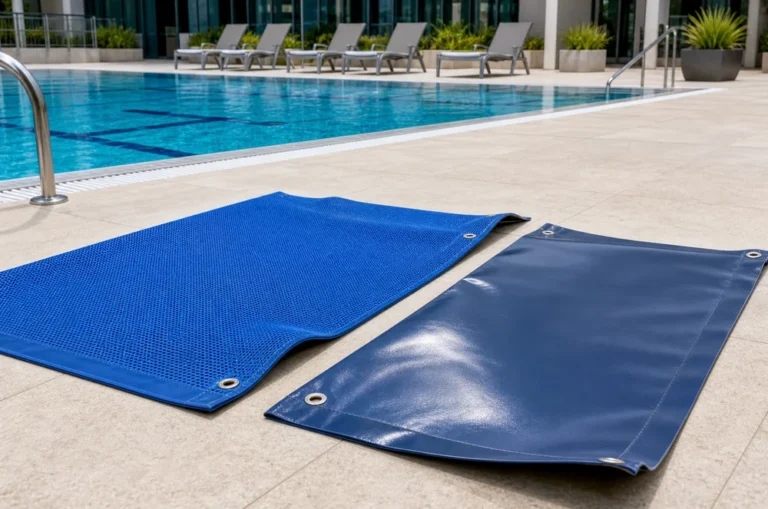
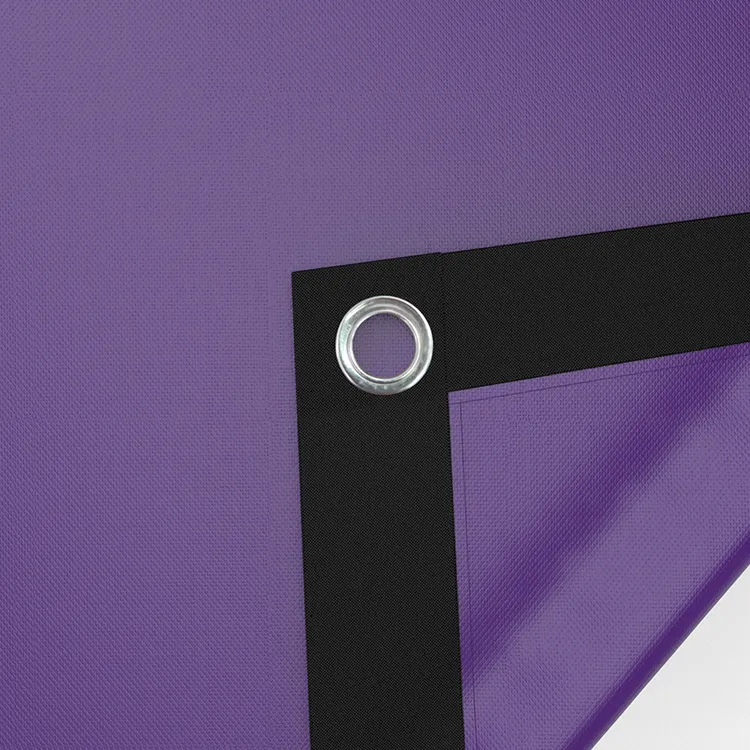
Common options include grommets, D-rings, webbing, straps, ropes, reinforced corners, zippers and fasteners. Existing LonaTarp component references are US$0.05 per stainless-steel grommet and US$0.08 per brass grommet. These are component references, not complete installed hardware prices. Quantity, spacing and the reinforcement layout determine the final accessory work.
Basic Fabrication Labor
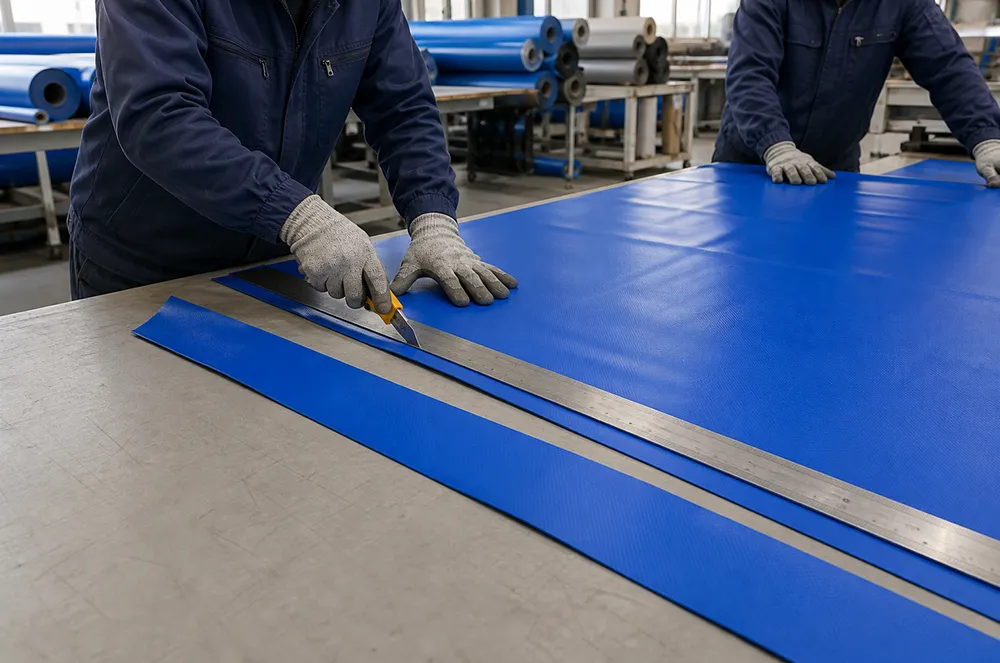
Cutting, welding, sewing, hemming, grommet installation, reinforcement, printing preparation, inspection and folding are different operations. For preliminary budgeting LonaTarp currently uses RMB 2.50/m² as a single basic labor allowance. We do not multiply the allowance again for every step, and we do not add the former US$0.009/m² cutting figure on top of it.
More complicated fabrication will usually require additional time or a revised labor estimate. Larger repeat runs can spread setup and preparation expenses across more pieces, although material use and essential processing work remain variable costs.
Packaging and Quality Control
Bulk industrial packing is different from individually wrapped retail goods. Printed bags, branded labels, product inserts, barcodes, cartons, pallets or marketplace-specific preparation are priced against the actual packaging specification. We do not assign a fixed charge to custom printed packaging without those details.
III. How Do Dimensions and Cover Construction Affect Cost?
For a flat rectangle, nominal coverage area is length × width. Actual manufacturing cost also depends on whether the roll width can accommodate that size, how the edges are finished, and whether multiple fabric panels need welding.
Flat Covers vs. Fitted 3D Covers
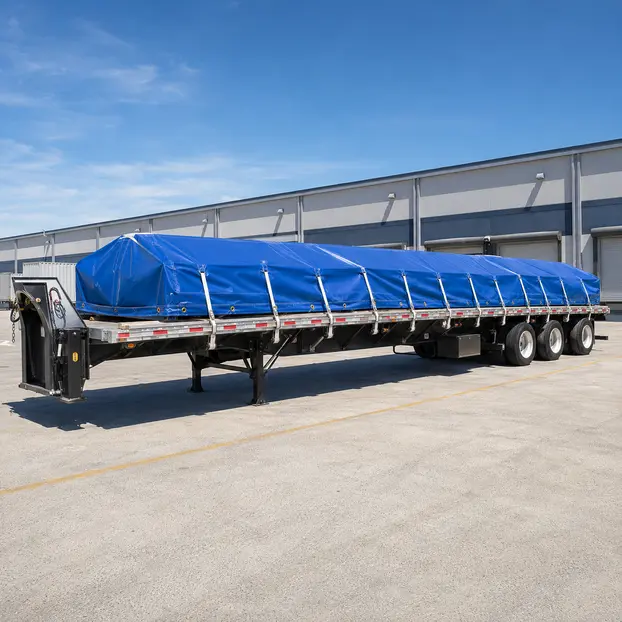
A three-dimensional equipment cover may include a top and four sides, only three side panels, four side panels without a roof, or another combination. It is not correct to automatically calculate all six faces for every fitted tarp.
| Rectangular panel | Nominal area |
|---|---|
| Top or bottom | Length × Width |
| Front or back | Width × Height |
| Left or right | Length × Height |
For example, a 2 m × 1.5 m × 1.2 m fitted cover with a top and four sides but no bottom has 3.0 m² in the top, 3.6 m² in the front and back, and 4.8 m² in the other two sides: 11.4 m² total nominal area.
That estimate still excludes seam overlaps, openings, reinforced edges, material yield and special shaping. For equipment with curved surfaces or irregular outlines, photographs, drawings or a physical sample are needed before a reliable quote.
IV. How Many Custom Tarps Meet the Minimum Order?
For finished-tarp manufacturing, LonaTarp’s general starting scale is approximately 5,000 m² of PVC material requirement, subject to the agreed construction and production plan. This is not a universal fixed minimum of 30 pieces. A large cover may reach the production threshold with far fewer pieces than a small tarp.
| Flat finished size | Nominal area / piece | Approximate pieces to reach 5,000 m² |
|---|---|---|
| 10′ × 10′ | 9.29 m² | 539 pcs |
| 10′ × 20′ | 18.58 m² | 270 pcs |
| 20′ × 30′ | 55.74 m² | 90 pcs |
| 40′ × 45′ | 167.23 m² | 30 pcs |
The quantities above use nominal finished area for simple initial planning. They do not prove that an order qualifies: actual material consumption, seam allowances, size mix, color, specification and production setup must be reviewed. Different sizes can sometimes be combined when the material and manufacturing requirements are compatible.
The calculator below lets you choose a flat sheet or select the actual panels of a rectangular fitted cover. It estimates nominal area and the piece count corresponding to 5,000 m², then displays a separate known-cost calculation for the reference 20 oz material. It is not an automatic order approval or selling-price quote.
Custom Tarp Area & MOQ Calculator
Flat sheets or rectangular fitted covers · planning estimate only
Adjust reference cost (optional)
V. How Does Order Quantity Affect Unit Manufacturing Cost?
When a factory can repeat the same specification over a longer run, preparation costs—such as cutting layouts, machine setup, production samples and packing organization—can be spread over more pieces. Labor efficiency can improve when operations are repeated without frequent size, material or accessory changes.
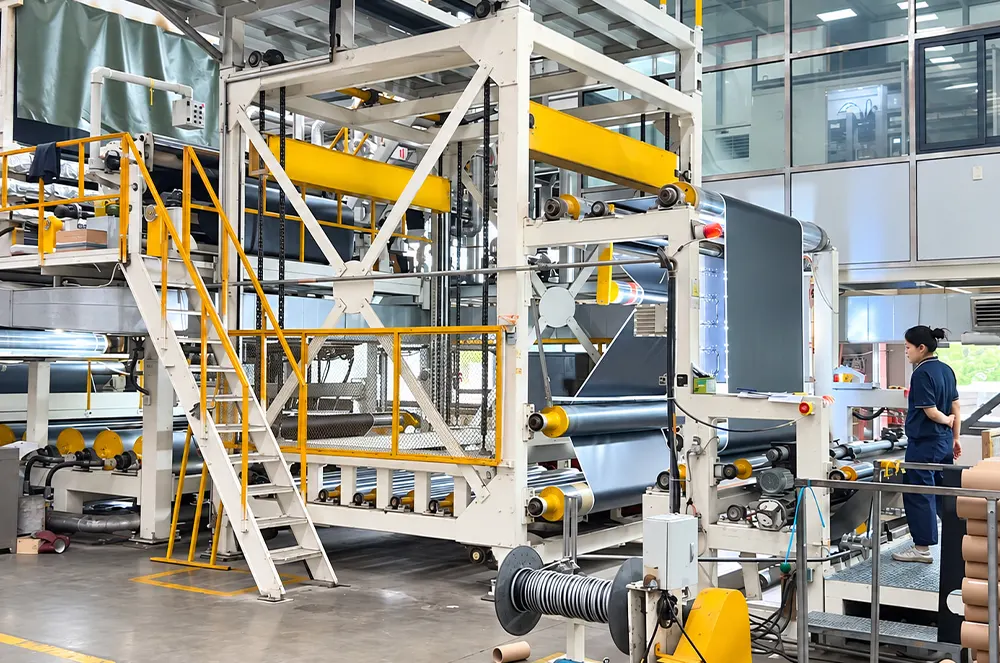
LonaTarp manufactures its own PVC roll materials and coordinates finished-tarp fabrication. Where the production program requires it, our factory can organize three-shift, round-the-clock operations. That capability supports manufacturing continuity; it does not by itself guarantee a fixed cost saving for every design.
Buyers can improve price predictability by sharing the expected order schedule, the quantity of each SKU, and which dimensions or accessories may be standardized. Larger orders should still be weighed against inventory, cash-flow and storage needs. A larger batch does not make the material or essential per-piece work free.
VI. U.S. Retail Vinyl Tarp Prices vs. Factory Cost References
A single ready-to-ship retail tarp and a large made-to-order factory program operate at different commercial stages. Retail prices can include local inventory, distribution, small-order handling and seller margins. Factory cost references are not the same as finished-product wholesale selling prices.
The following historical U.S. retail figures were previously recorded for comparable-looking white vinyl tarp sizes. They are retained to illustrate the difference in cost structure and have not been independently reverified as current retail offers. For product and size details, refer to Billboard Tarps’ white 20 oz vinyl tarp listing.
| Finished size | Previously recorded U.S. retail reference | LonaTarp known cost estimate |
|---|---|---|
| 10′ × 10′ | US$51.00 | US$14.45 |
| 10′ × 20′ | US$102.00 | US$28.90 |
| 20′ × 30′ | US$306.00 | Custom calculation required |
These columns are not directly comparable selling prices. LonaTarp’s column excludes additional production and commercial costs, while the U.S. figures reflect an earlier retail observation. Before making a buying decision, buyers should request a current factory quote and compare the complete finished specification, packaging, shipping terms and destination costs.
VII. How to Reduce Finished Vinyl Tarp Manufacturing Costs
Improve Cutting Yield Before Reducing Material Quality
Start with the actual cover dimensions and the available roll widths. A good panel layout can reduce offcuts and welded seams. Where the product permits it, small design changes can sometimes improve cutting yield—but the finished product must still fit the equipment or installation.
Choose a Material That Meets the Job Without Over-Specifying
A heavier GSM, a stronger base fabric or special surface treatment may be necessary for repeated folding, abrasion, UV exposure or high loads. Other applications can use a lighter suitable specification. Choosing material only by price per square meter can result in premature failure or higher replacement costs.
Reduce Unnecessary Components and Operations
Place grommets, webbing and reinforcement where the actual load path requires them. Extra fittings and decorative steps add material and work. Welding or sewing should be chosen according to seam performance and fabrication suitability, not just the cheaper quoted process.
Standardize Compatible Sizes and Components
Importers selling multiple SKUs can sometimes use common materials, colors, hem types and hardware. Repeated production reduces unnecessary setup changes and makes sample approval and quality checks more predictable. Mixed-size orders still need a practical cutting plan.
Choose the Packaging Required by the Sales Channel
Bulk packing may suit an industrial project, while distributors and online sellers may need individual bags, inserts, barcodes or branded labels. Avoid retail packaging extras unless they are commercially useful. Marketplace labeling and packaging must be confirmed against the seller’s current requirements.
Control Rework Through Samples and Inspection
Dimension errors, misplaced hardware, weak welds and unsuitable packaging cause avoidable production and resale costs. Confirm the drawing, material sample, seam design, hardware positions and packing method before volume production; check repeat batches against the agreed standard.
VIII. Pricing for Project Buyers, Wholesalers and Private-Label Sellers
Industrial and Project Buyers
Project covers may involve machinery, storage areas, equipment, trailers or custom enclosures. A project quote should account for the actual three-dimensional surfaces, attachment points, operating conditions, installation constraints and drawings. An area estimate is only the first step.
Wholesalers and Importers
Wholesale programs frequently combine several sizes and packaging configurations. Buyers should share per-size quantities, forecast repeat demand, preferred materials and desired shipping terms. LonaTarp can evaluate whether compatible SKUs can share a practical production run.
Amazon and Other Online Private-Label Sellers
Private-label buyers may request logo printing, branded individual bags, carton labels, inserts and consistent package dimensions. We can discuss the manufacturing and packing requirements from product design through individual packing. Costs for custom artwork, printing or marketplace-specific packing are reviewed separately, and final marketplace-compliance instructions must come from the seller.
IX. How to Compare Finished Vinyl Tarp Quotes
Two quotations for a “10 × 20 vinyl tarp” may describe very different goods. Compare the same product construction and commercial terms before comparing the number per piece.
| Quote item | Check before comparing suppliers |
|---|---|
| Finished shape and dimensions | Final measurements, tolerances, covered panels, and whether dimensions are finished or cut sizes |
| Material | GSM or thickness, base fabric, coating construction, required performance |
| Joining and edges | Single panel or welded sections, overlap, hem, reinforcement |
| Hardware | Grommet material and count, spacing, D-rings, straps, webbing, corner parts |
| Printing and packaging | Artwork, printed parts, individual bags, labels, cartons, palletization |
| Quantity and delivery | Pieces per SKU, total material area, named Incoterm, freight and destination |
Compare approved samples, expected tolerances and inspection conditions alongside prices. A bare cut-to-size tarp should not be treated as equivalent to a finished, reinforced and individually packed product with the same dimensions.

X. What Information Is Needed for an Accurate Factory Quote?
You can begin with a drawing, sketch, old sample or a clear description of your intended application. For a stronger quotation, provide finished length, width and height where relevant; the panels to be covered; size-by-size quantity; preferred PVC material; seams and hems; reinforcement; grommets and other attachments; printing; packaging; and delivery destination.
For a fitted enclosure, the custom tarp drawing guide explains how to identify finished dimensions and hardware locations. To explore the manufacturing routes and actual design options, see custom made tarps.
We can then review material consumption, cutting and joining, component requirements, production quantity, packing and the applicable trade terms before preparing a quotation. A realistic vinyl tarp price is the price of the finished product you can use, not a materials-only area calculation.
XI. Frequently Asked Questions About Vinyl Tarp Prices
How much does a custom vinyl tarp cost?
Pricing depends on the specified material, actual material consumption, panel construction, accessories, fabrication, packaging, order quantity and delivery terms. The reference calculations above are known manufacturing-cost components rather than final selling prices.
What is the minimum order quantity for finished tarps?
Our general starting scale is approximately 5,000 m² of material requirement, subject to the agreed specification and production plan. The equivalent number of pieces varies by the finished dimensions and construction.
Can different tarp sizes count toward one bulk order?
They may be considered together when the fabric, color and production requirements are compatible. Confirmation depends on the actual size mix, total material requirement and manufacturing plan.
Why do larger tarps require a different cost calculation?
Large covers can need multiple fabric panels, welding, overlaps, additional handling and reinforced edges. Nominal finished area alone may underestimate actual material and fabrication requirements.
Does the unit price include grommets and reinforced edges?
Only when those items are specified in the quotation. Grommet type, number, spacing and installation requirements, along with hems and reinforcement, affect the final cost.
Can you provide branded individual packaging for resale?
Yes. We can discuss printed bags, labels, logo printing and other private-label options. Packaging and printing costs require an agreed design, specifications and quantity.
Are volume discounts available?
Larger compatible runs can lower setup cost per piece and improve production efficiency. The discount depends on the actual material, fabrication requirements, SKU mix and order conditions.
What is the typical production lead time?
For common programs, around 15 days may be an initial working reference after specifications and sampling are agreed. The actual production and delivery schedule is confirmed with each order.