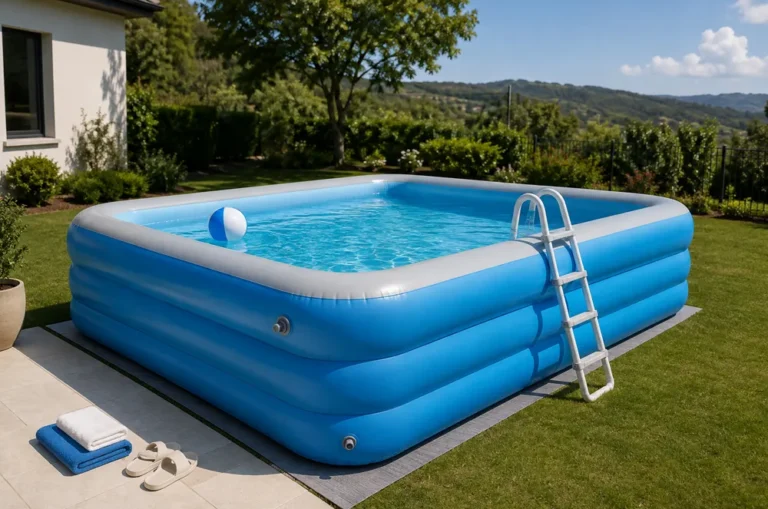
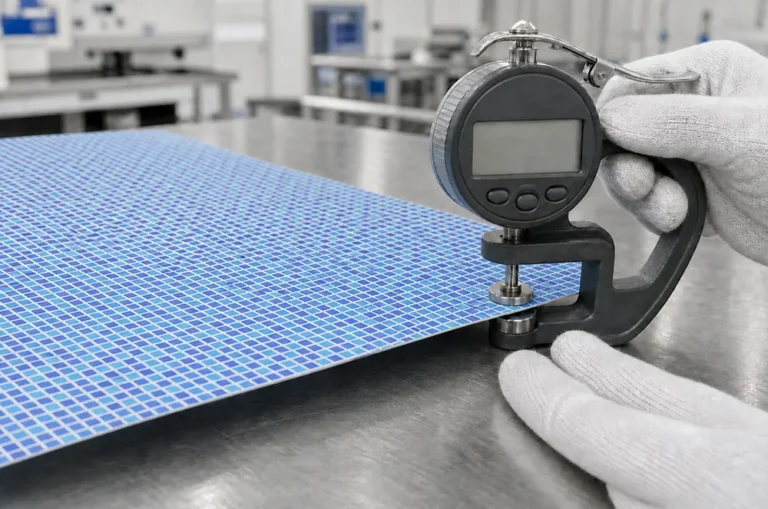
Hypalon fabric vs PVC is a common comparison when choosing inflatable boat tubes for RIBs, tenders and other inflatable craft. The short answer is that Hypalon—an established trade name often used for CSM-based rubber-coated fabric—has a strong record in prolonged sunlight and demanding marine conditions, while PVC-coated fabric is often the more economical, production-friendly choice for boats that are appropriately specified, manufactured and maintained.
Neither name guarantees a stronger or longer-lasting boat. The coating formulation, reinforcing textile, seam construction, boat design and storage conditions matter. For inflatable boat brands, fabricators and sourcing teams, the practical decision is not simply which material sounds more premium. It is which construction meets the boat’s intended service requirements, fabrication method and total cost target.
I. Hypalon Fabric vs PVC: The Quick Comparison
The following comparison describes common material-family differences, not guaranteed performance for every fabric grade or finished boat.
| Comparison factor | Hypalon / CSM-CR fabric | PVC-coated fabric |
|---|---|---|
| Material family | Synthetic rubber-based coating system, commonly CSM outside and CR inside | Thermoplastic PVC coating or film over a reinforcing textile |
| Typical use case | Intensive or extended outdoor marine service | Recreational, portable and cost-controlled boat programs; other grades serve demanding applications |
| UV and weather exposure | Often favored for prolonged sun and ozone exposure | Depends strongly on grade, additives and operating conditions |
| Seams | Usually adhesive bonded, with controlled surface preparation and curing | May be heat or high-frequency welded, or adhesively bonded, depending on construction |
| Repair | Needs compatible CSM/CR adhesive and preparation | Needs PVC-compatible repair method and materials |
| Initial material and fabrication cost | Typically higher | Typically lower |
| Weight | Often heavier in comparable product programs, but grade dependent | Often lighter in comparable product programs, but grade dependent |
| Main purchasing risk | Assuming all CSM/CR fabrics and bonded seams are equal | Assuming any waterproof PVC tarpaulin is suitable for an airtight boat tube |
For an inflatable tender used occasionally and stored out of direct sunlight, a properly specified PVC construction may make good economic sense. For a RIB kept outdoors in strong tropical sun or operated intensively, a suitable CSM/CR construction may justify its greater initial cost. The finished tube must still be evaluated as a system.
II. What Are Hypalon and PVC Inflatable Boat Fabrics Made Of?
Hypalon is a familiar name for CSM-based marine fabric
Hypalon was a DuPont trade name for chlorosulfonated polyethylene, usually abbreviated CSM. DuPont stopped producing the original Hypalon product in 2010, but CSM materials and CSM-based coated fabrics continue to be available from other manufacturers. In the inflatable boat market, the name Hypalon is still widely used to describe CSM or CSM/CR material.
A common marine construction combines an outer weather-resistant CSM coating, an inner chloroprene rubber layer (CR, often called neoprene), and a reinforcing fabric. Details vary by manufacturer and grade. The textile carries mechanical loads, while the rubber layers support the surface and air-retention functions.
For a useful manufacturer description of current CSM/CR grades, see the ORCA inflatable boat fabric range.
PVC boat fabric is a reinforced thermoplastic composite
PVC inflatable boat fabric generally contains a woven or other engineered reinforcement covered by PVC layers. Polyester reinforcement is common, but the actual yarn, weave, coating and thickness must be identified on the supplier specification.
PVC is not simply a thin, unsupported plastic sheet in this application. The reinforcing textile contributes tensile strength, tear behavior and dimensional stability. The PVC coating provides a flexible barrier and, in suitable constructions, a weldable surface.
A boat tube requires air retention and reliable joints, not only a waterproof face. The specification must account for internal pressure, cyclic inflation, folding, attachment points and environmental exposure.
III. How Do They Compare in UV, Heat, Abrasion and Chemical Exposure?
Long-term sunlight and heat
CSM/CR boat fabrics are widely chosen for intensive outdoor service because of their resistance to UV, ozone and weathering. This is especially relevant to tenders left on deck or RIBs used year-round in high-sun regions.
PVC can also perform well outdoors, particularly when a marine-suitable formulation and protective package are specified. But the phrase PVC coated fabric alone does not show how long the coating will retain flexibility, adhesion or appearance under the intended climate.
Avoid choosing a material based on an unsupported number of years. Ask how the proposed grade performs under a relevant weathering method and how the manufacturer defines acceptable change after exposure.
Abrasion, folding and mechanical stress
The rubber coating family does not determine all mechanical performance. The reinforcing textile, coating thickness, adhesion and finishing quality have substantial effects.
Both material families can be damaged by sharp edges, rough contact, chafing or poorly designed attachments. For boat tubes that are repeatedly folded and packed, inspect the risk of cracking, delamination and stiffness after representative handling cycles. For permanently deployed craft, assess repeated contact and sun exposure.
A thicker or heavier specimen is not automatically better. The test result and behavior in the actual tube design are more informative than GSM alone.
Fuel, oil and cleaning chemicals
Many CSM/CR marine products are selected where contact with fuel or oils is a realistic risk. PVC formulations vary, and some chemicals or solvents may attack particular PVC surfaces or affect their long-term properties.
Neither family should be described as resistant to every chemical. Use the actual contact medium, concentration, exposure duration and cleaning procedure to review compatibility.
The West Marine inflatable boat material guide also treats UV and chemical exposure as important comparison factors.
IV. Welded vs Bonded Seams: Why Fabrication Changes the Answer
PVC can support controlled welding processes
A suitable PVC surface can be joined by methods such as hot-air or high-frequency welding. Correctly produced welded seams may offer repeatability and efficient production, which can be valuable in an OEM boat program.
However, welding is not guaranteed for every PVC finish or construction. Surface treatments, coating thickness, equipment setup and joint design can influence the result. Seam testing on representative samples is necessary before production approval.
For a more detailed explanation of joining methods, see our PVC fabric welding guide.
CSM/CR tubes generally use adhesive bonding
CSM/CR constructions are usually joined with material-compatible adhesive systems. This requires appropriate surface preparation, adhesive selection, overlap design, application control and curing conditions.
Adhesive bonding is an established manufacturing method, but a material’s reputation cannot compensate for poor joint workmanship. Bond strength and airtightness must be checked on the finished construction.
Do not treat repair adhesives as interchangeable
A repair product or bonding procedure designed for PVC must not automatically be used on CSM/CR, or vice versa. Confirm the fabric identity and the adhesive manufacturer’s approved procedure before attempting a structural repair.
For an existing boat, ask the original boat or tube manufacturer for the material specification. Color, texture, backing color and seam appearance may provide clues, but none is an infallible identification method. Do not use destructive solvent tests merely to identify an unknown tube.
V. Which Lasts Longer—and What Does That Mean for Total Cost?
It is tempting to answer Hypalon fabric vs PVC with a single lifespan figure. That would be misleading for a purchasing decision.
In prolonged high-UV exposure, a well-specified CSM/CR tube can offer a service-life advantage. In a temperate environment, a properly constructed PVC boat that is rinsed, protected and stored correctly may provide many years of useful service.
Premature failures can also arise from seams, valves, repairs, abrasion, storage conditions or incorrect inflation pressure. These causes are not captured by coating names alone.
For a B2B comparison, consider total cost per service year, not only the quoted fabric price. That includes material, fabrication labor, inspection, warranty exposure, maintenance, possible retubing and transport weight.
A lower initial PVC material cost is useful when the resulting boat meets its actual duty cycle. A higher CSM/CR cost can be reasonable when expected outdoor exposure and maintenance conditions justify it. Neither decision should be based on a blanket promise that one family always lasts a particular number of years.
Professional marine sources such as Sail Magazine’s RIB material discussion also caution that individual fabric grades can matter as much as the material category.
VI. Which Material Fits Your Inflatable Boat Program?
Portable recreational tenders
For tenders used seasonally, deflated for transport and stored under cover, PVC is often attractive because of its material cost and compatibility with scalable fabrication methods.
The buyer still needs to approve the actual tube fabric, seams, valves and finished pressure-holding performance.
Commercial RIBs in sustained sunshine
For RIBs used intensively or left exposed to strong sun for much of the year, CSM/CR is often a strong candidate. Its weathering record can justify a higher manufacturing and acquisition cost when the expected service environment is demanding.
The required quality of bonding, maintenance plan and repair support should be part of the comparison.
OEM and private-label programs
An OEM buyer may have to evaluate a proposed PVC construction against an existing CSM/CR boat—or the other way around. A material substitution should not be approved on color, nominal thickness or weight alone.
It can change cutting, joining, bonding, repair documentation, quality control and customer expectations. Any proposed substitution needs a redesigned validation plan for the finished tube.
VII. What Should Inflatable Boat Manufacturers Verify Before Buying Fabric?
Before requesting a bulk fabric quotation, define the intended boat and its operating conditions. The most useful information is:
- Product and use: Tender, RIB, inflatable kayak or another design; occasional or intensive operation; planned climate and storage.
- Material construction: Polymer and coating layers, reinforcement fiber, yarn and fabric architecture, thickness or weight, finish and color.
- Mechanical properties: Relevant tensile and tear strength, coating adhesion, abrasion behavior and flexibility under expected conditions.
- Air-retention requirements: Pressure, test duration, acceptable leakage and test conditions for the finished sample.
- Joining and repair: Intended welded or bonded seam process, overlap geometry, surface preparation, adhesive or welding qualification and repair procedures.
- Approval evidence: Production-representative samples, agreed test methods, acceptance criteria, applicable boat requirements and records of finished-product checks.
A marine tube specification must be evaluated differently from an ordinary waterproof cover. For example, waterproof performance alone does not establish airtightness at the intended operating pressure.
LonaTarp manufactures airtight PVC tarpaulin roll materials for inflatable applications. A buyer considering material for an inflatable boat should provide the proposed tube design and required test criteria so that suitability of a specific PVC construction can be reviewed. This comparison is not a claim that LonaTarp manufactures Hypalon/CSM fabric or that any general-purpose PVC tarpaulin is already qualified as marine tube fabric.
VIII. Frequently Asked Questions
Is Hypalon the same as neoprene?
Not exactly. In marine fabric descriptions, Hypalon generally refers to a CSM-based material. Neoprene is chloroprene rubber (CR). Many boat fabrics combine CSM and CR in different layers, which is why both names may appear in one product description.
Is Hypalon still manufactured?
The original DuPont Hypalon production ended in 2010. CSM-based materials continue to be manufactured by other suppliers, and the name Hypalon remains common in the inflatable boat trade.
Is Hypalon always stronger or longer-lasting than PVC?
No. CSM/CR is often preferred for extended sun and weather exposure, but tensile strength, tear resistance, seam quality and service life depend on the actual grade and boat construction. A high-quality PVC fabric can outperform a poorly specified alternative on some measures.
Can PVC inflatable boat fabric be welded?
Many suitable PVC boat fabrics can be welded, including with hot-air or high-frequency equipment. The process and final seam strength must be validated for the actual coating, finish and tube construction.
Can Hypalon boat fabric be heat welded?
CSM/CR marine tube fabrics are normally bonded using compatible adhesives rather than thermally welded like PVC. Do not assume that PVC welding settings or procedures apply to them.
How can I identify whether my inflatable boat has PVC or Hypalon tubes?
The most reliable method is to check the boat or tube manufacturer’s specifications. Seam construction and surface or backing appearance may be clues, but visual identification is not always conclusive. When uncertain, consult a qualified repair professional before ordering a patch.
Can I use the same repair kit for PVC and Hypalon?
Do not assume so. Adhesives, patches and surface preparation must match the identified fabric system. Follow the boat and repair-product manufacturer’s instructions.
Does greater GSM mean a more durable boat tube?
Not by itself. Weight does not prove seam integrity, coating adhesion, UV resistance or air retention. Compare the actual construction, mechanical evidence, environmental performance and production-representative tube samples.
IX. Final Thoughts
The right answer to Hypalon fabric vs PVC depends on how the inflatable boat will be built, operated, maintained and stored.
CSM/CR deserves consideration where strong sun, heat and prolonged marine exposure dominate the service conditions. PVC deserves consideration where cost, weight, scalable fabrication and appropriate storage conditions matter. Neither material name replaces a properly defined specification or finished-tube validation.
For boat manufacturers and sourcing teams, compare specific fabric grades and seam systems, not just two labels on a brochure. That is the basis for a reliable material choice and a repeatable production program.