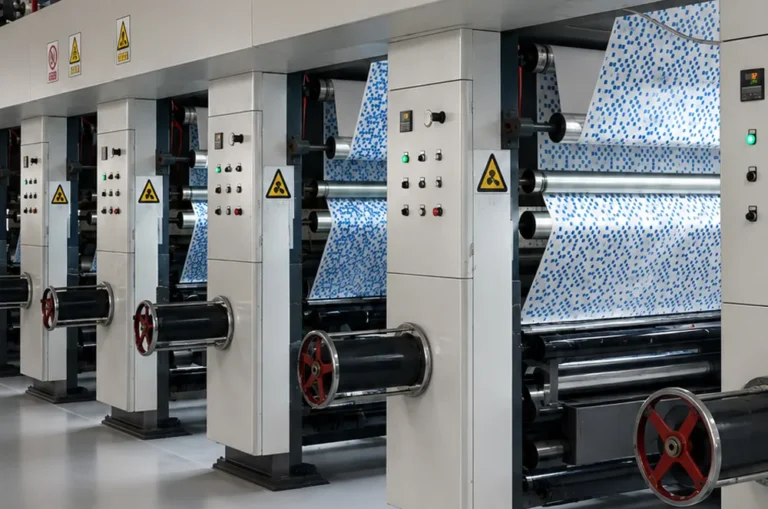
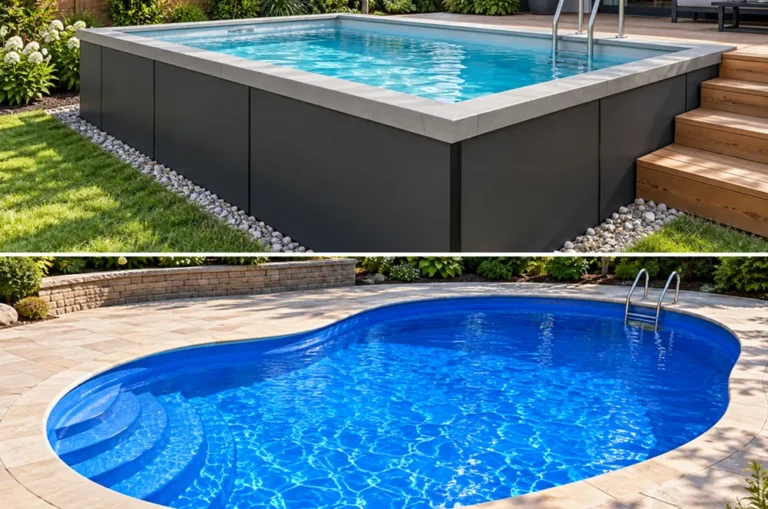
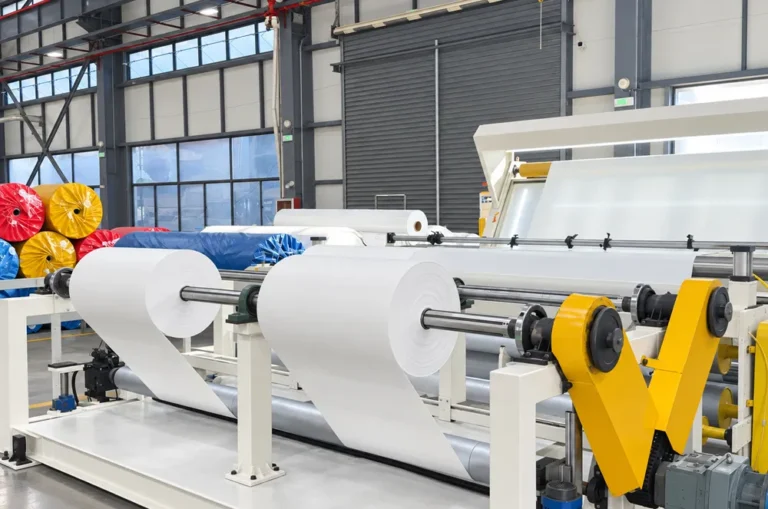
Commercial pool liner thickness should be selected within the specified pool lining system, not by thickness alone. Hotels, resorts, public swimming pools, and aquatic facilities face different operating conditions, including frequent cleaning, chemical treatment, surface wear, and demanding seam details.
A conventional vinyl liner made from unreinforced PVC film and a textile-reinforced PVC membrane are different constructions. Their thicknesses, joining methods, and material requirements should be evaluated separately.
For commercial projects, buyers need to confirm the liner construction, service conditions, material performance requirements, and fabrication compatibility before ordering PVC pool liner rolls.
I. Which PVC Liner Construction Is Used in Commercial Pools?
Commercial pool lining systems must be specified according to the pool structure, approved design, and fabrication method.
Reinforced PVC pool liner membranes contain an internal textile layer between PVC layers. The reinforcement supports dimensional stability during material handling and panel fabrication. The complete membrane construction must be evaluated together with its thickness, surface finish, and welding compatibility.
Unreinforced vinyl pool liner film contains no textile reinforcement and is used in liner systems designed for that construction. A thicker unreinforced film is not automatically a substitute for a reinforced membrane.
The project specification determines the required material system. LonaTarp manufactures both reinforced PVC membranes and unreinforced vinyl pool liner film in rolls. Downstream fabricators and installers are responsible for producing and fitting the finished lining.
II. Which Commercial Pool Conditions Affect Liner Thickness Selection?
Commercial pool liner material selection begins with the conditions the finished lining must withstand. A public swimming pool with frequent cleaning and heavy use requires different material verification from a lightly used private pool.
The material specification should connect thickness with the actual operating environment.
| Commercial Pool Condition | Material Requirement to Verify |
|---|---|
| Frequent cleaning and public use | Surface abrasion resistance, cleaning compatibility, and surface finish |
| Chlorinated or chemically treated water | Chemical resistance, color stability, and compatibility with the specified water conditions |
| Outdoor pools and exposed waterlines | UV resistance and surface aging performance |
| Steps, entry zones, and walking surfaces | Surface texture, abrasion requirements, and slip-resistance evidence where specified |
| Welded joints and penetrations | Material weldability, seam performance, and compatibility with the selected lining system |
| Renovation and existing pool structures | Material flexibility, approved substrate conditions, and compatibility with the project design |
These conditions help determine which membrane grade and thickness should be evaluated. Two materials with identical nominal thicknesses do not necessarily have the same reinforcement, PVC formulation, surface performance, or welding behavior.
For commercial procurement, thickness must therefore be reviewed alongside the complete material construction and the project’s acceptance requirements.
III. How to Verify Pool Liner Thickness and Reinforcement for Commercial Projects
First, identify the approved lining system and specify its required material construction. Thickness should be stated in mil or millimeters, together with the agreed tolerance and measurement method.
For general mil-to-millimeter conversions and conventional 20, 27, 28, and 30 mil vinyl liner comparisons, see our pool liner thickness guide. Those common film thickness references should not be treated as interchangeable commercial reinforced-membrane specifications.
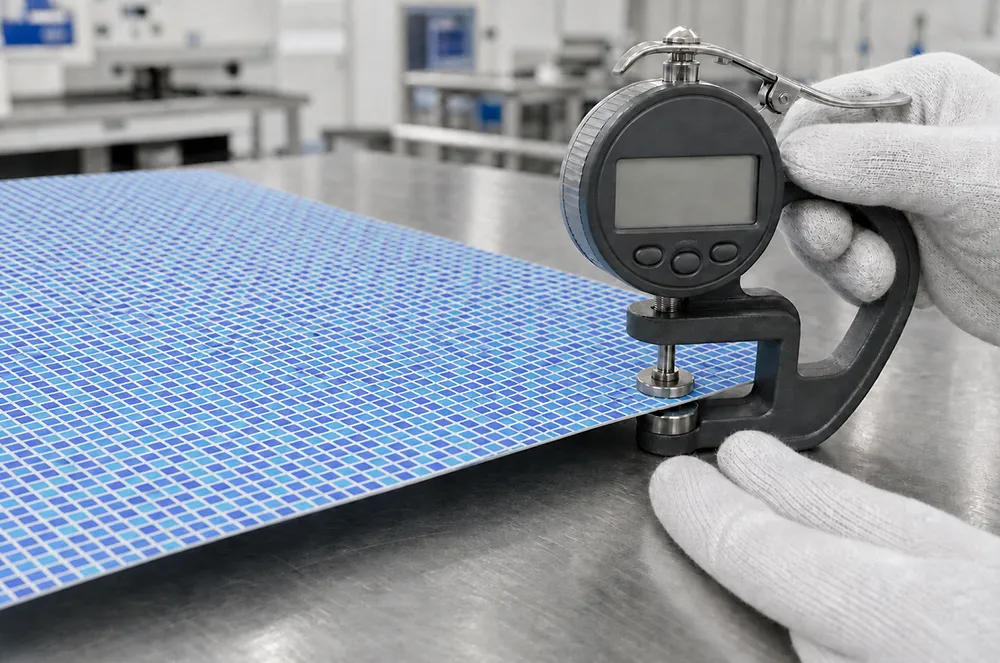
For reinforced PVC pool membranes, material verification should cover the following:
- Nominal thickness and tolerance: Confirm the specified thickness, measurement procedure, and acceptable variation.
- Internal reinforcement: Identify the textile structure and the mechanical performance required for the selected system.
- PVC layers and surface finish: Review the complete construction, color or printed pattern, texture, and required resistance properties.
- Fabrication compatibility: Confirm that the material can be processed with the fabricator’s intended joining equipment and approved method.
- Sample and inspection requirements: Establish the reference sample, necessary test methods, and acceptance criteria before bulk production.
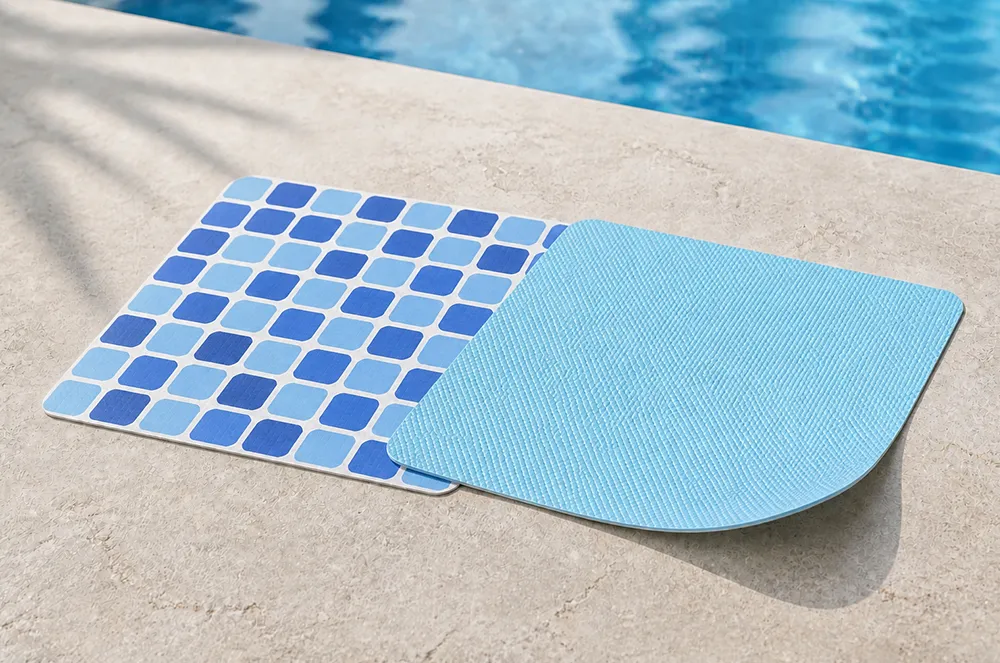
Where hot-air welding is specified, the fabricator must verify seam performance using the selected material and actual processing conditions. Printed or embossed membranes also require checks for appearance and surface effects around welded areas.
A complete material specification provides a more reliable basis for procurement than thickness alone.
IV. How Water Treatment and Cleaning Affect Commercial Liner Durability
Commercial swimming pools operate under different water-treatment, cleaning, and exposure conditions. These conditions influence the material properties that must be verified before selection.
Chlorine exposure, water temperature, pH conditions, cleaning chemicals, and cleaning frequency all need to be considered when reviewing PVC formulation and surface performance.
Outdoor pools introduce additional UV exposure, especially at the waterline and other exposed surfaces. Surface color retention, flexibility, and aging performance must be evaluated using evidence relevant to the proposed material grade and operating environment.
For public-use pools, surface abrasion and repeated cleaning also require attention. An approved material sample and applicable test results provide a more useful comparison than a general claim that a thicker liner will last longer.
Thickness alone does not establish the service life of a commercial pool lining. Material construction, water treatment, fabrication quality, installation, and maintenance must be considered together. A guaranteed number of service years should not be inferred from nominal thickness or accelerated UV test hours.
V. Which Commercial Pool Areas Require Closer Material Review?
Commercial pool projects contain areas with different material and fabrication requirements. Flat wall panels, floors, steps, corners, drains, waterline details, and welded transitions should not automatically be treated as identical conditions.
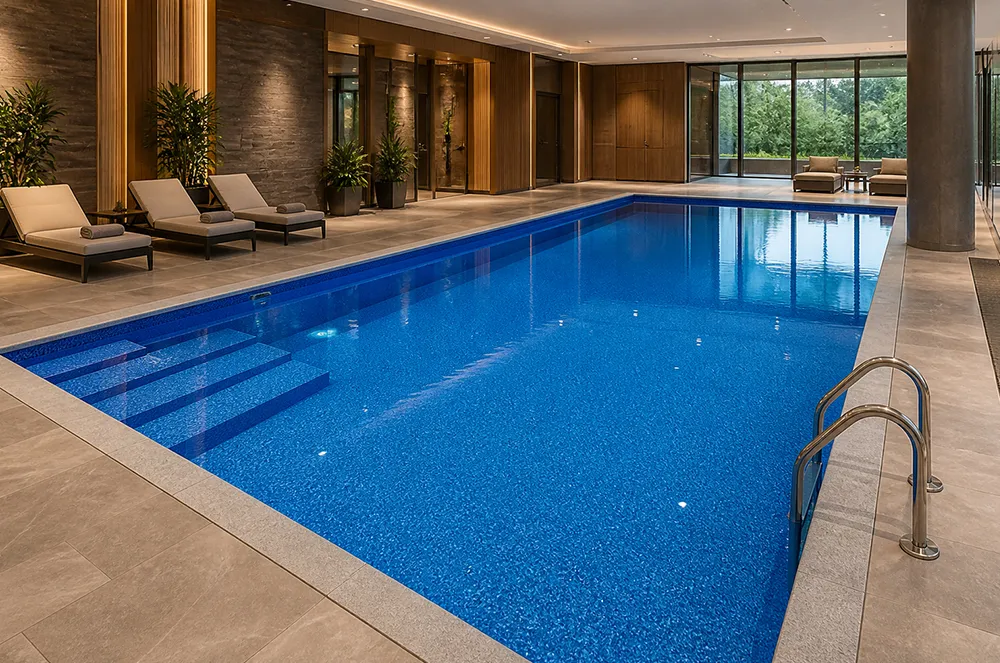
Steps and entry areas require attention to surface wear, texture, and any specified slip-resistance performance. Wall-to-floor transitions and curved sections introduce different handling and joining conditions. Drains, fittings, and other penetrations require compatibility with the approved lining and sealing system.
Project drawings help identify these requirements before material selection. The fabricator and installer remain responsible for panel dimensions, seam positions, site preparation, fittings, and final installation. The roll supplier uses the relevant project information to review material construction and fabrication compatibility.
Printed and embossed membranes require additional visual checks when patterns or surface textures cross joining areas. Buyers should confirm appearance requirements, sample acceptance, and the performance evidence needed for the selected finish.
Reviewing these details before bulk production helps establish a material specification that matches the actual commercial pool project.
VI. RFQ Checklist for Commercial Pool Liner Roll Materials
For an accurate material quotation, provide the required construction and technical specifications rather than pool dimensions alone.
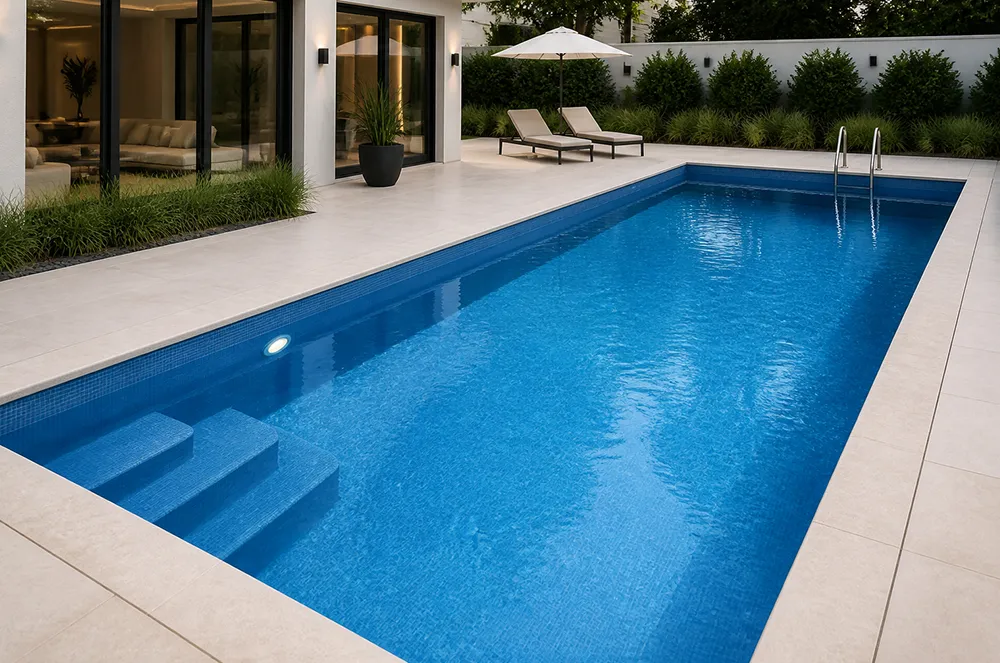
A commercial pool liner roll-material inquiry should include:
- Buyer and application: Company type and intended project, such as a hotel pool, public swimming pool, aquatic facility, or renovation project.
- Lining system: Reinforced PVC membrane or unreinforced PVC film, according to the approved project design.
- Material specification: Target thickness, thickness tolerance, reinforcement requirements, and existing reference sample or technical sheet.
- Surface appearance: Solid color, printed pattern, surface finish, or embossed texture.
- Operating conditions: Indoor or outdoor use, relevant water-treatment conditions, temperature, cleaning requirements, and performance expectations.
- Fabrication and verification: Intended joining method, applicable technical standards, requested tests, and sample acceptance criteria.
- Roll order details: Required roll width and length, total quantity in square meters, packaging requirements, destination, and requested delivery schedule.
LonaTarp supplies reinforced PVC pool liner membranes and unreinforced vinyl pool liner films as made-to-order roll materials. Fabrication, cutting, welding into finished liners, and installation remain the responsibility of the buyer or its appointed partners.
Explore our PVC pool liner roll materials to compare the available material constructions and specifications.
Pool Liner Roll Materials — MOQ: 3,200 m².
VII. FAQ
Can a thicker vinyl liner film replace a reinforced commercial pool membrane?
No direct substitution should be made based on thickness alone. Reinforced PVC membranes and unreinforced vinyl films are different lining constructions. The approved pool system determines which material is required.
Which material properties should commercial pool buyers verify?
Confirm thickness tolerance, material construction, relevant mechanical performance, welding compatibility, and the required chemical, UV, abrasion, or surface tests for the selected grade and project conditions.
Does LonaTarp supply finished commercial pool liners or installation services?
No. LonaTarp manufactures PVC pool liner materials in rolls for B2B customers. Finished liner fabrication, cutting, welding, installation, and related site services are not included.
What is the MOQ for commercial PVC pool liner roll materials?
The minimum order quantity is 3,200 m² for Pool Liner roll materials. Buyers should provide the required construction, thickness, roll dimensions, surface finish, and total quantity for quotation.