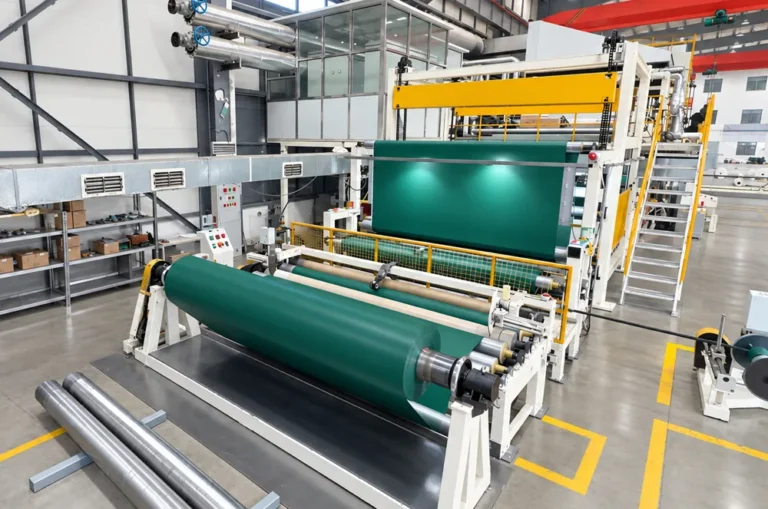
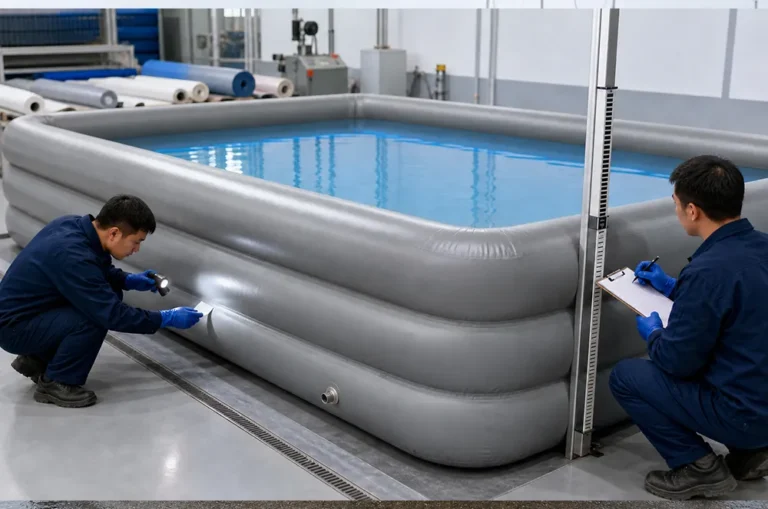
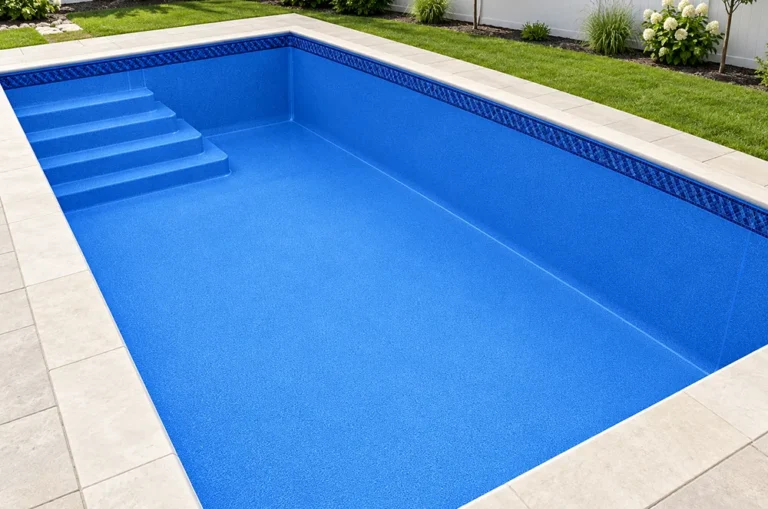
Choosing the best pool liner thickness starts with identifying the liner system, not picking the largest number on a product label. A conventional vinyl liner made from unreinforced PVC film and a textile-reinforced PVC membrane are different constructions. They are fabricated and installed differently, so their nominal thicknesses are not directly interchangeable.
For conventional vinyl pool liners, 20, 27, 28, and 30 mil are familiar reference values in many product ranges. Reinforced membranes are typically identified in millimeters and must be selected according to the approved membrane system. The right specification also depends on the pool’s shape, support surface, wall and floor requirements, fabrication method, and intended service conditions.
This guide explains actual mil-to-millimeter conversions, the trade-offs between thinner and thicker material, and how to compare options for above-ground and inground pools. It is written for liner fabricators, pool professionals, and buyers evaluating PVC liner material rather than a single retail replacement liner.
I. How Thick Is a Pool Liner? Common Sizes and Thickness Chart
A mil is one-thousandth of an inch: 1 mil = 0.001 in = 0.0254 mm. Unlike a marketing grade or a product-specific gauge number, this is a defined unit of length. Thickness values can therefore be converted precisely, even when the actual manufactured material varies within an agreed tolerance.
Pool Liner Mil-to-mm Chart
| Nominal thickness | Equivalent millimeters | Equivalent inches |
|---|---|---|
| 15 mil | 0.381 mm | 0.015 in |
| 20 mil | 0.508 mm | 0.020 in |
| 25 mil | 0.635 mm | 0.025 in |
| 27 mil | 0.686 mm | 0.027 in |
| 28 mil | 0.711 mm | 0.028 in |
| 30 mil | 0.762 mm | 0.030 in |
| 40 mil | 1.016 mm | 0.040 in |
| 45 mil | 1.143 mm | 0.045 in |
These are exact unit conversions rounded for display, not a claim that every thickness is available from every manufacturer or suitable for every pool. Nominal thickness and the thickness measured on production material are different concepts.
A product specified as 20 mil has a nominal thickness of 0.508 mm. Its measured thickness must be checked against the supplier’s technical sheet and the agreed tolerance. A table of nominal values cannot replace actual sample inspection, and measured averages from one manufacturer’s samples should not be presented as universal manufacturing standards.
What Does Gauge Mean for a Pool Liner?
Some vinyl liner listings use gauge instead of mil. Gauge does not have one universally reliable conversion to mil across pool liner manufacturers. Consequently, a product sold as “25 gauge” cannot be assumed to measure 25 mil (0.635 mm). Ask for the actual nominal thickness in mil or millimeters, the tolerance, and the method used to verify it.
The detailed differences between gauge labeling and physical measurement are a separate technical topic. For thickness selection, the essential rule is to compare stated, verifiable thickness values rather than matching gauge names.
Is There a Standard Pool Liner Thickness?
There is no universal standard pool liner thickness for every pool. Conventional vinyl liner product ranges commonly include 20, 27, 28, and 30 mil, while reinforced PVC membrane systems use different material constructions and thickness specifications. Confirm the approved lining system before treating any grade as standard.
Why Reinforced Pool Membranes Need a Separate Comparison
Reinforced PVC pool membranes contain a textile reinforcement within the PVC construction. In industry product ranges, examples include 1.5 mm, 1.8 mm, and 2.0 mm membrane systems, equivalent to approximately 59, 71, and 79 mil. These are examples of reinforced membrane system specifications, not a recommendation to substitute a 1.5 mm membrane for a conventional 20–30 mil finished vinyl liner.
First determine whether the planned pool uses a factory-fabricated unreinforced liner or an engineered reinforced-membrane lining system. Only then is the thickness comparison meaningful.
II. Does Pool Liner Thickness Matter? Is Thicker Always Better?
Thickness matters, but thicker is not automatically better.
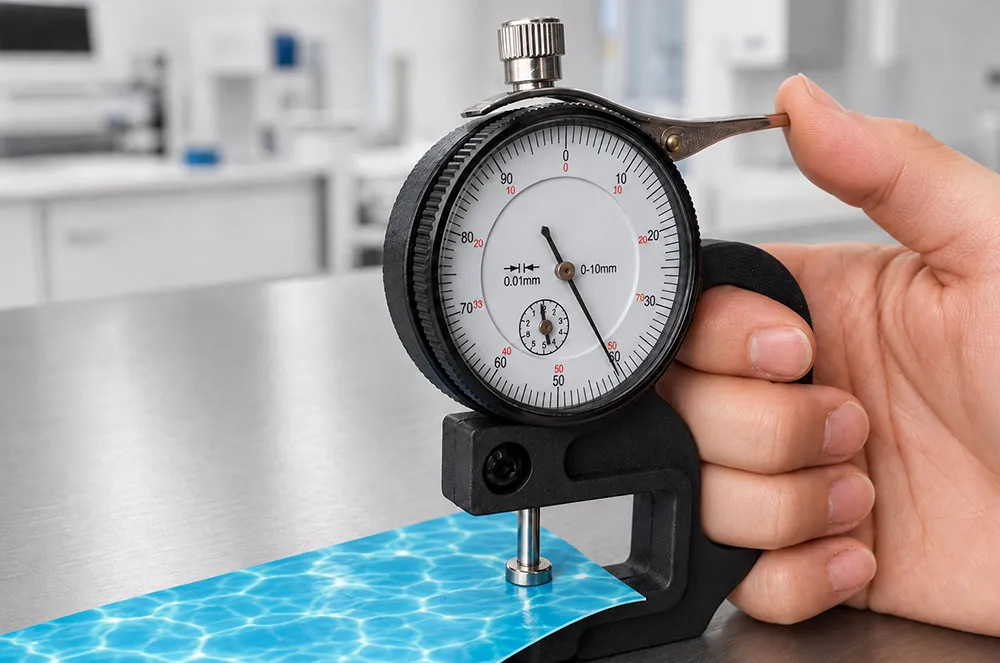
Greater thickness adds material to the cross-section. Whether this translates into a worthwhile performance improvement depends on the PVC formulation, reinforcement, surface condition, manufacturing quality, and how the liner fits the pool.
Puncture and Abrasion Performance
When comparing otherwise similar materials, added thickness can provide more material between a sharp contact point and the opposite surface. This is a useful consideration in assessing puncture and abrasion exposure. But a nominal thickness increase does not establish a particular puncture-test result or wear-life improvement. Obtain comparable test results and consider the supporting surface rather than treating thickness as the only resistance measure.
A thicker sheet cannot correct exposed sharp edges, a damaged substrate, or a fitting that leaks because its sealing detail is unsuitable. Those problems require their own investigation and correction.
Flexibility and Fit
Conventional vinyl liners must fit walls, floors, corners, steps, and other geometric transitions. A heavier film construction can be less compliant during fabrication and installation, depending on the formulation and temperature. A thinner material can therefore be easier to fit in a complicated geometry, provided it meets the liner system’s mechanical and durability requirements.
The choice should be based on tested fit and approved construction, not on the assumption that all lighter materials are weak or that all heavier materials are difficult to install. Reinforced membranes have a different handling and welding profile because of their internal textile layer.
What About Color Retention and Service Life?
Nominal thickness is not a substitute for verifying resistance to chlorine, ultraviolet exposure, cleaning agents, or plasticizer-related aging. Two liners of different thicknesses can use different PVC formulations and surface finishes, so their long-term appearance and flexibility cannot be ranked by thickness alone.
Different pool professionals also prioritize the trade-offs differently: some favor higher-thickness options in exposed areas, while others put more weight on exact fit and the approved liner design. These are system- and product-specific judgments. Do not turn one supplier’s preference into a universal best thickness or a promised number of service years.
III. What Is the Best Pool Liner Thickness for Above-Ground Pools?
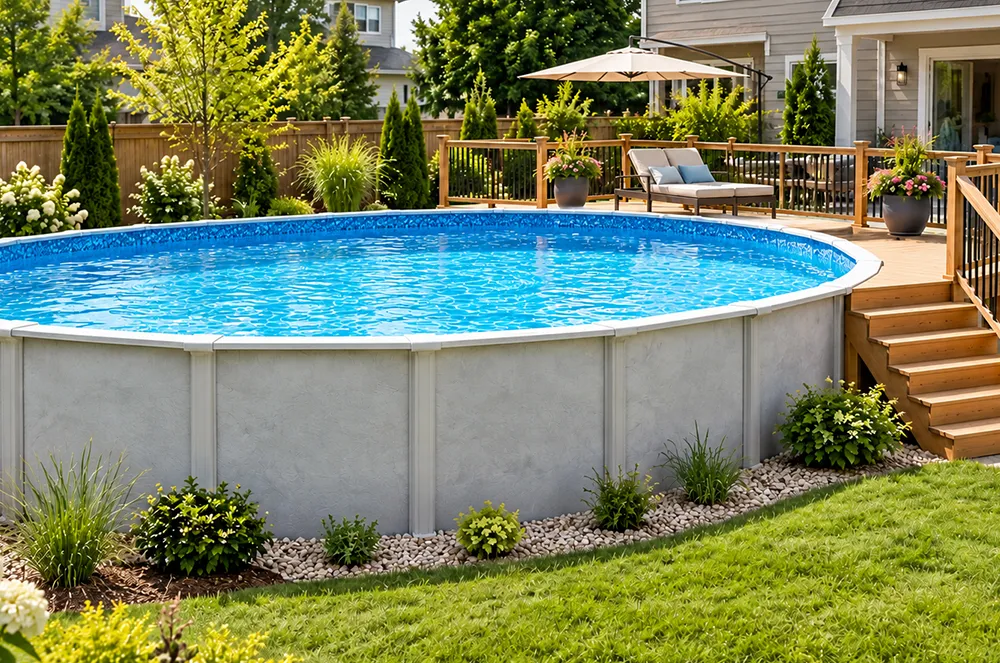
For a conventional above-ground pool, the best thickness is the one approved for the pool’s liner design and verified as compatible with its geometry, attachment, and support structure. Vinyl film thicknesses commonly discussed in this category include 20 mil and other manufacturer-specific grades, but no single number works for every pool.
Check Wall and Floor Construction Separately
A finished liner may use one thickness for both wall and floor or different thicknesses in the two sections. Published manufacturer and retailer offerings include a 20 mil floor paired with heavier walls; other product ranges illustrate a heavier floor with lighter walls. Neither arrangement is a universal recommendation.
To assess the actual construction, verify the specified wall thickness, floor thickness, support-surface condition, and the finished liner’s fit requirements. Compare material thickness only after confirming that the alternatives are made for the same pool and design.
Fit and Attachment Come Before Thickness Upgrades
Wall height, floor profile, bottom coves, and round or oval geometry determine whether the finished liner will fit. Beaded, overlap, J-hook, and unibead edge systems also require compatible pool components. A thicker sheet does not make an incompatible attachment profile fit correctly.
The full connection differences belong to our pool liner attachment types guide. Here, the key thickness decision is whether the chosen film can be fabricated and fitted within the already specified system.
Implications for Vinyl Liner Fabricators
For OEM production, start from an approved liner drawing and sample. Confirm nominal and measured film thickness, any wall/floor specification split, forming behavior, seam performance, and repeatability on the intended equipment. An unreinforced-film system should not be replaced with a reinforced-membrane system merely because one membrane is thicker.
IV. What Is the Best Pool Liner Thickness for Inground Pools?
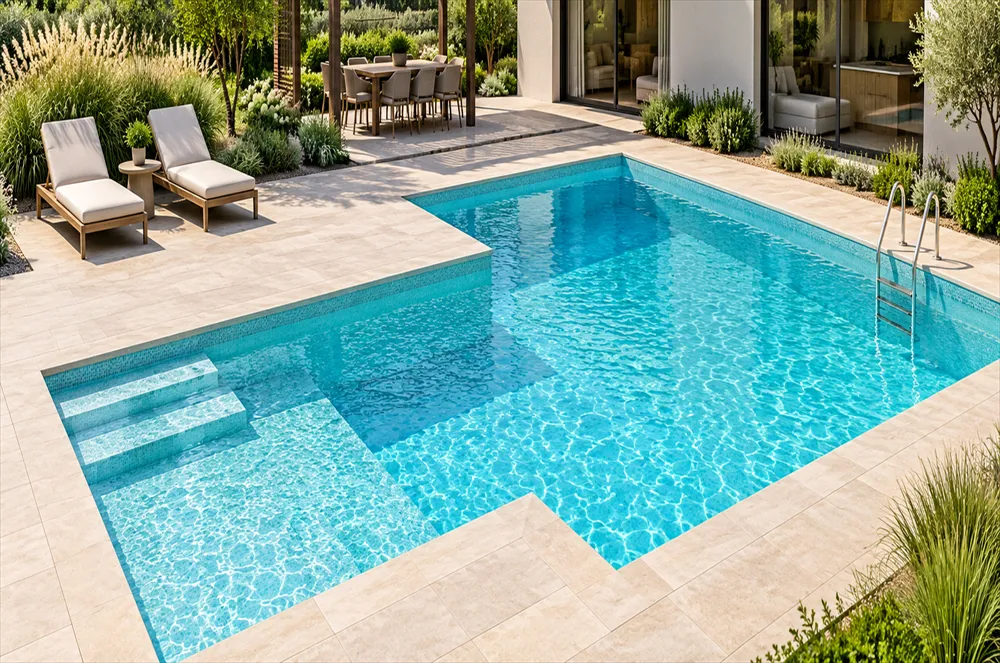
Inground pool thickness selection has two distinct paths: a conventional factory-fabricated vinyl liner and a reinforced PVC membrane used in a site-welded lining system. The pool’s approved lining design determines which path is relevant.
Factory-Fabricated Vinyl Liners
Inground vinyl liner ranges commonly discuss 20 mil and heavier options such as 27, 28, or 30 mil. For a comparable formulation, the heavier grade adds material thickness; however, the appropriate choice must be tested against the required fit, corners, steps, wall/floor configuration, and support surface.
Some published offerings use heavier vinyl on exposed walls and lighter film on smooth floors. Others use a heavier floor, where the design places more emphasis on floor contact or wear. This variation shows why the wall and floor specifications must be checked separately rather than assuming one fixed arrangement is best.
The precise material choice also depends on the substrate. A smooth, properly prepared base and a rough or irregular supporting surface create different demands. Changing thickness does not eliminate the need to evaluate the underlying surface and the finished liner’s construction.
Reinforced PVC Membranes
A reinforced PVC membrane has an internal textile layer and uses a different fabrication and installation approach from a conventional shaped vinyl liner. Examples of industry membrane systems are 1.5, 1.8, and 2.0 mm, but selecting among them requires the complete specification: reinforcement, surface layer, seam process, project exposure, and installation requirements.
Where the selected membrane system requires hot-air welding, material thickness and welding conditions must be assessed together. Fittings, terminations, steps, and transitions are parts of the specified system; a heavier sheet cannot compensate for a defective seam or inappropriate substrate preparation.
For roll-material details, see reinforced PVC pool liner material. For conventional non-reinforced construction, review vinyl pool liner film instead. These are different product families, not interchangeable thickness upgrades.
V. How to Choose the Best Pool Liner Thickness for Your Pool
A useful selection process follows four questions in order: What liner system does the pool require? Which part of the liner is being specified? What loads and processing conditions matter? What actual thickness and test evidence does the approved material provide?
For factory-fabricated vinyl liners, 20 mil is a common starting reference, while 27, 28, and 30 mil are thicker options in selected product ranges. Choose among them using the approved liner design, material test results, fit, and cost. For reinforced PVC systems, industry examples include 1.5, 1.8, and 2.0 mm membranes. These are different lining systems, not interchangeable upgrades.
Pool Liner Thickness Decision Table
| Project or product condition | Thickness-selection direction | Required confirmation |
|---|---|---|
| Above-ground, standard rigid-wall pool | Start from the approved vinyl liner specification rather than a universal gauge grade | Pool model, wall height, floor profile, compatible attachment |
| Above-ground liner with separate wall and floor grades | Compare both sections independently; do not assume the wall or floor must always be thicker | Actual thickness for each section, material grade, fitting requirements |
| Inground, factory-fabricated vinyl liner | Compare 20 mil and manufacturer-approved heavier options on a like-for-like basis | Finished liner design, fit, seam arrangement, prepared substrate |
| Inground, reinforced welded membrane | Follow the project membrane-system specification; compare reinforced grades with reinforced grades | Textile reinforcement, nominal thickness, system tests, seam details |
| Irregular pool with steps and curves | Prioritize compliance with the required shaping and joining conditions | Sample-forming and welding results, liner or panel layout |
| Rough, damaged, or renovation substrate | Evaluate preparation or protection first; thickness alone is not a repair method | Substrate condition and installer-approved preparation |
| Embossed or textured surface | Confirm what the quoted thickness refers to and how it will be measured | Measurement protocol, texture profile, acceptance limits |
| OEM roll-material production | Confirm the selected grade can be processed consistently | Approved samples, tolerance, seam tests, batch acceptance |
How to Make the Final Choice
For a conventional above-ground liner, use the approved finished-liner grade and verify its measured thickness, fit, and attachment. For an inground factory-fabricated liner, compare suitable film options and any wall/floor split within the same product system. For a reinforced-membrane pool, use the engineered membrane specification and its required processing and installation system.
Only after those conditions are established should cost differences be weighed. A higher thickness generally uses more material when other factors are held constant, but it does not automatically reduce life-cycle cost or guarantee performance. Conversely, the lowest-price option is not economical if it fails the approved fit or acceptance tests.
Public facilities introduce additional exposure and acceptance questions. Our commercial pool liner project guide discusses cleaning, water treatment, welded details, and commercial project checks; it is separate from this general thickness-selection method.
VI. What Should Fabricators Check Before Selecting Pool Liner Rolls?
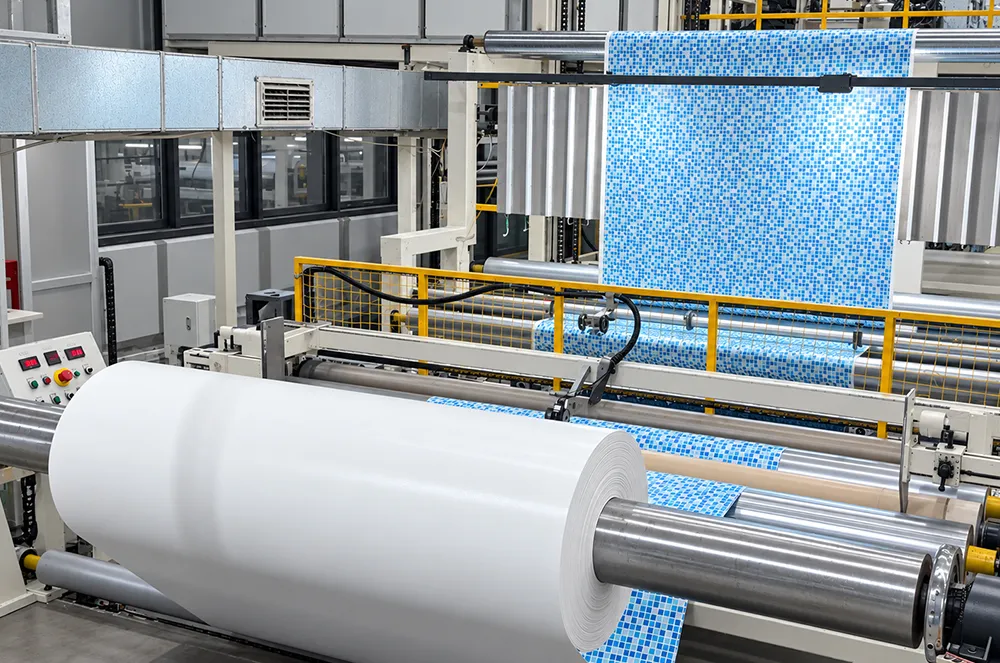
For fabricators and bulk materials buyers, an effective thickness choice has to be written as a repeatable specification. A quote describing only “20 mil vinyl” or “1.5 mm PVC membrane” leaves out information needed to approve the actual roll material.
Nominal Thickness, Measured Thickness, and Tolerance
Specify the nominal thickness, agreed tolerance, sampling plan, measurement instrument, and conditions. The manufacturing specification must define how to compare measurements to the approved reference; the published nominal value is not proof that every point on every roll has exactly the same thickness.
For embossed or textured vinyl, measurements taken across surface peaks and valleys can differ. Agree in advance whether the method reports overall thickness, average thickness, or another defined value under an applicable procedure. Do not compare two textured materials using inconsistent measurement positions or treat one retailer’s measurement convention as a universal standard.
Material Construction and Fabrication Trials
Verify whether the PVC is unreinforced film or textile-reinforced membrane. For film, check its layering and forming requirements. For membrane, verify the reinforcement, total thickness, and surface finish. Then run the joining or forming trials appropriate to the buyer’s actual equipment and target finished liner. Test seam quality and surface effects against agreed acceptance requirements.
What to Include in a Roll-Material Specification
| Item | Buyer and supplier should confirm |
|---|---|
| Material family | Unreinforced PVC film or textile-reinforced PVC membrane |
| Nominal thickness | Stated in mil and/or mm, not an unverified gauge label |
| Thickness acceptance | Tolerance, sampling, measurement procedure, texture conventions |
| Wall/floor application | Whether one material or different sections/grades will be used |
| Processing | Forming and joining method, seam acceptance, sample trial |
| Surface and performance | Color or pattern, texture, relevant exposure and test requirements |
| Production reference | Approved sample, specification revision, and batch inspection criteria |
The current LonaTarp PVC pool liner material range lists unreinforced film options of 15, 20, 28, 30, 40, and 45 mil, alongside reinforced membrane options of 60, 70, and 80 mil. These are material supply references, not universal recommendations; verify each selected grade and its intended fabrication process before ordering.
LonaTarp manufactures unreinforced vinyl pool liner film and reinforced PVC membrane in rolls for liner manufacturers, fabricators, and bulk distributors. Buyers can compare the available constructions through the PVC pool liner material range. Pool Liner Roll Materials — MOQ: 3,200 m². LonaTarp does not supply finished replacement liners or on-site installation.
The best pool liner thickness is the verified thickness within the correct liner system that satisfies the intended geometry, processing, and performance requirements. Choosing that system first makes every later thickness comparison more reliable.