Choosing the right inflatable pool material is a manufacturing decision, not a label choice. OEM buyers need to connect PVC coated fabric, reinforced PVC, drop-stitch fabric, welding, valves, air retention, water-holding checks, and packing behavior to the actual custom inflatable pool they want to produce.
Start With the Finished Pool Structure, Not a Material Name
The best inflatable pool material is not chosen from a single catalog word. For a custom inflatable pool program, the material has to match the finished structure, target users, water depth, wall shape, welding route, packing method, and inspection plan. A simple PVC inflatable pool, a reinforced wall pool, and a drop-stitch wall product may all use coated textile materials, but they do not need the same approval standard.
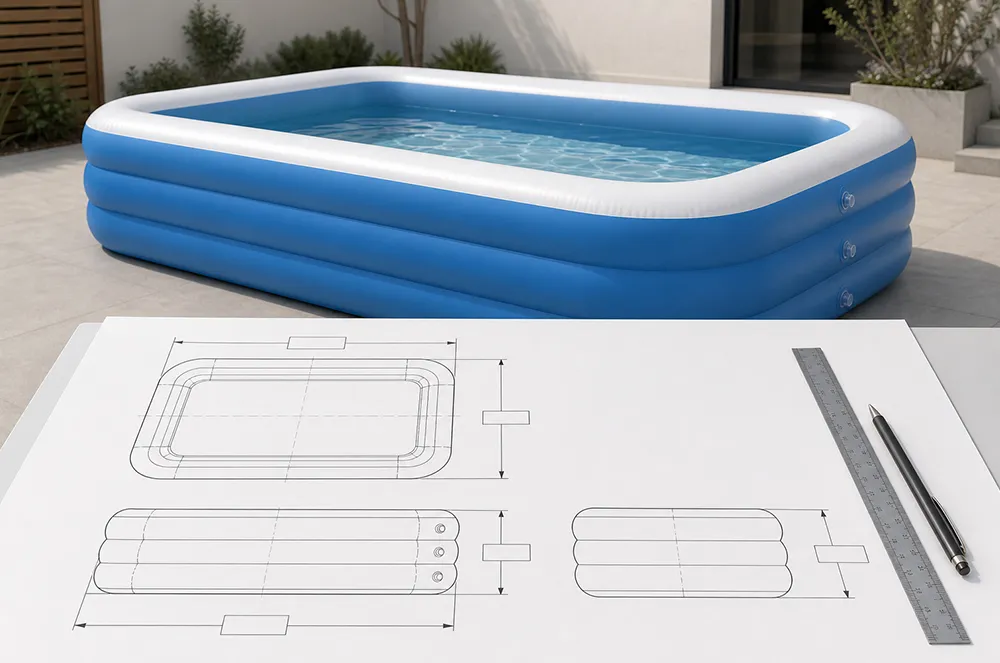
OEM buyers should first define what the pool must do after inflation and water filling. Is it a light seasonal SKU for a distributor, a stronger private-label pool for repeat orders, a compact commercial product for supervised use, or a premium wall concept that needs a flatter panel? The answer changes the fabric, coating, reinforcement, sidewall, valve, and sample test requirements.
This is why material selection should start from the product brief, not from a claim such as “heavy duty PVC” or “drop stitch.” Those words are useful only after the buyer knows how the finished pool will be welded, filled, folded, packed, shipped, and checked before bulk production.
PVC Coated Fabric Is the Practical Baseline for Many Inflatable Pools
For many B2B programs, PVC coated fabric is the practical starting point because it combines a textile base with a waterproof and weldable PVC coating. The textile reinforcement helps control tear and dimensional behavior, while the coating provides the surface needed for heat welding, water contact, cleaning, printing, and repeatable production.
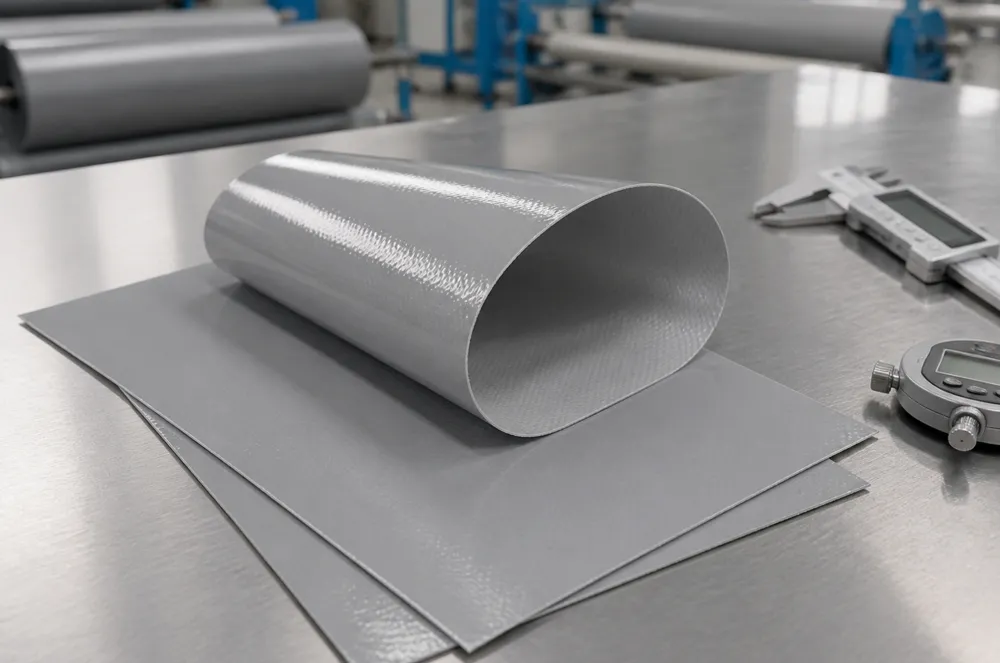
A buyer should not treat all PVC fabric as equal. The supplier needs to confirm fabric weight, base fabric structure, coating thickness, coating adhesion, surface finish, color, flexibility, weldability, and whether the material is intended for air-holding, water-holding, or both. These details matter more than a broad material name.
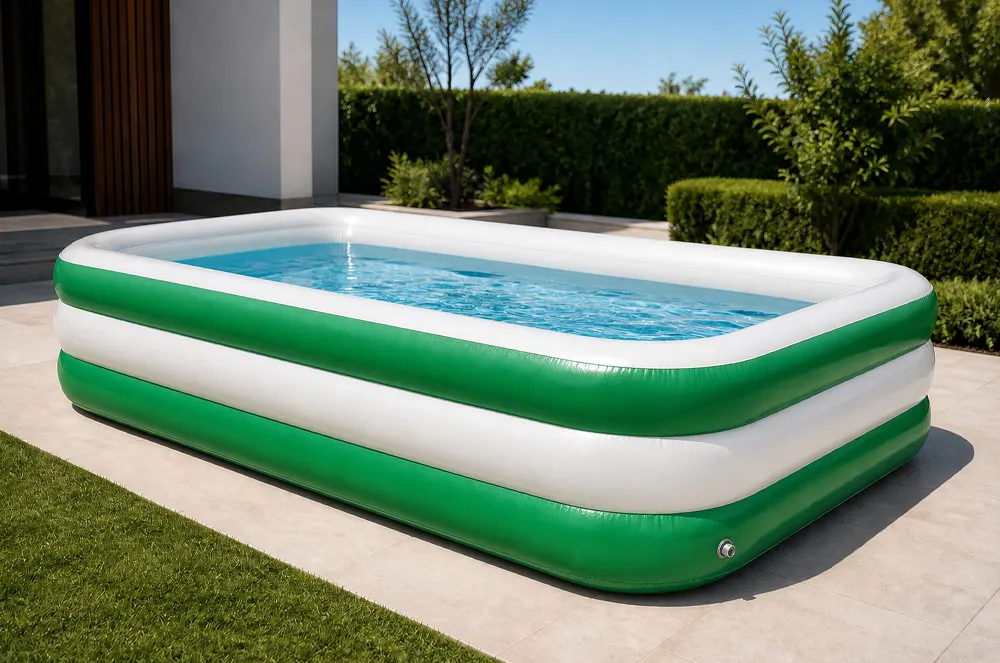
For a pvc inflatable pool, the material also has to work with valves, drain fittings, corners, floor seams, and folded packing. A fabric can be waterproof on a flat sample but still create leakage or shape problems if the seam design, welding temperature, overlap width, or packing fold is not controlled.
When Reinforced PVC Is Enough for a Custom Inflatable Pool
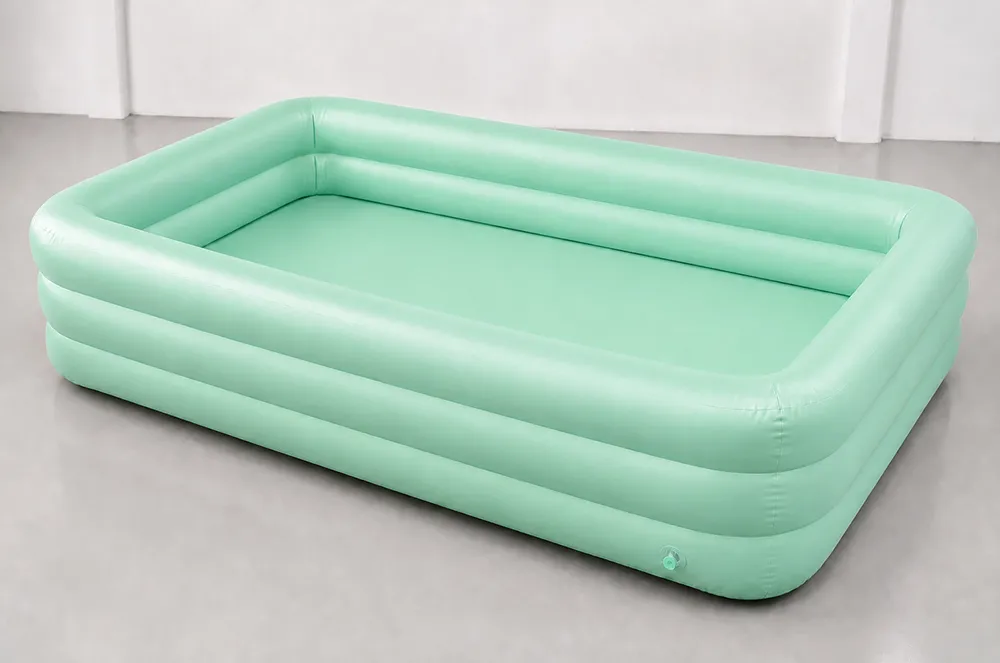
Reinforced PVC is often enough when the pool uses traditional air chambers, flexible walls, compact packing, and a cost structure suitable for seasonal wholesale or private-label distribution. In this route, the buyer usually focuses on wall height, chamber layout, floor connection, seam appearance, valve positions, color consistency, logo printing, carton size, and repeat-order stability.
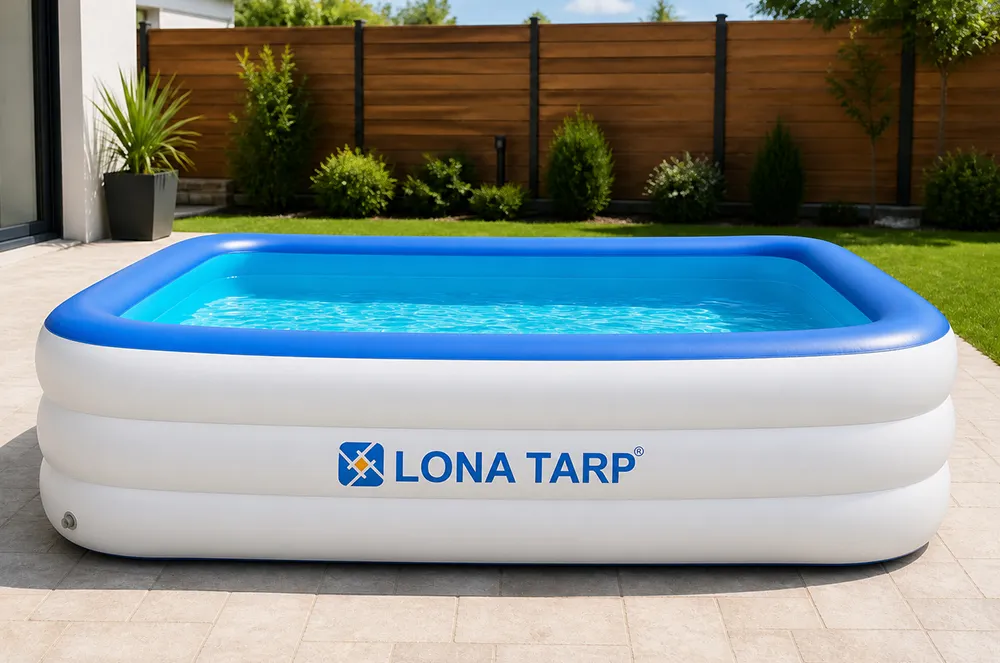
The advantage is commercial balance. A reinforced PVC inflatable structure can be easier to fold, easier to pack, and easier to scale across several sizes than a more rigid wall concept. It can also be easier for a factory to repeat when the buyer keeps the same material grade, welding method, inspection points, and packing rules across the product line.
The limitation is wall behavior. A flexible chamber can deform under water load, especially in larger sizes or higher wall concepts. If the pool needs a straighter wall, a premium display appearance, or a panel-like structure, reinforced PVC alone may not solve the design problem without stronger structure planning.
When Drop-Stitch Fabric Changes the Pool Design
Drop-stitch fabric changes the material discussion because it is not just a surface fabric. It uses two coated textile faces connected by internal yarns, so an inflated panel can stay flatter than a traditional round chamber when the pressure and sidewall sealing are correct. That can help a premium wall, spa-style concept, or project-specific drop-stitch pool design look more controlled.
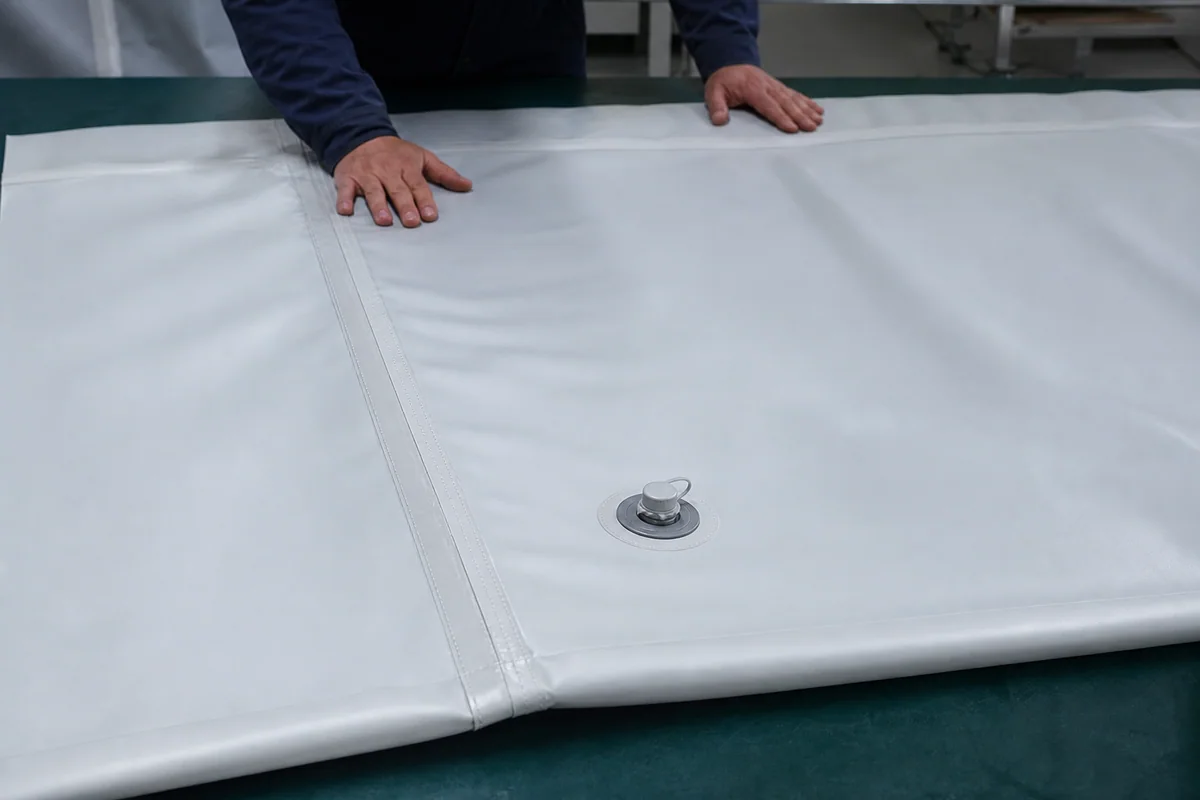
This route is useful only when the buyer accepts the extra approval work. Drop-stitch height, face material, sidewall strip, edge reinforcement, valve layout, pressure target, seam route, and folding method all affect the final result. The material cannot be approved from a roll name alone; it must be checked as a finished panel or finished pool sample.
For LonaTarp, drop-stitch material is a relevant option for products such as inflatable boards, floating platforms, gym mats, mattresses, spa-pool-style structures, and other flat inflatable panels. For an inflatable pool material decision, the buyer should ask whether the wall benefit is worth the added sample, pressure, seam, and packing controls.
Welding, Valves, and Water-Holding Tests Decide the Result
The most common mistake is treating material approval and finished pool approval as the same step. They are related, but they are not identical. An inflatable pool material may pass a flat sheet review, while the finished product still fails at a valve base, floor seam, corner radius, sidewall overlap, or repeated fold line.
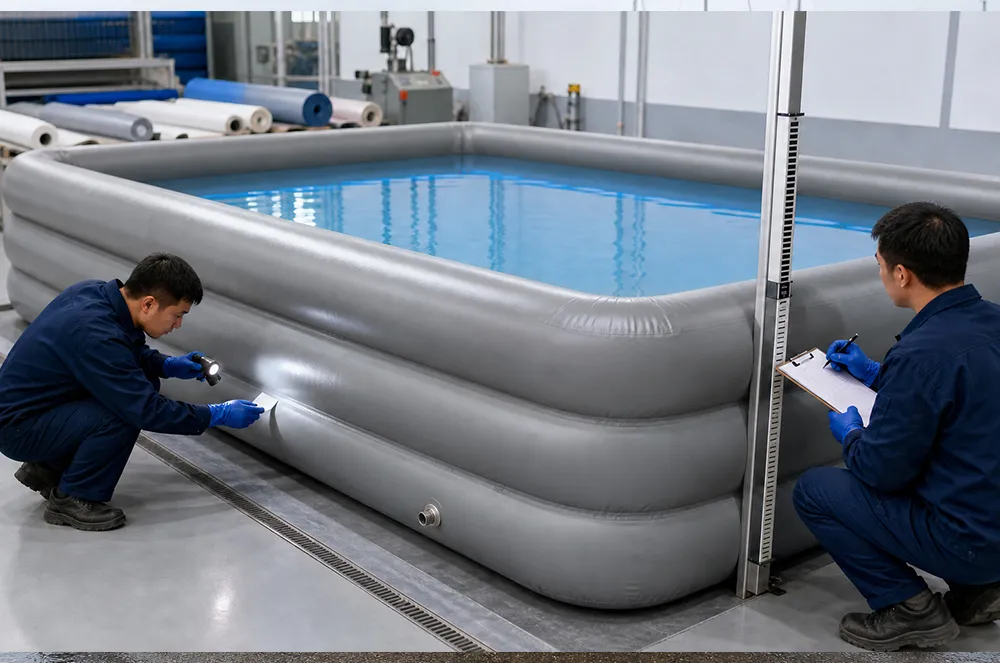
For any custom pool body, the supplier should define the welding method, seam width, overlap route, valve installation area, drain position, reinforcement patches, inflation pressure, and filled-water observation condition. If printing or private-label packaging is part of the order, color and artwork should be approved on the actual coated surface, not only on a digital mockup.
Air retention and water-holding checks should be written into the sample approval plan. The buyer should agree how long the sample will be observed, what pressure or filling condition will be used, what visual changes are acceptable, and which seam areas must be photographed or measured before the sample is approved for bulk production.
What Material Evidence Should OEM Buyers Request?
A useful evidence package is practical and product-specific. Before placing an OEM order, the buyer should ask for the material sample, finished pool sample, fabric construction, coating description, weld sample, valve sample, folded packing sample, and inspection notes. General claims such as “premium PVC” or “strong drop stitch” are not enough.
The buyer should also separate required documents from required performance. Certification documents, test reports, or third-party files must match the actual material, product structure, target market, and agreed test method. If a standard or report applies only to a material sample, it should not be used as proof that every finished pool design will perform the same way.
For repeat programs, keep one approved reference set. That set can include the confirmed material swatch, color sample, welded seam coupon, valve area photo, folded packing method, carton target, and the QC notes used during sample approval. This gives the buyer and factory the same standard when the next batch is produced.
| Evidence item | What it should prove | Why it matters for bulk orders |
|---|---|---|
| Material swatch | Coating, hand feel, color, surface and flexibility | Prevents approving only a vague PVC name |
| Weld coupon | Seam width, overlap route and visual uniformity | Controls leakage risk at repeated production points |
| Valve and drain sample | Accessory fit and reinforcement area | Reduces failures around openings and fittings |
| Filled sample | Air retention, water-holding behavior and shape stability | Shows whether the real product matches the brief |
| Packing sample | Fold lines, carton size and stress near seams | Avoids warehouse and after-sales issues |
How to Send a Useful Inflatable Pool Material RFQ
A strong RFQ should tell the supplier more than the pool size. Share the intended use, target users, water depth, wall height, expected structure, quantity, target market, color, logo, packing method, and any reference sample. If you already know the preferred inflatable pool material, explain why you chose it and what problem it must solve.
For LonaTarp projects, the best fit is an OEM, wholesale, or commercial buyer planning a repeatable custom order. Bulk material planning normally starts from a 5,000 square meter MOQ, so the RFQ should include estimated material area or order quantity instead of a single-piece retail request.
If the material route is still open, LonaTarp can discuss PVC coated fabric, reinforced PVC, drop-stitch options, welding, printing, accessory installation, sample approval, and batch QC together. For the broader project page, review the custom inflatable pool development route and prepare the information needed for a practical quote.