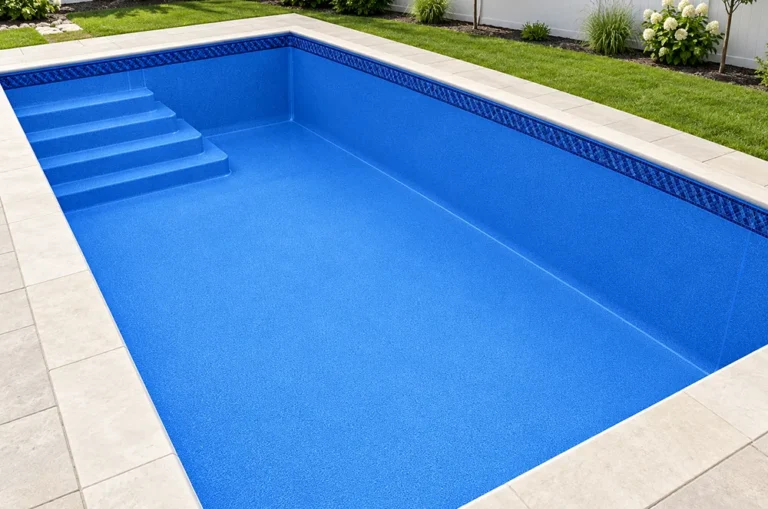
PVC fabric welding joins two pieces of PVC-coated or laminated polyester by melting the PVC on each surface and pressing the layers together until they fuse. The polyester base fabric inside does not melt; it keeps carrying the load while the PVC forms a continuous, watertight seam. Three methods do most of the work in industry: hot air, hot wedge and high-frequency (HF, also called RF) welding. Which one fits depends on seam length and shape, material thickness and production volume.
This guide is for fabricators, OEM brands and distributors who weld vinyl into tarps, awnings, enclosures and inflatables. LonaTarp makes weldable PVC fabric in rolls and also produces welded finished products on HF, hot-air and hot-wedge equipment.
I. What PVC Fabric Welding Is — and Why “Heat Sealing” Means the Same Thing
For PVC-coated fabric, heat welding, heat sealing and heat seaming name the same process. Heat softens the PVC, pressure fuses it, and the seam cools into one piece. Unlike a sewn seam, a welded seam has no needle holes, so a properly made weld is waterproof and can be airtight.
Heat Sealing Is Not Heat Transfer Vinyl
Searches for heat seal vinyl fabric often turn up heat transfer vinyl (HTV) and iron-on films. Those are thin decorative or protective films that bond to garments and craft fabric with a heat-activated adhesive. They stick by glue rather than fusing two PVC layers, and they are not made to carry load in a tarp or awning seam.
II. Main Welding Methods for PVC and Vinyl Fabric
All vinyl fabric welding methods fuse PVC with heat and pressure; they differ in how the heat reaches the seam.
| Method | How the heat is applied | Best fit | Watch-outs |
|---|---|---|---|
| Hot air | Heated air is blown into the overlap; a pressure roller follows | Long seams, curves, changing panel sizes, field repairs | Seam quality depends on stable temperature, speed and pressure |
| Hot wedge | A heated metal wedge runs between the layers; rollers press them together | Long, straight seams at high speed on large covers and liners | Less suited to tight curves and complex shapes |
| High frequency (HF / RF) | An electromagnetic field heats the PVC from inside; a shaped electrode presses the seam | Repeatable shaped seams, airtight products, high-volume parts | Needs matched tooling; works only on materials with suitable electrical properties, which PVC has |
| Bar sealing (impulse or constant heat) | A heated bar presses the layers; impulse sealers heat, then cool under pressure | Thin films and lighter vinyl parts | Limited seam length per stroke |
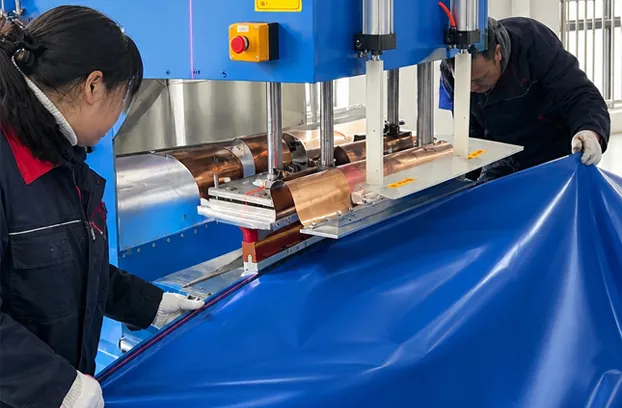
Heat welding PVC fabric for a tarp line often comes down to hot air versus HF. For that decision, see our comparison of hot air welding vs high frequency welding. Our factory runs HF, hot-air and hot-wedge welding, so we choose the method by the seam and the product.
III. How to Weld Vinyl Fabric, Step by Step
Whatever the machine, a good weld follows the same sequence: clean material, a consistent overlap, settings proven on a test strip, and a check before production.
- Clean and dry the weld zone. Dust, grease and moisture block fusion. Wipe the overlap area and let it dry fully.
- Set the overlap. Match the overlap width to the load on the seam and any hardware it carries, and keep it constant along the seam.
- Dial in settings on a test strip. There is no single welding temperature for PVC fabric. Heat, speed and pressure depend on fabric weight, coating thickness, surface finish and the machine, so run strips from the same roll first.
- Tack, then weld. Tack the ends of a long seam so the panels cannot shift, then weld in one continuous pass at a steady speed.
- Cool and check. Let the seam cool under pressure. A common shop check is to pull a test strip apart: on a sound weld, the failure moves into the fabric or coating instead of the bond line peeling open cleanly.
To turn that check into an acceptance plan for bulk orders, see how to check tarpaulin welding quality.
Common Causes of Weak Welds
- Too cold or too fast: the seam peels open along the bond line.
- Too hot or too slow: the coating scorches, thins or distorts beside the seam.
- Dirty or damp surfaces: the weld holds in some spots and fails in others.
- Uneven pressure: the seam width wanders and leaves unfused gaps.
IV. What Makes a Vinyl Fabric Weldable
Weldable vinyl fabric needs enough compatible PVC on the faces being joined. Most PVC-coated and PVC-laminated polyester qualifies, but construction and surface finish change how easily it welds.
PVC on Both Faces of the Seam
Check which faces meet in your seam design. An overlap seam may join the face of one panel to the back of another, and both surfaces must carry PVC that can melt and fuse.
Coated or Laminated Construction
Knife-coated and laminated PVC fabrics both weld well. Their surfaces and layer bonding differ, so settings proven on one construction should be rechecked on the other. LonaTarp produces both on knife-coating and hot-lamination lines.
Acrylic and PVDF Top Coats
Many outdoor vinyl fabrics carry an acrylic or PVDF top coat to resist dirt, UV and mildew. These finishes make welding harder, not impossible: the coated face needs its temperature and speed adjusted for that finish. When we supply top-coated fabric, we confirm the welding settings on trial samples before bulk production.
Fabric Weight
Heavier fabrics carry more PVC and need more heat input. A high-output machine can supply that heat at normal speed; on equipment with a lower temperature ceiling, the operator slows the pass instead. Lighter fabrics scorch more easily, so each weight needs its own test strip.
V. Welding Different Vinyl Products
The right method follows the product: what each seam has to hold, and where it sits.
Welding Awning Vinyl Fabric
Awnings and RV slide toppers combine long straight seams with hems, pockets and keder edges that fit the awning hardware. Hot air or hot wedge suits the long seams. Awning vinyl often carries an acrylic or PVDF top coat, so settings should be proven on the top-coated face, as described above.
How to Weld Clear Vinyl to Fabric
Clear PVC windows in enclosures, café blinds and tents are welded to PVC-coated fabric because both sides are PVC. HF and hot-air welding are both used. The clear film is usually lighter than the coated fabric around it, so tune the settings on a test strip until the clear side bonds without marking or distorting. Our clear vinyl fabric range is supplied for this kind of welded window work, with a trial on the exact material before bulk production.
Inflatables and Airtight Products
Airtight parts need a continuous fused seam with no channels for air to escape. HF welding is common here because shaped electrodes repeat the same seam on every part.
Tarps and Large Covers
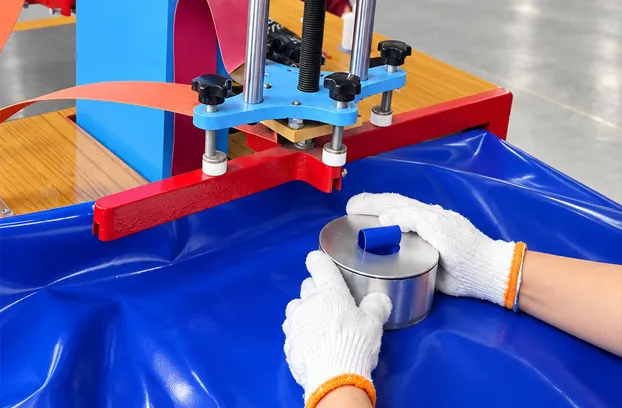
Large covers are mostly long seams and reinforced edges. Hot air and hot wedge handle the panel joins, while hems and corners take extra layers where hardware is fitted.
VI. Sourcing Weldable Vinyl Fabric or Welded Products
You can buy weldable vinyl fabric in rolls and weld it in your own plant, or have us weld the finished product. Either way, the welding route should be agreed before the fabric is specified.
To quote accurately, send us your welding requirements:
- Your welding method and machine: hot air, hot wedge, HF or bar sealer
- Seam type and overlap, plus hems, pockets or keder edges
- The product and where it will be used
- Fabric weight and construction, or a sample of what you use now
- Color, any acrylic or PVDF top coat, and any clear sections
- Roll width and length, or finished sizes and drawings
- Quantity and expected repeat volume
- Target market and any standards required
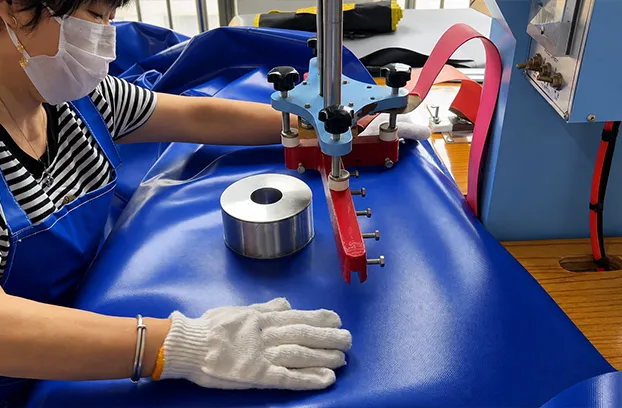
Before bulk production, we make trial samples and confirm welding settings for your method. For finished products, our factory welds on HF, hot-air and hot-wedge equipment.
Orders start at 5,000 m². Rolls are supplied to your width and length; welded finished products are made to your sizes, from 30 pieces per size, with the total order reaching 5,000 m². Lead time is typically about 15 days after the specification is approved and is confirmed for each order.
VII. FAQ
What temperature is used to weld PVC fabric?
There is no single number. For heat welding vinyl fabric, the right temperature depends on fabric weight, coating thickness, any top coat, welding speed and the machine. Set it on a test strip from the same roll, then keep speed and pressure steady in production.
Can you weld vinyl fabric with a heat gun?
Yes. A hand-held hot-air welder with a narrow nozzle and a silicone roller can heat weld vinyl fabric for repairs and short seams. Production work uses automatic hot-air, hot-wedge or HF machines because they hold speed and pressure constant.
Can acrylic or PVDF top-coated vinyl be welded?
Yes. Welding vinyl fabric with these top coats is harder, but the surface welds well once temperature and speed are adjusted for the finish. We confirm those settings on trial samples before bulk production.
Is all vinyl fabric weldable?
Most PVC-coated and PVC-laminated polyester is weldable, which is why PVC vinyl fabric welding is standard for tarps, awnings and inflatables. Heat transfer vinyl, iron-on films and fabrics without PVC on the weld face are not.