Roll width affects custom tarp cost because it changes material yield, tarp cutting loss, seam layout, welding quantity, and sometimes export packing. A buyer may compare two quotations by GSM only, but the factory also has to check whether the finished tarp size fits the available tarpaulin roll width. If it does not, the custom tarp price may include extra panels, longer welded seams, and leftover PVC coated fabric that cannot be used on the same order.
This is why two custom tarp cost estimates can differ even when the material name looks similar. In production, the question is not only “how heavy is the fabric?” It is also “how efficiently can this finished size be cut, welded, inspected, folded, packed, and repeated for bulk custom tarps?”
I. Check Tarpaulin Roll Width Against Finished Tarp Size
Roll planning starts with real tarpaulin rolls, not with an ideal drawing on a screen. If the finished cover fits inside one tarp roll width after edge folding, trimming, and tolerance, production is simpler. If the finished tarp size is wider than the available PVC tarpaulin roll, the cover needs two or more panels joined by welding.
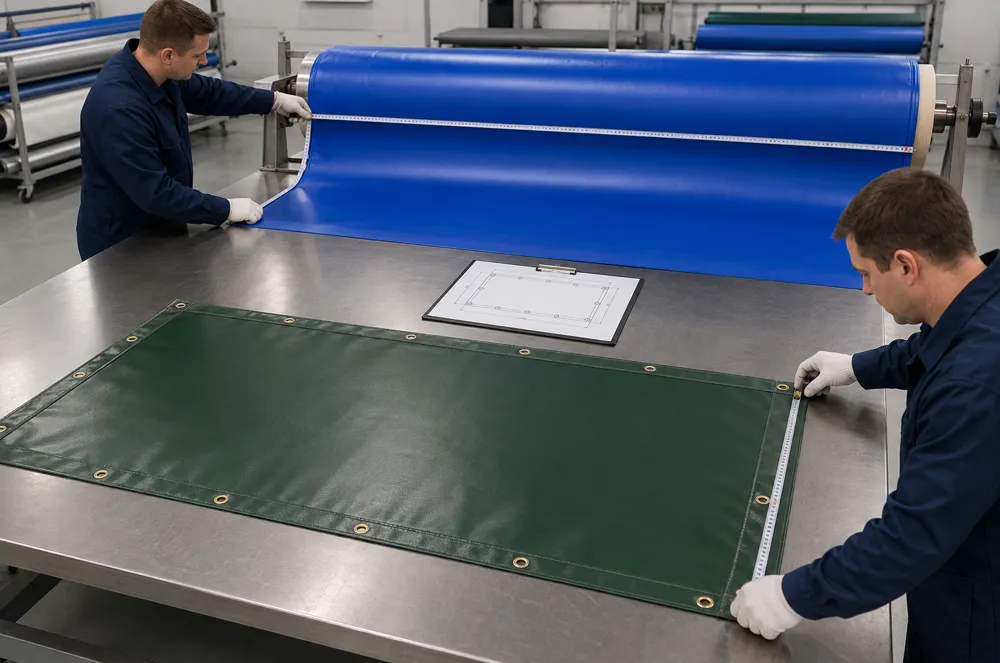
For custom-made tarps, a small width change can move the job from one-panel cutting to multi-panel tarp fabrication. That change affects labor, seam strength review, finished appearance, inspection time, and where the seam should sit. I usually check roll width before discussing edge hardware because the panel plan becomes the base for every later cost decision.
II. Calculate Tarp Cutting Loss Before Comparing Custom Tarp Price
Tarp cutting loss is the material left after useful panels are cut from the roll. It becomes part of the real finished tarp cost even if the buyer only receives the finished covers. A size that looks only a few centimeters wider may break the cutting plan and create a long leftover strip that cannot match another panel.
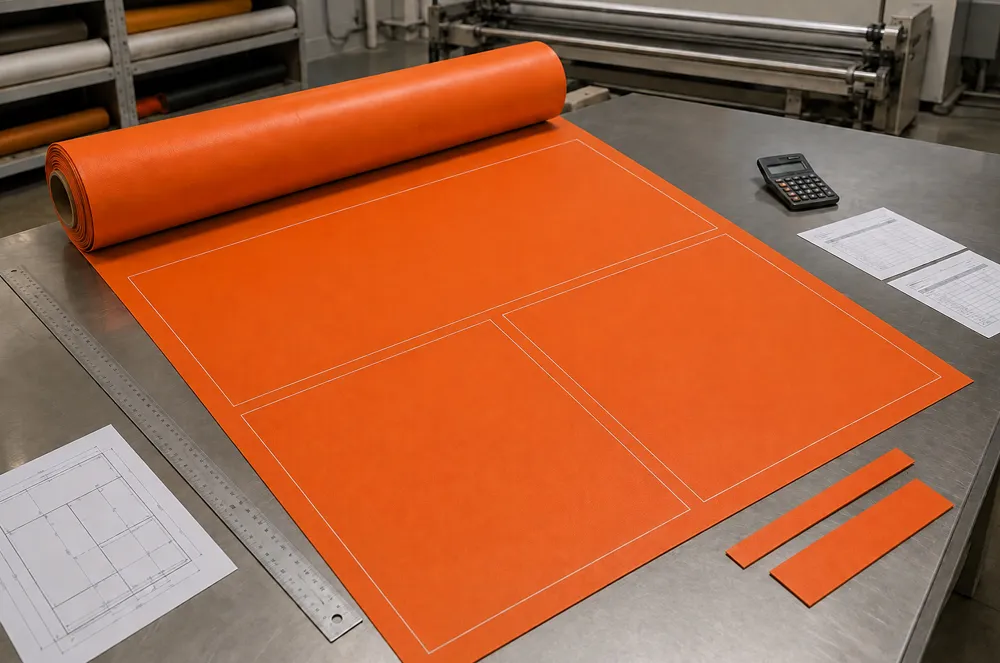
That is why a lower GSM is not always the reason for a lower custom tarp price. PVC coated fabric width, roll inventory, size mix, color batch, and cutting layout can all change material consumption. If a project has several sizes, we review them together instead of pricing each size in isolation. Sometimes a small adjustment in finished size or seam position can reduce waste without changing how the cover works.
| Cost driver | What the factory checks | Why it changes the quote |
|---|---|---|
| Finished size vs roll width | Finished tarp size, tolerance, hem allowance, and available tarp roll width | Decides whether the cover can be made as one panel or needs extra welded panels |
| Tarp cutting loss | Material yield, leftover strips, size mix, and repeat cutting plan | Shows material consumption beyond the finished area shown on the drawing |
| Tarp seam layout | Seam position, welding length, stress zone, water flow, and appearance line | Affects welding quantity, inspection points, field performance, and visible finish |
| Oversized custom tarp handling | Folding direction, packed size, lifting method, labels, and export carton or pallet plan | Large covers may need different packing and handling even when square meters look normal |
| Tarp quotation variables | Roll material requirements, quantity per size, seam preference, edge design, and packing target | Lets the supplier quote the real fabrication plan instead of only the finished area |
III. Plan Tarp Seam Layout, Welding Quantity, and Stress Position
Tarp seam layout changes both cost and product behavior. More panels usually mean longer welding length, more inspection points, and more chance for appearance variation. A seam in the wrong place can also create rubbing, folding, or water-flow issues in the field, especially when the tarp is pulled tightly over a frame or load.
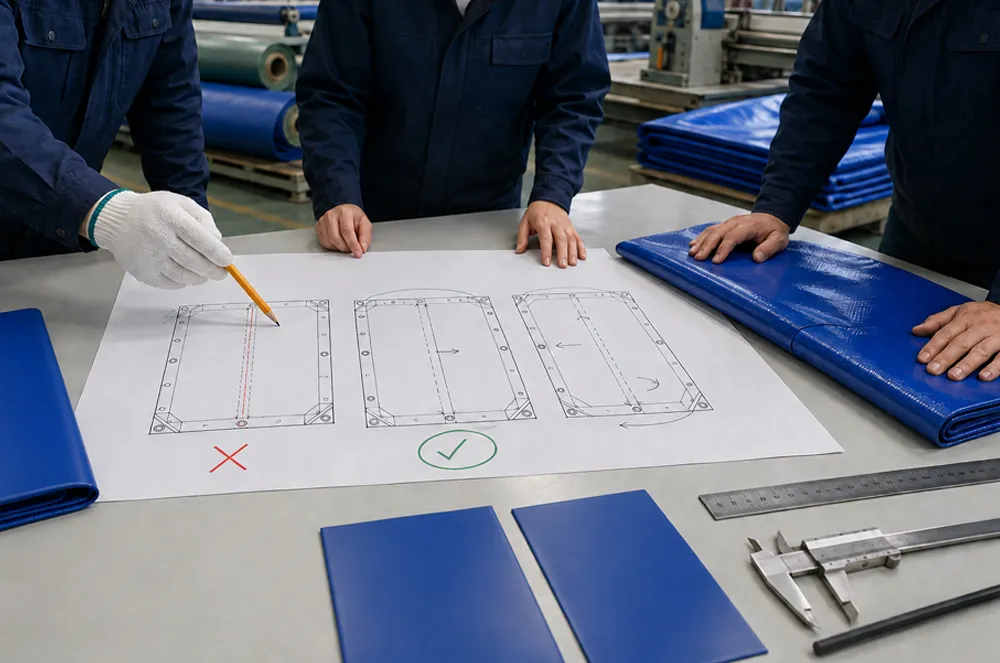
In our factory review, I prefer to see a simple sketch before confirming large covers. The sketch helps us decide whether the seam should be centered, moved to a low-stress zone, or aligned with the way the tarp will be folded and fixed. The cheapest seam position on paper is not always the safest seam position in use.
IV. Review Oversized Custom Tarps, Handling, and Packing Cost
An oversized custom tarp may have a reasonable finished area but still create extra handling cost. Large welded panels can be harder to move, inspect, fold, label, and pack. If the cover must fit a container, machine frame, truck body, or temporary structure, the fold direction and seam position should be planned before production.
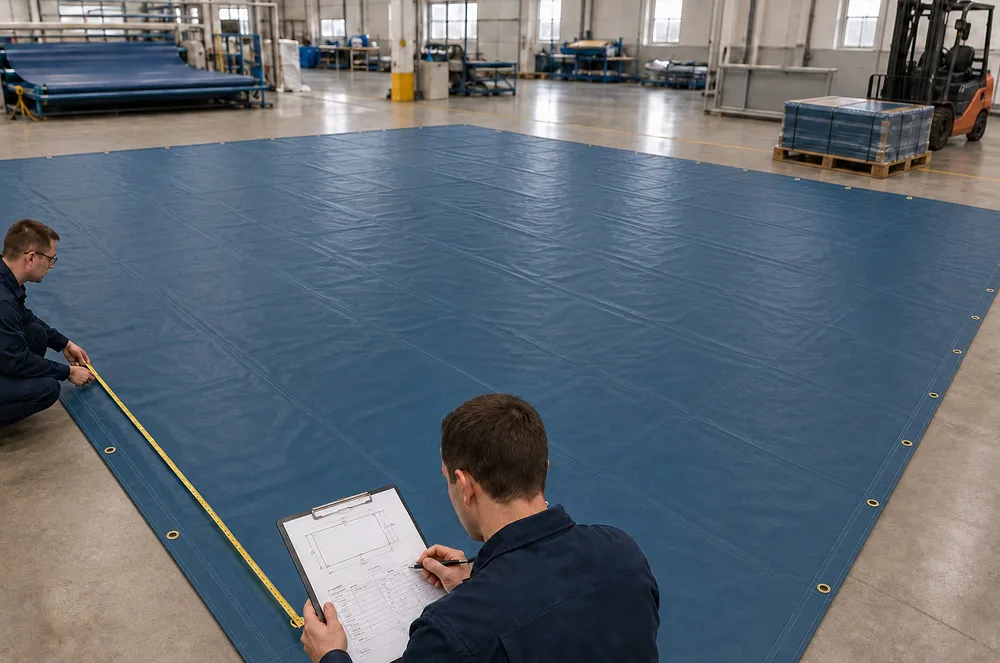
PVC tarpaulin selection still matters, but roll width explains why two quotations can differ even when GSM looks similar. The same GSM can behave differently depending on base fabric, coating formula, peel strength, tear strength, welding method, and process stability. Roll width and cutting loss sit on top of those material factors, so buyers should ask whether the price is based on finished area only, material consumption, or a full fabrication plan.
V. Send Roll Material Requirements and Size Mix Before Quotation
The fastest way to get a realistic custom tarp cost is to send the finished size, quantity per size, preferred seam position, roll material requirements, edge design, and packing target together. If the buyer already knows the preferred PVC coated fabric width or roll width limit, include it. If not, the factory can suggest a practical layout after checking material availability.
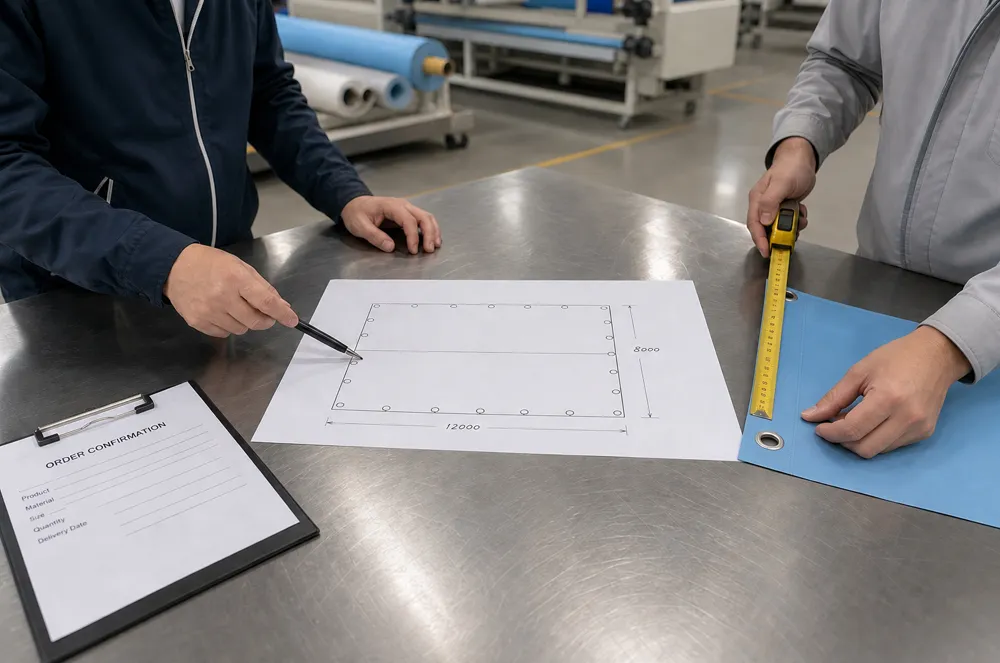
For bulk custom tarps, this information can reduce back-and-forth before sampling and avoid comparing quotes that are not built on the same cutting layout. A good price discussion should separate material specification, tarp cutting loss, seam layout, welding quantity, edge accessories, and export packing. Then the buyer can see whether the cost difference comes from the fabric, the fabrication plan, or the way the finished tarp is packed and delivered.