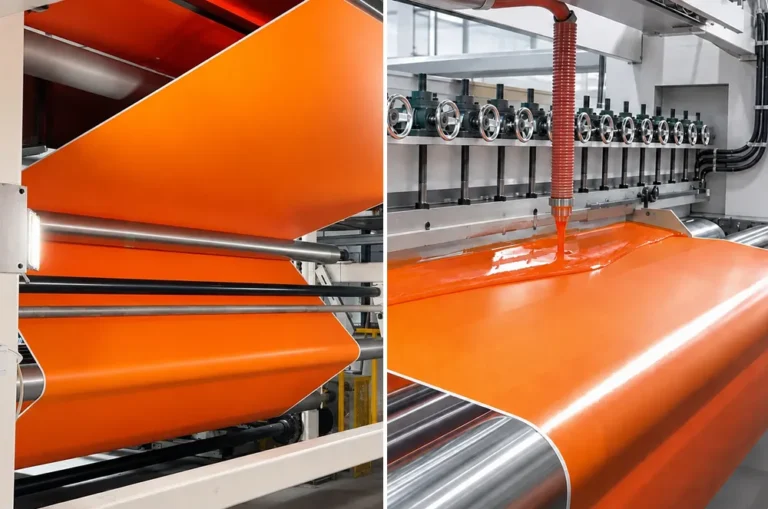
Pool liner thickness matters, but it should never be selected as a number alone. For commercial pools, the liner has to resist water pressure, cleaning traffic, chlorine exposure, surface abrasion, corner stress, and welded-seam movement. A thicker liner can help, but service life also depends on reinforced fabric, PVC formulation, installation quality, water chemistry, cleaning tools, and how the pool is used.
For LonaTarp projects, we usually start with the pool drawing and the operating environment before discussing thickness. We do not retail one standard liner from stock. Custom pool liner production is made to order, and bulk projects normally start from 5,000 sqm of fabric with sample confirmation before mass production.
I. What Is a Pool Liner in a Commercial Pool System?
What is a pool liner? In a commercial project, it is the flexible waterproof layer installed inside the pool shell or panel system. It protects the structure from water contact, creates the visible interior surface, and helps the pool operator maintain a clean, usable basin. For PVC and vinyl liner projects, the liner is normally more than a plain plastic sheet. The buyer should check the PVC layer, reinforced fabric, surface finish, color stability, welding performance, and resistance to the project’s water and cleaning conditions.
This distinction matters because many quotation mistakes start from a simple request such as “send me a thick liner.” A commercial buyer needs to know whether the project is a hotel pool, resort pool, steel-panel pool, renovation project, training pool, or water park pool. Each environment creates different stress on the liner surface and seams.
II. Thickness Is a Starting Point, Not the Full Specification
The right pool liner thickness depends on how the liner will be loaded and maintained. A lightly used decorative pool does not create the same demand as a public pool, rental facility, or water park area. Floor zones, wall panels, steps, corners, drains, and fittings also have different stress levels.
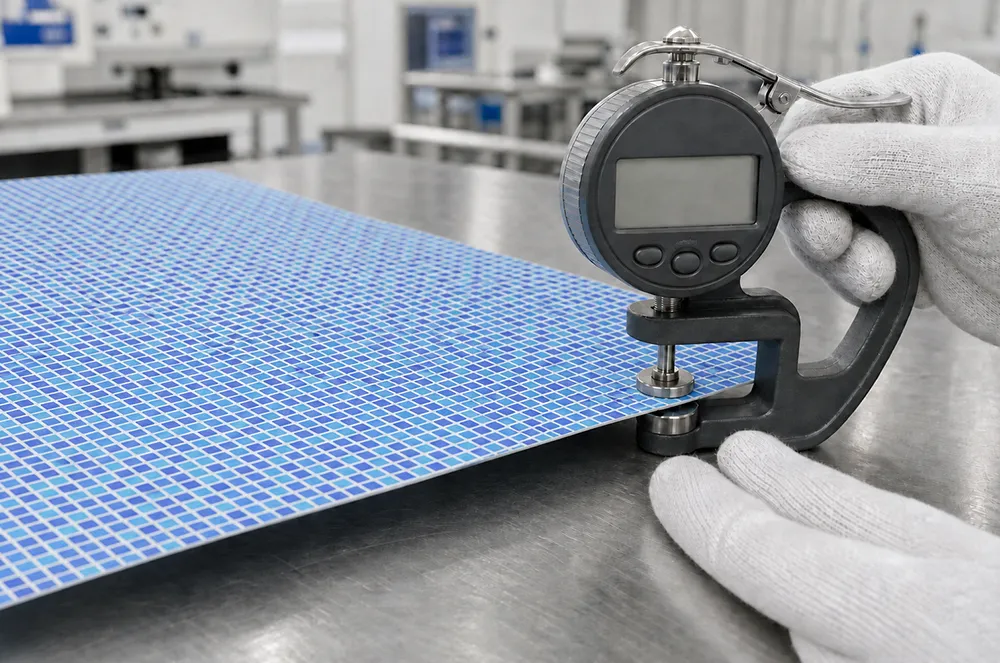
When we review a liner request, we look at thickness together with these points:
| Specification point | Why it affects the liner decision |
|---|---|
| Reinforced base fabric | Adds dimensional stability and helps resist tearing around stress points. |
| PVC coating formulation | Affects flexibility, chlorine resistance, color stability, mildew resistance, and weldability. |
| Welding method and seam layout | Poor seams can fail even when the sheet itself is thick. |
| Surface finish | Smoothness, slip feel, cleanability, and printed pattern durability matter in public-use pools. |
| Installation details | Corners, stairs, fittings, drains, and wall transitions often fail before the flat center panel. |
| Maintenance routine | Cleaning tools, chemical balance, winter closure, and water replacement affect the liner over time. |
For procurement, this means a thickness number should be written with fabric structure, coating performance, width, color, welding requirement, sample test, and inspection standard. If two suppliers only quote thickness, the cheaper quote may hide a weaker base fabric or unstable coating.
III. How to Compare Vinyl Pool Liner Thickness
Vinyl pool liner thickness is often described in mil, gauge, or millimeters, depending on the market. Buyers should be careful because naming systems are not always used consistently across suppliers. A “gauge” label may not tell you the measured thickness, reinforced structure, coating quality, or welding behavior.
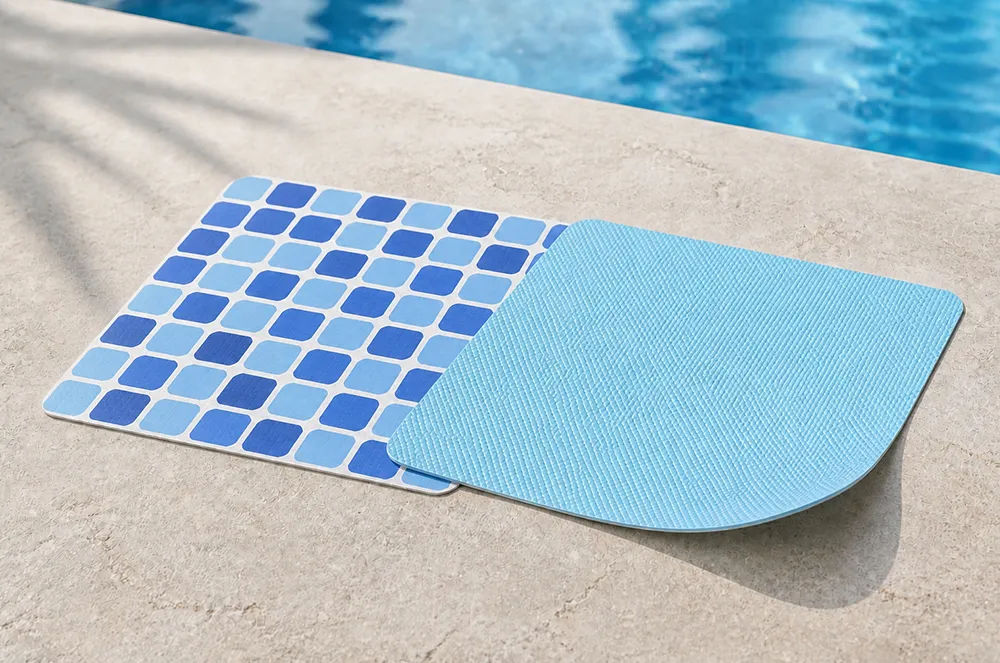
For commercial pool liner projects, ask for the actual measured thickness and the material construction. For a PVC pool liner, confirm the fabric type, coating weight, total GSM, surface treatment, and whether the material is suitable for hot-air or high-frequency welding. If the liner is printed or patterned, also check color stability, abrasion, and whether printed areas can affect welding or long-term appearance.
Thickness comparison becomes much more useful when it is connected to a real pool drawing. Large flat areas, wall height, stairs, curved corners, fittings, and overflow edges all influence cutting and seam layout. In production, we prefer to confirm a small sample or trial weld before bulk production, especially when the project has a new color, surface finish, or chemical-resistance requirement.
IV. Does Thickness Decide How Long a Vinyl Pool Liner Lasts?
How long does a vinyl pool liner last? Thickness is only one part of the answer. A thicker liner may give more material margin, but it cannot compensate for poor welding, wrong installation tension, sharp substrate edges, aggressive cleaning tools, unstable water chemistry, or unsuitable PVC formulation.
In our factory discussions, service life is treated as a risk-control question. We check whether the liner will face high chlorine exposure, outdoor sunlight, frequent cleaning, heavy foot traffic, winter storage, mildew risk, or contact with rough concrete or metal panels. We also look at seam direction and corner reinforcement, because many liner problems start where the material is cut, welded, folded, or fixed.
Instead of asking for a guaranteed year number, commercial buyers should ask for the specification logic: why this thickness, why this base fabric, what welding method, what sample check, what surface requirement, and what inspection points before shipment. That makes the service-life conversation more useful than a simple promise.
V. Where Commercial Liners Usually Need More Attention
Not every area of the pool needs the same engineering attention. The flat wall or floor panel may look important, but the highest risk often appears at details: inside corners, steps, drain openings, skimmer areas, ladder positions, wall-to-floor transitions, and welded overlaps.
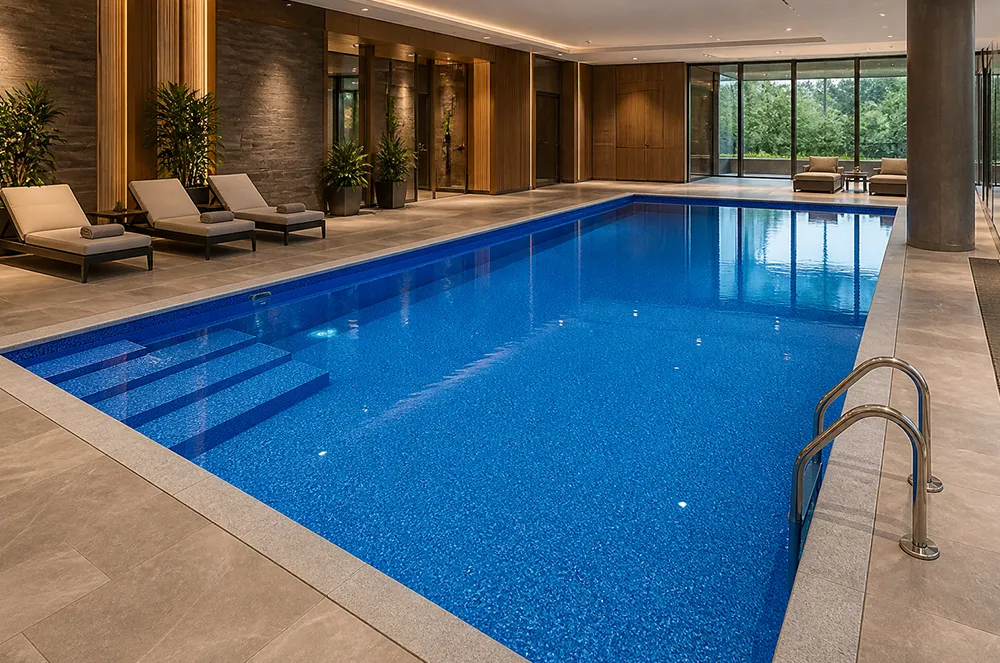
These details are why a commercial pool liner should be reviewed from drawings instead of only from a size list. A good drawing helps the supplier plan panel direction, seam positions, cutting allowance, reinforced areas, and packing sequence. It also reduces installation surprises at the jobsite.
If the project includes special surface color, printed pattern, anti-mildew requirement, or stronger chlorine-resistance target, tell the supplier before sampling. Additives and surface treatments can improve one property while affecting flexibility, welding window, or cost. The right choice is the one that fits the project’s actual exposure and inspection requirement.
VI. RFQ Checklist for a Commercial Pool Liner Project
For a useful quotation, send more than the pool length and width. A commercial pool liner request should include:
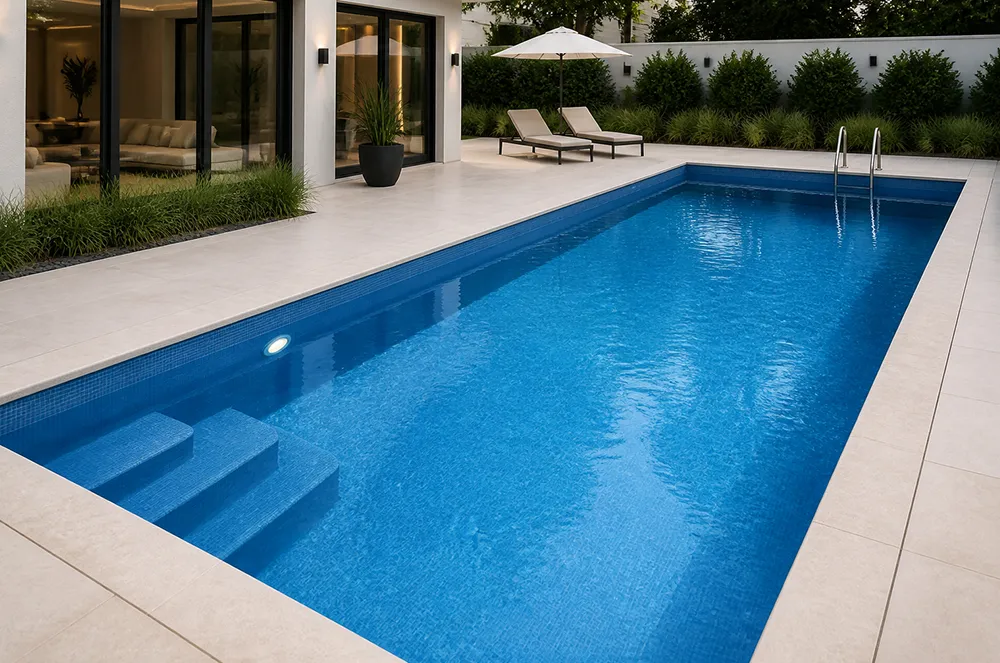
- Pool drawing, depth, wall height, steps, drains, skimmers, ladders, and irregular shapes.
- Indoor or outdoor use, sunlight exposure, heating, and seasonal closure plan.
- Expected surface: solid color, printed pattern, anti-slip feel, or easy-clean finish.
- Thickness target, measured unit, reinforced fabric requirement, and total GSM if available.
- Welding method, seam layout preference, and installation responsibility.
- Chemical exposure, mildew risk, cleaning method, and local inspection requirement.
- Quantity, project schedule, sample approval plan, packing requirement, and destination country.
LonaTarp can support custom pool liner projects for hotels, resorts, public pools, pool contractors, water parks, and distributors. We can also align sample checks with your project’s quality control requirements before bulk production. MOQ normally starts from 5,000 sqm of fabric, and production is made to order rather than pulled from retail stock.
VII. FAQ
Is a thicker pool liner always better?
No. A thicker liner can add material margin, but base fabric, PVC formulation, weld quality, installation, and maintenance often decide the real project result.
Should I choose pool liner thickness by mil, gauge, or millimeter?
Use the unit required by your market, but ask the supplier to confirm the measured thickness and full material construction. Do not compare gauge names alone.
Can LonaTarp supply one replacement liner for a home pool?
No. LonaTarp focuses on B2B custom production and bulk projects. We do not retail single standard replacement liners.
What should be checked before mass production?
Check the approved sample, measured thickness, reinforced structure, welding result, color, surface finish, packing method, and inspection criteria before the bulk order starts.