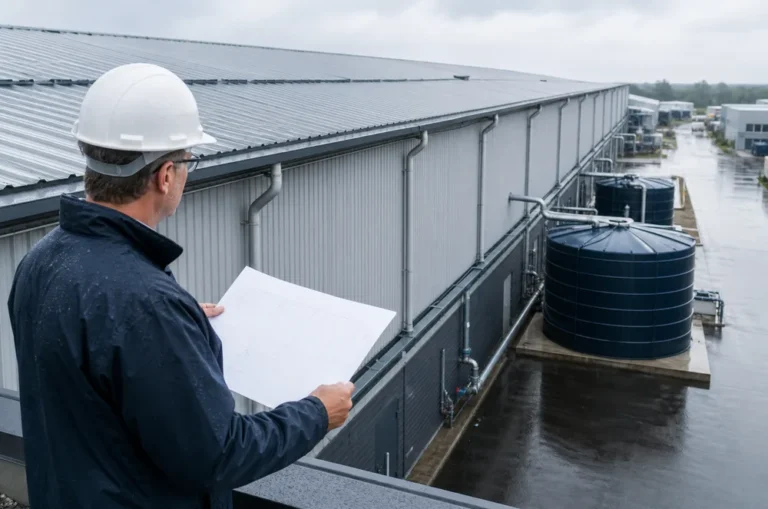
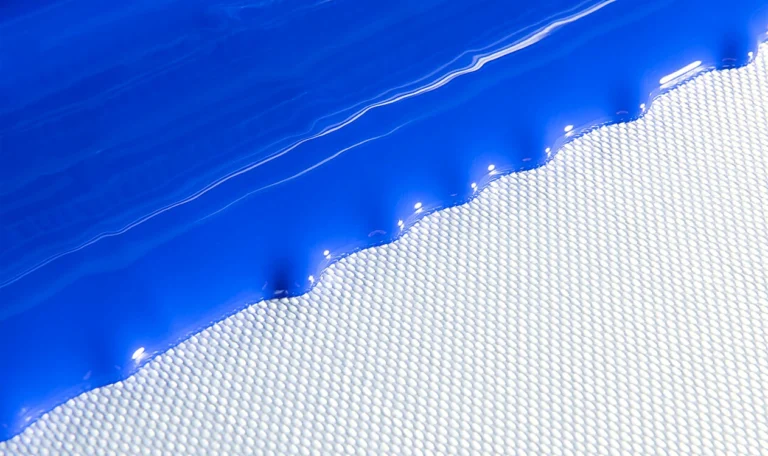
PVC coated fabric applications range from truck covers, tents and industrial curtains to machinery protection, flexible water tanks, inflatable products and sports equipment. These products share a common material principle: a textile reinforcement provides mechanical support, while the PVC coating creates a flexible protective surface.
However, the same PVC coated fabric is not suitable for every application. A truck cover must withstand road movement, tension and repeated handling. An inflatable product needs low air leakage and reliable welded seams. A flexible water tank requires a material suitable for prolonged liquid contact and the pressure created by stored water.
For industrial fabricators, manufacturers and material buyers, understanding these differences is more useful than choosing a material by weight alone. This guide explains where PVC coated polyester fabric is used, which properties matter in each application, and what should be verified before selecting a material for production.
I. What Are the Main Applications of PVC Coated Fabric?
PVC coated fabric is widely used to manufacture flexible industrial products that require a combination of strength, protection and processability.
Common PVC coated fabric uses include truck tarpaulins, trailer side curtains, tents, temporary shelters, industrial partitions, machinery covers, agricultural covers, flexible liquid containers, inflatable products, protective equipment covers and sports mat coverings.
These applications can be grouped into several major areas:
- Transportation: Truck covers, trailer curtains and protective cargo covers.
- Construction and shelters: Industrial tents, temporary warehouses, awnings and protective membranes.
- Industrial facilities: Flexible curtains, workshop partitions and equipment covers.
- Agriculture and outdoor storage: Weather-resistant coverings for goods, equipment and temporary storage areas.
- Liquid containment and inflatables: Purpose-designed flexible tanks, bladders and inflatable structures.
- Manufactured protective products: Gym mat coverings, selected industrial bags and protective padding covers.
The broad application range comes from the ability to adjust the polyester reinforcement, PVC coating formulation, surface finish and fabrication characteristics.
Yet each application creates its own requirements. A waterproof coating may be sufficient for one cover but inadequate for a liquid storage tank. Similarly, a fabric with good tensile strength may still fail if its coating adhesion, flexibility or seam construction does not match the finished product.
II. Industrial Uses of PVC Coated Polyester Fabric
Truck Tarpaulins and Transportation Covers
Truck and trailer covers are among the most established uses of PVC coated polyester fabric.
Their main purpose is to protect cargo from rain, dirt and exposure during transportation. However, the material must also tolerate conditions that are different from those encountered by a stationary cover.
Road vibration, wind movement, repeated tension, folding and contact with cargo can place considerable stress on the fabric.
For these applications, the polyester reinforcement contributes tensile and tear resistance, while the PVC coating protects the surface from water and abrasion.
Material selection should consider the required strength, coating durability, flexibility and resistance to outdoor exposure.
A material that performs well as a stationary warehouse cover may not be appropriate for a truck curtain that is opened, closed and tensioned repeatedly.
The final cover design also matters. Reinforced edges, attachment points and joining methods must be compatible with the selected material.
Tents, Awnings and Temporary Structures
PVC coated fabric is used in industrial tents, temporary warehouses, canopies and selected membrane structures.
These applications require a flexible protective surface that can cover large areas while resisting rain and environmental exposure.
The most important material requirements depend on the structure.
A temporary storage shelter may prioritize water resistance, UV stability and practical fabrication. A tensioned membrane structure may require more demanding tensile performance, dimensional stability and verified resistance to weathering.
Where flame-retardant performance is required, the material must be selected and documented against the applicable project standard.
Low-temperature flexibility is another consideration. Materials exposed to repeated folding or installation in cold climates must remain suitable for those conditions.
The supporting frame, membrane geometry, connection details and installation design also affect the performance of the finished structure. Material strength alone does not establish the safety or suitability of the complete system.
Industrial Curtains and Machinery Covers
Factories and workshops use PVC coated fabric for flexible barriers, partitions, protective curtains and equipment covers.
These products may be designed to prevent water splashes, limit dust movement, separate work areas or protect equipment when it is not in use.
Unlike large outdoor covers, some industrial curtains are opened, folded or moved many times during a working day.
In these situations, flexibility and resistance to repeated bending can be as important as tensile strength.
Surface characteristics also influence maintenance. Smooth, suitable PVC finishes may make cleaning easier, while the selected formulation must withstand the expected contact with oils, cleaning agents or other workplace substances.
For an industrial curtain near heat sources or in an area with specific fire requirements, the buyer should also confirm the applicable temperature and flame-performance limits.
Not every PVC coated fabric provides the same degree of chemical resistance, fire performance or flexibility. These characteristics must be verified for the selected grade.
Agriculture, Outdoor Storage and Protective Covers
PVC coated tarpaulin fabric is also used to produce agricultural covers, outdoor storage sheets, equipment protection and other weather-resistant products.
The main requirement is often to keep rain and dirt away from the protected goods.
However, the operating environment can create additional demands.
A cover installed over agricultural equipment may face abrasion from exposed edges. A storage sheet used outdoors may remain under sunlight for extended periods. A cover that workers remove daily must withstand repeated handling.
For these products, buyers should consider UV exposure, tear resistance, coating condition and the intended handling frequency.
Waterproof fabric also does not guarantee that everything underneath will remain dry. Condensation, poor drainage and incorrectly positioned openings may still cause moisture problems.
The selected material should therefore be evaluated together with the intended cover design and the conditions in which it will be used.
Flexible Water Tanks and Inflatable Products
Selected PVC coated fabrics can be engineered for flexible water tanks, liquid bladders and inflatable structures.
These applications have more demanding containment requirements than ordinary protective covers.
A flexible water tank must retain liquid while the material and its welded joints withstand the pressure created by the stored water.
The coating must be appropriate for the liquid, and the fabric must provide the required mechanical strength and resistance to leakage.
For inflatable products, airtightness becomes a critical consideration.
A material can resist water penetration without meeting the air-retention requirements of an inflatable structure. The coating, reinforcement, joining process and finished seams must work together.
Repeated inflation, deflation and folding may also create stresses that need to be evaluated.
Where the product will store drinking water or another regulated liquid, additional material compatibility and applicable compliance evidence are required. Ordinary industrial PVC coating specifications do not establish suitability for these uses.
These products should use grades designed and verified for their intended containment function, rather than general-purpose tarpaulin material selected only by GSM.
Sports Mats, Protective Padding and Industrial Products
PVC coated polyester fabric is also used as an outer covering for selected gym mats, protective pads and other manufactured products.
In these applications, the fabric usually provides a protective outer surface rather than the cushioning itself.
The material may need to resist abrasion, repeated contact, cleaning and handling. Flexibility is important where the covering wraps around foam or other internal structures.
For protective bags and similar industrial products, the requirements may shift toward cut resistance, tear strength, surface cleanability and sewing compatibility.
Some products may also need specific surface textures, colors or printed patterns.
The important point is that these finished products do not all use the same fabric construction. Their material requirements depend on the physical stresses, processing method and expected conditions of use.
III. Which PVC Coated Fabric Properties Matter for Different Uses?
Understanding PVC coated fabric applications requires looking at how each part of the material contributes to performance.
Polyester reinforcement and mechanical strength
The polyester base fabric provides structural support. Yarn size, weave or knit construction and fabric density influence tensile strength, tear behavior and dimensional stability.
This matters particularly for truck covers, large tensioned panels and products that experience repeated mechanical stress.
However, denier and GSM alone do not establish a finished material’s strength. The actual coated fabric should be evaluated through appropriate testing.
PVC coating and protective performance
A continuous PVC coating provides a barrier against liquid water and helps protect the textile underneath from direct environmental exposure.
The coating formulation, thickness, coverage and adhesion affect its performance.
A material with insufficient coating continuity or poor adhesion may fail despite having a relatively strong reinforcement.
For a detailed explanation of the difference between surface waterproofing and internal moisture movement, see Is PVC Fabric Waterproof?.
Flexibility and repeated movement
Some applications use a fabric in a fixed position, while others require frequent folding, rolling or bending.
Trailer curtains, removable covers and inflatable products may experience repeated movement.
The material must retain suitable flexibility and coating integrity under those conditions, including the expected working temperature.
Weather resistance and surface finish
Outdoor applications may require UV stabilization, color retention and resistance to surface aging.
The appropriate formulation and surface treatment depend on the exposure environment and required service performance.
A short-term protective sheet and a membrane intended for extended outdoor exposure should not automatically receive the same specification.
Fabrication and joining compatibility
PVC coated fabric may be cut, sewn, printed or thermally welded, depending on the selected grade and surface treatment.
The chosen process must produce suitable seams and finished components.
For example, certain surface finishes can affect welding behavior, while different coating constructions can change the way a seam responds to heat and pressure.
Fabricators should verify joining performance on the selected material rather than assuming that every PVC coated fabric behaves identically.
Further processing details are covered in our PVC Fabric Welding Guide.
IV. How Do Material Requirements Change by Application?
Different applications expose PVC coated fabric to different mechanical and environmental conditions.
The following table connects common end products with their main material concerns and suitable verification approaches.
| Application | Main Performance Concern | What to Verify |
|---|---|---|
| Truck and trailer covers | Tearing, abrasion and repeated tension | Tensile strength, tear resistance, coating durability and fabrication trials |
| Tents and temporary shelters | Weather exposure, tension and project fire requirements | Mechanical properties, UV performance, flame-test documentation where required and seam strength |
| Industrial curtains | Flexibility, cleaning and repeated movement | Flexing behavior, surface compatibility and joining performance |
| Outdoor storage covers | Water penetration, abrasion and environmental aging | Water resistance, coating condition, tear strength and outdoor performance |
| Flexible water tanks | Liquid leakage, pressure and material compatibility | Liquid suitability, coating integrity, welded seam performance and relevant containment tests |
| Inflatable products | Air leakage and repeated folding | Air retention, seam integrity, coating adhesion and flexing performance |
| Sports mat coverings | Abrasion, cleaning and surface wear | Surface durability, flexibility and compatibility with the intended manufacturing process |
| Printed protective products | Print quality, adhesion and appearance retention | Surface finish, printing trials, ink compatibility and expected exposure conditions |
These are material evaluation priorities, not universal test requirements or guaranteed performance levels.
For example, a water tank may require testing at a specified hydrostatic pressure, while an industrial curtain may be evaluated primarily for flexibility and surface durability.
A buyer should determine the actual failure risks before requesting a material specification.
This also explains why two PVC coated polyester fabrics with similar nominal weights may perform very differently in service.
The polyester reinforcement, PVC coating, surface treatment and fabrication compatibility must be considered together.
V. Where Is General-Purpose PVC Coated Fabric Not Enough?
PVC coated fabric is versatile, but its application range should not be confused with universal suitability.
A waterproof grade is not automatically airtight. An ordinary cover material may resist rain but lack the coating and seam performance necessary for an inflatable product. Airtight applications require a purpose-designed material and validation of the finished construction.
A protective fabric is not automatically suitable for liquid storage. Water tanks and other liquid containment products require appropriate compatibility, mechanical performance and seam testing. Drinking-water contact and certain chemicals introduce additional requirements.
A standard outdoor coating is not automatically suitable for every climate. Extended UV exposure, low temperatures, high temperatures and repeated folding can affect materials differently. The proposed grade must be assessed against the actual service conditions.
Flame-retardant performance must be specified. General PVC coated fabric should not be presented as meeting a particular flame standard without appropriate evidence for that exact product.
Material construction also matters. Solid PVC coated polyester fabric, open PVC-coated mesh and PVC-laminated fabric are not interchangeable materials. Their structure and performance should be matched to the finished product.
In some applications, a laminated construction or another polymer-based technical fabric may be more appropriate than the proposed coated material.
The correct choice depends on the required function, not simply on the material’s commercial name.
VI. What Should Fabricators Verify Before Selecting a Material?
After identifying the intended application, the next step is to translate its working conditions into measurable material requirements.
A useful material review starts with the end product and the stresses it will experience.
For example, an equipment cover that remains outdoors requires a different evaluation from an inflatable bladder or a curtain that moves repeatedly.
The buyer should identify the required reinforcement, finished material weight, coating construction, surface finish, usable roll width and processing method.
Mechanical and protective properties can then be checked against agreed methods.
Relevant examples include ISO 1421 for tensile strength, ISO 4674-1 for tear resistance, ISO 1420 for water penetration resistance and ISO 2411:2024 for coating adhesion.
These standards describe test methods. They do not establish one universal passing value for every PVC coated fabric application.
Where the end product relies on welded or sewn joints, a representative fabrication trial is also important. Material test results alone cannot prove the performance of finished seams and attachments.
Before approving bulk production, buyers should compare the proposed material with a reference sample or agreed specification and confirm which test results are necessary for their particular application.
LonaTarp supplies custom PVC coated fabric rolls for industrial converting. If you are evaluating a new application, provide the intended finished product, working environment, required performance, processing method and any reference sample or specification. These details provide a more reliable starting point for material selection than GSM alone.
VII. Frequently Asked Questions
Can PVC coated polyester fabric be used outdoors?
Yes. Suitable PVC coated polyester grades are used for truck covers, tents, outdoor storage and other exposed products. The required UV resistance, flexibility, weathering performance and mechanical strength depend on the specific application and exposure conditions.
Is PVC coated fabric suitable for inflatable products?
Certain PVC coated fabrics are designed for inflatable applications, but ordinary waterproof grades should not automatically be considered airtight. The material and finished seams must meet the relevant air-retention and mechanical requirements.
Can the same PVC coated fabric be used for tents and truck covers?
Sometimes a material may be suitable for both, but this should not be assumed. Truck covers can experience repeated handling, abrasion and road-related stresses, while tents may have different tension, weathering and flame-performance requirements.
Can PVC coated fabric be printed or welded?
Many PVC coated fabrics can be printed or thermally welded, but compatibility depends on the coating formulation, surface finish and processing conditions. Printing and welding trials should be completed on the actual proposed material.
Is PVC coated mesh suitable for the same applications as solid coated fabric?
Not necessarily. Open mesh allows air and water to pass through its openings, making it useful for certain screens, ventilation and shade applications. Solid coated fabric is more appropriate where continuous coverage and a water barrier are required.
Does a heavier PVC coated fabric always perform better?
No. Greater weight does not automatically mean higher tear strength, better coating adhesion or greater durability. Reinforcement construction, coating quality, flexibility and the actual working conditions all affect performance.
What is the most important factor when choosing PVC coated fabric for an industrial product?
The intended end use is the starting point. Once the application, mechanical stresses, exposure conditions and fabrication method are clear, the buyer can define the necessary material properties and acceptance requirements. A material should be selected against those conditions rather than its name or weight alone.
VIII. Final Thoughts
PVC coated fabric is used across transportation, construction, industrial protection, outdoor storage, liquid containment and manufactured protective products because its reinforcement and protective coating can be engineered for different requirements.
But the broad range of PVC coated fabric applications does not mean that one material grade will work everywhere.
The most reliable approach is to start with the finished product, understand the conditions it must withstand, and identify the properties that must be verified before fabrication and bulk production.
For material buyers and fabricators, this creates a clearer connection between the intended application and the PVC coated fabric specification needed to support it.