Polyester and PVC are different materials that are usually used together, not against each other. Polyester is a woven textile that gives strength; PVC is a plastic that makes a surface waterproof. For outdoor covers, tents and tarps, PVC-coated polyester combines both. For light, breathable or indoor products, plain polyester is usually the better fit.
When buyers search for polyester vs PVC fabric, they are usually comparing three things, not two: plain polyester cloth, PVC on its own as a film or sheet, and PVC-coated polyester, which is what most tarps, truck covers and tent fabrics are made of. Mixing them up is how the wrong material gets ordered. This guide separates the three, compares them side by side, and shows which one fits which product, based on what we see every day as a PVC coated fabric manufacturer.
I. Polyester vs PVC: What Each Material Actually Is
Polyester Fabric
Polyester is a synthetic fiber made from PET (polyethylene terephthalate), spun into yarn and woven or knitted into fabric. It is strong for its weight, keeps its shape, dries quickly and takes dye and print well. Because it is a textile, it has gaps between the yarns. Polyester resists water better than natural fibers such as cotton, but water can still pass through the weave under pressure or long exposure, so uncoated polyester is water-resistant at best, not waterproof.
PVC (Vinyl)
PVC (polyvinyl chloride) is a plastic. In flexible products it is used as a film or sheet, softened with plasticizers. “Vinyl” is the everyday name for the same material; our guide to PVC vs vinyl fabric explains how the two names are used in supplier quotes. A continuous PVC film has no fibers and no pores, so water cannot pass through it. On its own, though, PVC film has limited tear strength: once it is cut or punctured, a tear spreads easily. That is why PVC film is used where waterproofing and clarity matter more than strength, such as clear curtains, windows and liners.
PVC-Coated Polyester: The Material Most Buyers Actually Mean
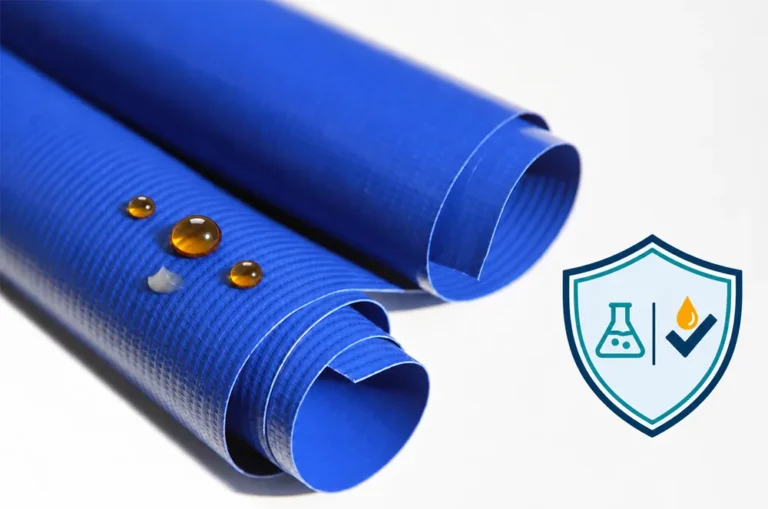
PVC-coated polyester puts the two together. A polyester base fabric, often called the scrim, is coated with PVC on one or both sides. We apply the PVC in two main ways: knife coating, where PVC paste is spread onto the fabric and fused with heat, and lamination, where pre-formed PVC film is bonded to it. The polyester carries the load and stops tears from running; the PVC seals the surface, adds color and makes the fabric weldable. In the trade it is also called vinyl coated polyester, and it is the material behind our PVC coated polyester fabric rolls.
II. Polyester vs PVC Fabric: Side-by-Side Comparison
The table compares the three materials as they are typically used in industrial products. Actual results depend on yarn, density, coating weight and formulation, so use it to narrow the choice, then confirm on a sample.
| Property | Plain Polyester Fabric | PVC Film or Sheet | PVC-Coated Polyester |
|---|---|---|---|
| Waterproof | No; water-resistant at best | Yes | Yes |
| Breathable | Yes | No | No (unless an open mesh) |
| Tensile and tear strength | High for its weight | Low to moderate; tears spread once started | High; the scrim stops tears spreading |
| Weight and feel | Light, soft, textile-like | Smooth, plastic feel | Heavier, firmer, smooth surface |
| Water at cut edges | The whole fabric can wet through | No wicking | The surface is sealed, but cut edges can wick unless the base is impregnated |
| Cold weather | Has no plasticized layer to stiffen | Stiffens and can crack unless formulated for cold | Depends on the formulation; cold-resistant grades are available |
| Sun and UV | Needs UV treatment for long exposure | Needs UV stabilizers | UV stabilizers and top coats protect the coating, and the coating shields the yarns |
| Cleaning | Absorbs dirt; needs washing | Wipes clean | Wipes clean; top coats help shed dirt |
| Printing | Takes dye and print well | Depends on the surface and the ink | Printable PVC tarpaulin grades take solvent-based digital, UV digital, screen and roller printing |
| Joining | Sewn; needle holes leak | Welded | Welded (high-frequency, hot-air, hot-wedge) or sewn |
| Flame retardancy | Needs FR yarn or treatment | Needs FR formulation | FR formulations available, tested to the standard required |
Price is not in the table on purpose. It depends on weight, coating and additives, so compare quotes for the same construction and the same test requirements.
III. Is PVC Better Than Polyester?
Neither is better in every case, because they do different jobs. The useful question is what your product has to survive.
Where Polyester Wins
Plain polyester is the better choice when the product must breathe, stay light and soft, or pack small: apparel, linings, indoor soft goods and anything worn against the skin. It also has no plasticized layer that stiffens in the cold.
Where PVC Wins
PVC wins when water must be kept out completely and the surface must be wiped clean: liners, clear curtains, windows and waterproof covers. Clear PVC film is also the choice when you need to see through the material.
Why Most Heavy-Duty Products Use PVC-Coated Polyester
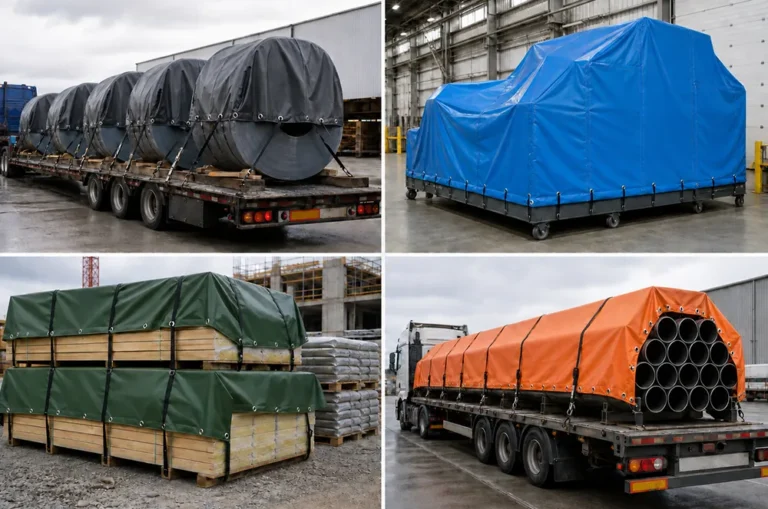
For tarps, truck covers, tents, awnings and fabric buildings, neither material alone is enough. Polyester alone leaks; PVC alone tears. Coated together, they give a fabric that is waterproof, resists tearing and can be welded into large panels for long outdoor use. That is why PVC-coated polyester is the standard material for heavy outdoor covers. Hems, grommets and seams still have to be designed and tested on the finished product.
IV. Which Material for Which Product?
| Product | Usual Choice | Why |
|---|---|---|
| Truck tarps, side curtains, industrial covers | PVC-coated polyester | Waterproof, tear-resistant at fixing points, weldable into large panels |
| Tents, event structures, fabric buildings | PVC-coated polyester, often flame-retardant | Welded watertight seams, strength under tension, FR test reports for public use |
| Awnings and shade structures | PVC-coated polyester for full rain protection; coated or uncoated polyester for lighter shade | PVC blocks rain and sheds dirt; polyester is lighter and puts less load on the frame |
| Inflatables (boats, pools, water toys) | Air-tight PVC-coated or laminated polyester | Must hold air under pressure; plain polyester cannot |
| Tool bags, dry bags, equipment cases | PVC-coated polyester | Waterproof, wipe-clean, weldable seams |
| Clear curtains, windows, see-through covers | PVC film, plain or reinforced | Transparency plus waterproofing |
| Apparel, linings, light soft goods | Plain or lightly coated polyester | Breathable, light, comfortable |
For see-through applications, see our clear vinyl fabric rolls. For inflatables, we inspect the coating, test peel adhesion and weld sample seams, so you can test air retention on your own design.
V. Disadvantages of PVC Fabric, and What a Good Specification Fixes
PVC has real drawbacks, and buyers should know them. Most of them are controlled at the formulation stage, which is why the specification matters more than the material name. Two of them are not.
The main ones are weight and no breathability, stiffening in the cold, UV ageing, plasticizer and stabilizer compliance, smoke in a fire and limited recycling routes. If your product needs airflow, an open-weave PVC mesh fabric keeps the PVC protection on each yarn while letting air through. For cold use, we take −30°C as the benchmark for our conventional cold-resistant range: a fixed installation is a practical use at that temperature, while repeated folding needs extra validation, as explained in PVC fabric in cold weather.
UV stabilizers in the compound and an acrylic or PVDF top coat over the surface protect the coating and help it shed dirt. We apply these top coats in-house. For damp uses such as tents and pool liners, anti-mildew agents can be added to the compound; our functional additives guide explains how they and flame retardants work.
Non-phthalate plasticizers such as DOTP are available. The heat stabilizer system is selected to match the lead limits of your market, so tell us the destination at the inquiry stage. We can provide REACH, RoHS, CPSIA and California Proposition 65 test reports for the ordered material. Where fire performance is required, a flame-retardant formulation is tested to the relevant standard. We hold flame-retardant test reports to NFPA 701 and DIN 4102 B1 for the constructions they cover.
Smoke and recycling are the two drawbacks a specification does not remove. A flame-retardant grade resists ignition, but PVC that burns still gives off dense smoke and can release hydrogen chloride. Recycling of coated fabric depends on the collection and processing routes available where the product ends its life, so we do not make a general recyclability claim.
Each drawback, and what to write into a specification to control it, is covered in our guide to the advantages and disadvantages of PVC fabric.
VI. Other Coated Polyesters: PU, Acrylic and TPU
PVC is not the only coating on polyester, and buyers often weigh these alternatives:
- PU-coated polyester: usually a thin coating on a lighter fabric, common in bags and outdoor gear where low weight matters.
- Acrylic-coated polyester: used for shade fabrics and blackout backings where a textile look and light weight matter more than full waterproofing.
- TPU-coated polyester: often considered when low weight, repeated folding or a welded thermoplastic seam matters, as in bladders, inflatables and dry bags. It can cost more than PVC. See our TPU fabric range.
For heavy industrial covers, tents and tarps, PVC-coated polyester remains the most common balance of waterproofing, strength, weldability and cost.
VII. How to Specify PVC-Coated Polyester for Your Product
Once PVC-coated polyester is the right material, “PVC polyester” on a quotation is not enough. Two rolls with the same name and weight can perform very differently. Agree these points with your supplier:
- Base fabric: yarn denier and density. Our base fabric guide shows how to read them.
- Weight and thickness: the total weight in gsm or oz/yd² and the thickness, which are separate measurements. See our PVC tarpaulin weight and thickness guide.
- Coating: one or both sides, knife-coated or laminated.
- Additives and test reports: what your market and product require.
- Surface finish, joining method and roll format.
We supply rolls up to 3.2 m (126 in) wide, with a minimum order of 5,000 m² per specification. Production usually takes about 15 days after the specification is confirmed, and shipping time is additional.
If you are replacing an existing material, send a sample. We match the construction, make a trial sample for approval and weld test pieces on our own equipment, so you see how the fabric behaves before bulk production.
VIII. FAQ
Is PVC a polyester?
No. PVC is polyvinyl chloride, a plastic used as the coating or film. Polyester is the fiber in the base fabric. “Vinyl fabric” usually means polyester coated with PVC, but always check the base fabric and coating on the specification.
Is a poly tarp made of polyester?
Usually not. “Poly tarp” commonly means a tarp made from woven polyethylene with a PE coating or lamination, not polyester. A vinyl tarp is PVC-coated or PVC-laminated polyester. Our guide to vinyl tarps vs poly tarps compares the two.
Is polyester waterproof?
Not on its own. Tightly woven or treated polyester is water-resistant, but water can pass through the weave. It becomes waterproof when coated or laminated with PVC, PU or TPU.
Is PVC-coated fabric breathable?
No. A solid PVC coating blocks air and water vapor. If airflow is needed, use PVC mesh fabric or plain polyester.
Can PVC-coated polyester be sewn?
Yes. It can be sewn or welded. Welded seams are watertight; sewn seams need tape or sealing if the product must stay waterproof.
Which lasts longer outdoors, polyester or PVC?
For products left outside, PVC-coated polyester usually lasts longer, because the coating shields the yarns from water and UV. With a full UV package and a suitable top coat, our heavy grades are built for 12 to 20 years in permanent structures. Lighter tarp grades that are folded and handled often will last less, so tell us how the product is used and we will match the grade.