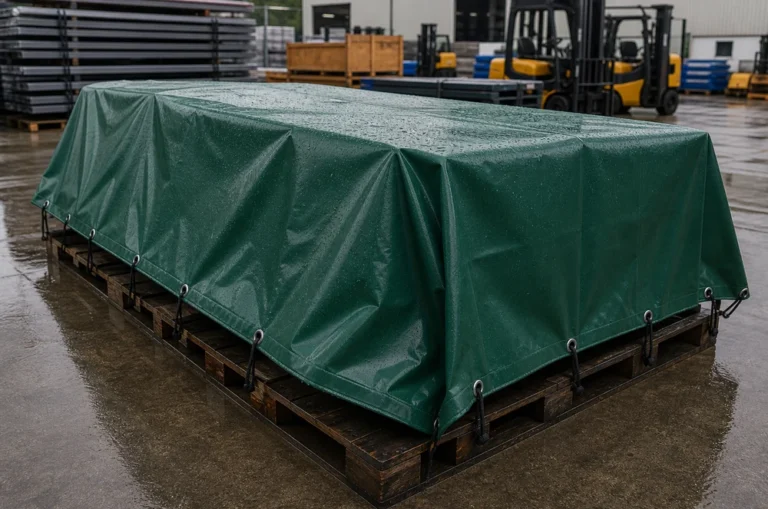
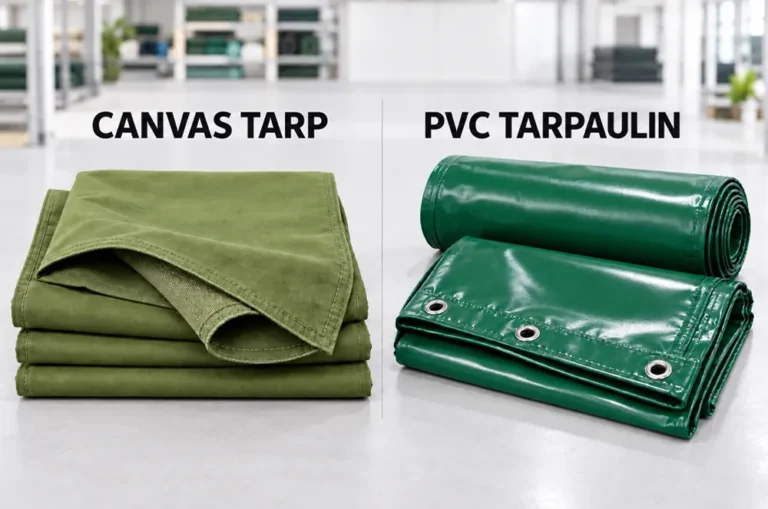
To clean PVC coated fabric, remove loose dirt, wash gently with a compatible mild cleaner and soft tools, rinse thoroughly, and dry the material before packing it away. Follow the care instructions for the exact fabric, including its topcoat and any printing. A method suitable for one surface may damage another.
For fabricators and industrial maintenance teams, the aim is to remove contamination while preserving the surface needed for the product’s next use. Start with the least aggressive method permitted for the material, and check the result before treating a larger area.
I. Check the Fabric and Surface Before Cleaning
Identify the Coated Face, Topcoat and Any Printing
PVC coated fabric combines a textile backing with a PVC layer on one or both sides. It is often called vinyl fabric, but that name does not identify the complete construction. Check the PVC and vinyl fabric construction if the material description is unclear.
The surface you are cleaning may be PVC, a protective topcoat, ink, or a finish applied over the print. These surfaces can have different cleaning restrictions. A single-sided material also has a different reverse face, so do not assume that a method approved for its PVC side permits soaking the entire fabric.
| Check before washing | Why it changes the method |
|---|---|
| Coated face and reverse face | Identify which surfaces the care instructions cover. |
| Protective topcoat | Use the cleaner and tools permitted for that finish. |
| Printing or print-receptive surface | Confirm ink and surface compatibility before applying detergent or rubbing. |
Printed surfaces need their own care instructions. The cleaning guidance for unprinted, lacquer-coated PVC polyester must not be assumed to cover ink or a print-protection varnish. Confirm the requirements for both the ink and any protective finish before applying a cleaner to printed rolls or finished graphics.
Check the Care Instructions and Intended Use
Match the material reference or product label to its care document. Check the permitted cleaner, dilution, water temperature, contact time, tools, rinsing method and drying requirements. If the material cannot be identified, confirm it before attempting chemical stain removal.
This surface-cleaning routine is intended for ordinary dirt on suitable industrial coated fabrics. Liquid-contact systems, medical products and other specialized uses require procedures matched to their service. For example, pillow tank cleaning and maintenance also depends on the stored liquid, internal access and fittings. Exterior fabric cleaning does not establish that a tank interior has been disinfected or released for reuse.
II. Choose a Compatible Cleaner and Soft Tools
Prepare Soft Tools and a Cleaner Approved for the Material
For ordinary surface dirt, water and a mild soap or detergent permitted for the fabric are the usual starting point. Use a clean, nonabrasive cloth or sponge. A soft-bristle brush may be suitable where the care instructions allow it; avoid stiff brushes, scouring pads and abrasive powders.
Prepare enough clean water for rinsing, and keep dirty tools separate from clean ones. A cloth that has picked up sand can scratch the next section even if it originally felt soft.
The cleaner’s name alone is insufficient. IVK Europe’s 2012 industry handling manual lists chemical composition, concentration, temperature and contact duration among the factors affecting resistance to a cleaner. Its cleaning section covers lacquer-coated PVC polyester and excludes printed products and print-protection varnishes. Follow the material’s care limits and the cleaner’s usage instructions.
Can You Use Alcohol, Bleach or a Pressure Washer?
Use these methods only when the instructions for the specific fabric and finish permit them. “Suitable for PVC” on a general cleaning product does not establish compatibility with every flexible coating, topcoat or ink.
| Method | Routine cleaning decision | What must be confirmed |
|---|---|---|
| Rubbing alcohol or other solvents | Do not substitute them for the approved mild cleaner. | Permission for the coating, topcoat and printing, including concentration and contact time. |
| Bleach or oxidizing cleaners | Do not use a general stain-removal recipe. | The specific material, cleaning product, dilution and exposure allowed. |
| Pressure washing | Use gentle rinsing unless pressure cleaning is expressly permitted. | Equipment settings, spray arrangement and restrictions near seams or damaged areas. |
| Steam or hot-air treatment | Do not use heat to accelerate cleaning or drying without permission. | The permitted process and temperature limits for the complete product. |
The IVK manual warns against high-pressure cleaners, hard brushes and intense scrubbing for the materials within its scope. Check the exact product instructions before selecting a cleaning method. A low-pressure setting or a successful test on another fabric does not establish that a pressure washer is suitable for your material.
Test a Small Area Before Cleaning the Whole Surface
Where the proposed method is permitted, try it on a small, inconspicuous area with the same surface finish. Use the planned dilution, tool and contact time, then rinse and let the area dry. Compare it with an untreated area for color, gloss, haze, tackiness or changes to the print.
Stop if the surface changes. An unchanged appearance is only a preliminary check; it does not demonstrate that repeated cleaning will preserve strength, coating adhesion or other specified performance. Recurring industrial cleaning should be qualified for the material and service conditions.
Where coating adhesion needs to be measured, ISO 2411:2024 specifies a test method for coated fabrics. A visual spot check cannot replace this measurement; the standard does not approve a cleaning chemical.
III. How to Clean PVC Coated Fabric Step by Step
Remove Loose Dirt Before Wet Cleaning
Work on an accessible surface that can be cleaned without dragging the fabric over rough ground. If a loose panel is laid down, use a clean, smooth support. Keep grit away from both faces so it is not pressed into the underside during washing.
Remove leaves and loose debris without scraping. Rinse away sand and dust with clean water using the permitted gentle method before rubbing. If an area is already cracked, peeling or damaged at a seam, leave it for assessment rather than scrubbing across it.
Apply the Approved Cleaning Solution as Directed
Prepare the cleaner at the dilution specified for the fabric and cleaning product. Use the permitted water temperature and apply it with the approved soft tool. Do not increase the concentration because one patch is more heavily soiled.
Keep any required contact time within the stated limits. A longer soak is not an automatic improvement and should not be improvised for a persistent stain.
Wash Gently in Small Sections
Clean an area small enough to wash and rinse before the solution dries on the surface. Use light pressure, keeping the cloth or sponge free of grit. Change or rinse the tool as it collects dirt.
Watch the surface as you work. If the coating or print appears to transfer, becomes cloudy, or changes in feel, stop that treatment. A remaining mark should be identified before another cleaner or stronger scrubbing is tried.
Rinse Away Dirt and Cleaner Residue
Rinse the washed section thoroughly with clean water, carrying away loosened dirt and cleaning solution. Include folds and overlapping areas where the finished product allows access. Keep contaminated runoff from flowing back across a section you have already rinsed.
Do not leave cleaner residue in place because the surface looks cleaner while wet. Complete rinsing before moving the fabric to drying and inspection.
Let the Fabric Dry Before Inspection and Packing
Allow the material to dry in the arrangement permitted for the product, with airflow reaching wet surfaces. A flat panel, hemmed cover and assembled curtain may dry differently because their folds and components hold water in different places.
Do not pack the fabric while it is still damp or use unapproved heat to shorten drying time. Once dry, check the cleaned surface before folding or rolling it. The inspection points below help prevent remaining moisture or new damage from being hidden inside the package.
IV. Handle Common Dirt and Stains Within the Material’s Limits
Mud and General Surface Dirt
For known mud and ordinary dust, begin by removing loose particles and rinsing before gentle washing. If dirt remains in a textured area, use only the soft tools and cleaning time allowed for that surface. Avoid scraping dried deposits or grinding them into the coating.
Oil, Grease and Unknown Residues
Identify the contacting substance before selecting a treatment. Record whether it was lubricating oil, fuel, adhesive, process liquid or another known material. That information is more useful than asking for a stronger general-purpose cleaner.
Use a degreasing or stain-removal product only when it is compatible with the fabric, finish and contaminant. Unknown industrial residues should be handled under the site’s applicable procedure before ordinary fabric washing begins.
Mildew and Stains That Remain After Cleaning
Removing visible dirt does not establish disinfection, and a color mark can remain after surface contamination has been removed. Do not keep increasing bleach strength or scrubbing pressure to chase the original color. Some discoloration requires a material assessment rather than another cleaning attempt.
| What remains | Next action | Stop when |
|---|---|---|
| Known ordinary dirt | Continue only with the permitted gentle cleaning method. | The surface begins to change or the method no longer removes soil. |
| Oil or chemical residue | Identify the substance and confirm a compatible treatment. | The contact history or treatment compatibility is unknown. |
| Dark spots or persistent color marks | Check the material’s stain or mildew instructions and document the result. | Cleaning affects the finish or the mark persists after the permitted treatment. |
V. Inspect and Store the Fabric After Cleaning
Check Both Faces, Seams and Hems for Trapped Moisture
Check the reverse face as well as the exposed surface. On finished products, inspect the seams, hems, pockets and folded areas that are actually present. They may remain wet after the open panel appears dry.
Let these areas dry fully before packing, with the fabric arranged so moisture can escape. Check any ropes or lining strips as well; the IVK handling manual includes these components in its requirement for complete drying before storage. Use the finished product’s requirements to decide when it is ready for storage, rather than a fixed drying time copied from another material.
Inspect the Dry Surface and Record Any Changes
Compare the dry fabric with its condition before cleaning. Check for residue, unexpected color or gloss changes, persistent tackiness, scratches, peeling and visible seam damage. Record anything that appeared or became clearer during washing.
For a maintenance team, a useful cleaning record includes the material or product ID, cleaning product and dilution, method, date, operator and any unusual result. This makes a later complaint easier to trace and helps prevent an unsuitable method from being repeated across a batch.
Fold or Roll According to the Product’s Care Instructions
Follow the specified folding or rolling method and use clean packaging. Keep the cleaned material away from sharp objects, incompatible chemicals and dirty surfaces during handling. Where the product has hardware, arrange it as instructed so it is not trapped against the fabric.
Store the material under its stated conditions. Do not assume that one storage temperature, roll position or maximum storage period applies to every coated fabric and finished cover.
VI. Know When to Stop Cleaning and Request an Assessment
Persistent Tackiness, Yellowing and Permanent Staining
A surface that remains tacky or discolored after the permitted cleaning process needs further investigation. Appearance alone cannot tell you whether the cause is residue, contact staining or a change in the material. Avoid trying successive solvents to find one that removes the symptom.
Research on plasticized PVC helps explain this caution: a review of plasticizer migration from PVC coatings describes extraction of plasticizers by contact liquids. An unsuitable solvent can therefore change the coating rather than simply remove dirt. This provides background on the mechanism; compatibility still needs confirmation for the actual industrial fabric.
Photograph the affected and unaffected areas, and record where the change appears and what the fabric contacted. For persistent color changes, see the causes of PVC tarpaulin discoloration to distinguish the next diagnostic task from routine washing.
Cracking, Peeling, Exposed Reinforcement or Seam Damage
Cleaning cannot restore missing coating or rejoin a separated seam. If washing reveals cracking, peeling, exposed reinforcement or joint damage, stop treating that area and request an assessment of the material and finished product.
| Finding after cleaning | Decision before further treatment |
|---|---|
| New haze, tackiness or apparent coating or print transfer | Stop the cleaning method and retain the cleaner and material details for review. |
| Peeling, cracking or exposed reinforcement | Assess the damaged material rather than continuing stain removal. |
| An opening or separation at a seam | Have the finished product assessed before return to service. |
The location of damage and the surrounding material condition matter when deciding what can be repaired. Our guide to PVC tarp service life and replacement assessment covers that broader decision. Send the assessor the product reference, photographs, contact history and cleaning details so the next action is based on the actual condition.