I. Truck and Cargo Covers
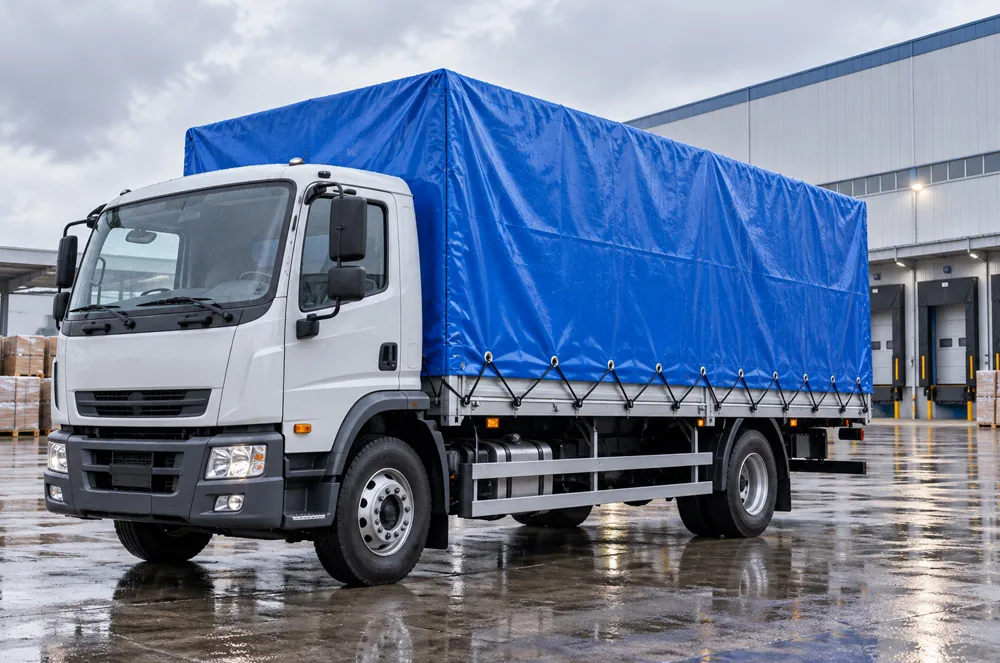
Truck and cargo covers are one of the most common uses of vinyl tarps in transport operations.
In transport, the cover does more than block rain. It may face wind movement, repeated tension, road exposure, cargo contact and frequent fastening. These conditions put stress not only on the fabric surface, but also on the edges, seams and fixing points.
Vinyl tarps are often considered for this application because they can be made into large finished covers with welded panels, reinforced hems, grommets, D-rings, straps or other fixing details.
For truck and cargo covers, material weight is not the only point to compare. A heavier fabric does not solve every problem if the edge construction or fixing layout is weak.
A large truck cover may use welded PVC panels for the main surface, reinforced hems around the perimeter, and sewn webbing or D-rings at selected fixing points. Each detail solves a different problem: panel size, edge strength and load transfer.
For applications with higher abrasion, tension or repeated-use demands, see
Heavy Duty Vinyl Tarps for finished-product options.
II. Equipment and Machinery Covers
Equipment and machinery covers create a different type of covering problem.
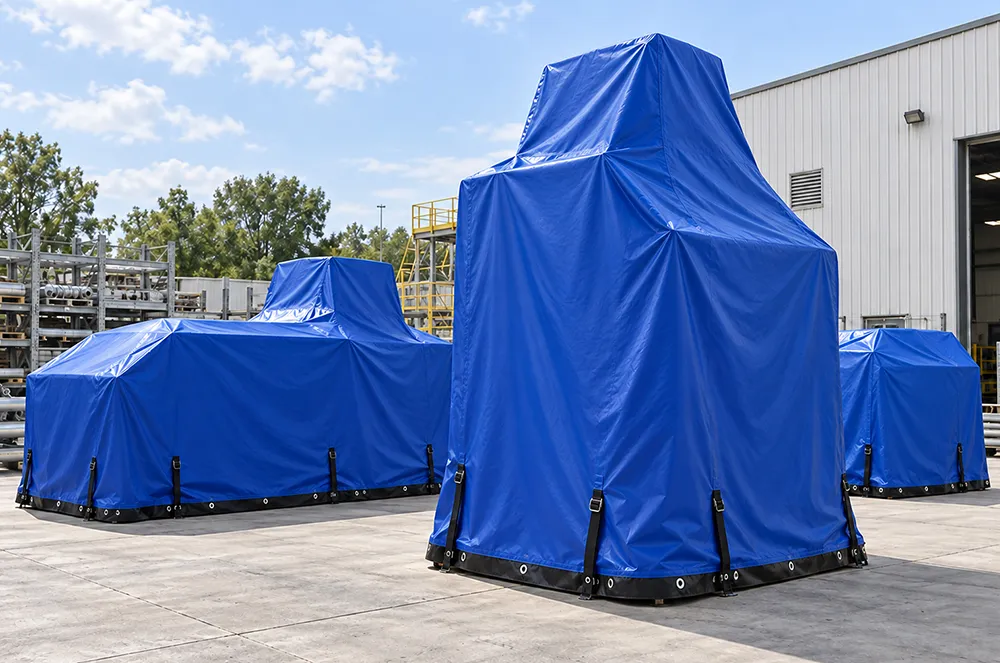
A rectangular sheet may be enough for temporary coverage, but machinery with control panels, exposed handles or sharp corners often needs a more considered finished design.
When planning an equipment cover, look at how the cover will actually be used:
- Fit around the equipment: Shaped panels may reduce loose material and provide better coverage around irregular machinery.
- Access points: Frequently used controls, doors or service areas may need flaps, zippers or other openings.
- Contact areas: Sharp corners and raised components may need additional reinforcement to reduce wear.
- Fixing method: Straps or other attachment points may be needed to keep the cover in position without blocking access.
- Daily handling: If workers remove and fold the cover regularly, finished weight and flexibility become more important.
Vinyl tarps made from PVC-coated fabric are often considered for equipment covers because they can provide a water-resistant surface and be fabricated into custom finished shapes. Final performance still depends on fit, reinforcement and how the cover is secured.
If the machinery requires shaped panels, access openings or special fixing points, a custom vinyl tarp may be more practical than a standard rectangular cover.
III. Construction and Jobsite Protection
Construction and jobsite protection is another important use of vinyl tarps.
Compared with transport covers, jobsite tarps often face more irregular handling. They may be dragged, folded, tied around uneven objects, exposed to rain, placed near rough surfaces or used around temporary work areas.
A tarp placed over sharp material edges may wear quickly if the contact points are not protected. A cover tied too tightly at a weak corner may tear even when the main fabric surface is strong.
This is why construction tarps often fail because of puncture, abrasion or poorly supported corners, not simply because the fabric is “not heavy enough.”
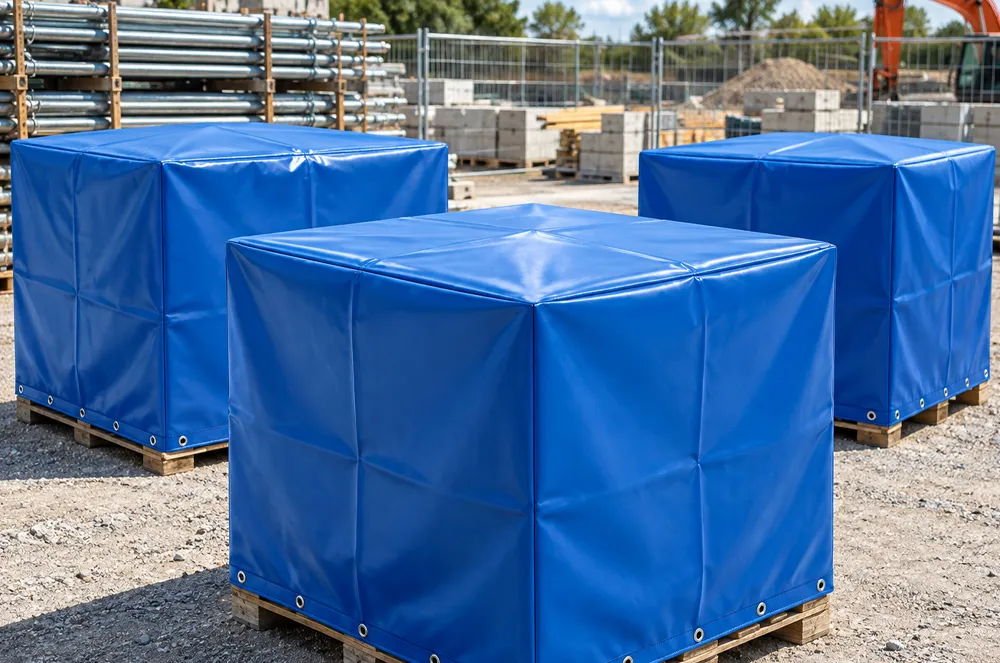
Vinyl tarps may be used on jobsites for covering building materials, protecting equipment, separating exposed work areas or shielding unfinished structures from weather. In each case, the finished cover should match the way it will be handled on site.
For construction use, buyers should look at where the tarp touches rough surfaces, where it will be pulled, and whether additional reinforcement is needed around high-stress areas.
IV. Warehouse Curtains and Industrial Partitions
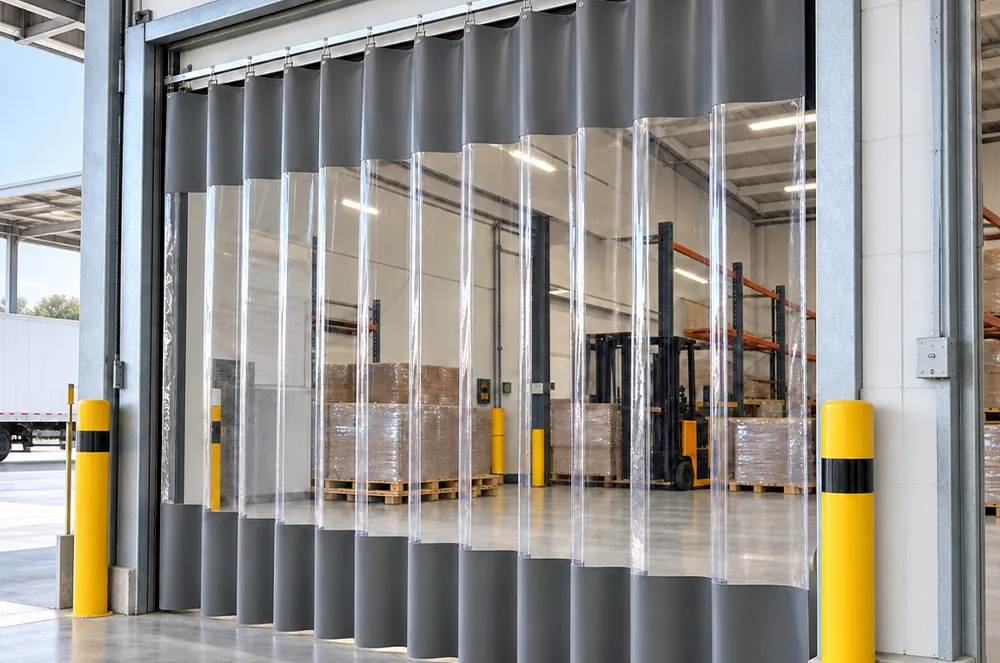
PVC/vinyl tarp fabric is not only used to cover objects from rain. It can also be fabricated into warehouse curtains and flexible industrial partitions.
In this application, the material works more like a movable barrier than a cover. It may be used for warehouse separation, dust control zones, loading-area curtains, work-area partitions or temporary industrial dividers.
The main concerns are different from truck covers or outdoor storage. A warehouse curtain may need to move repeatedly, hang from tracks or hooks, maintain stable dimensions, and include access openings or clear window sections.
A curtain that is too heavy may be difficult to operate. A curtain that is not reinforced properly may deform or tear around hanging points.
PVC-coated vinyl fabrics are commonly used for these applications because they can be made into flexible finished products with reinforced edges, transparent window sections, hanging details and custom dimensions.
If the partition needs special dimensions, access openings, windows or hanging points, this is usually a
custom vinyl tarp or custom PVC curtain project rather than a standard tarp purchase.
V. Outdoor Storage Covers
Vinyl tarps are also used for outdoor storage covers.
Common examples include machinery storage, seasonal agricultural equipment, bulk materials and other goods that need rain and weather protection.
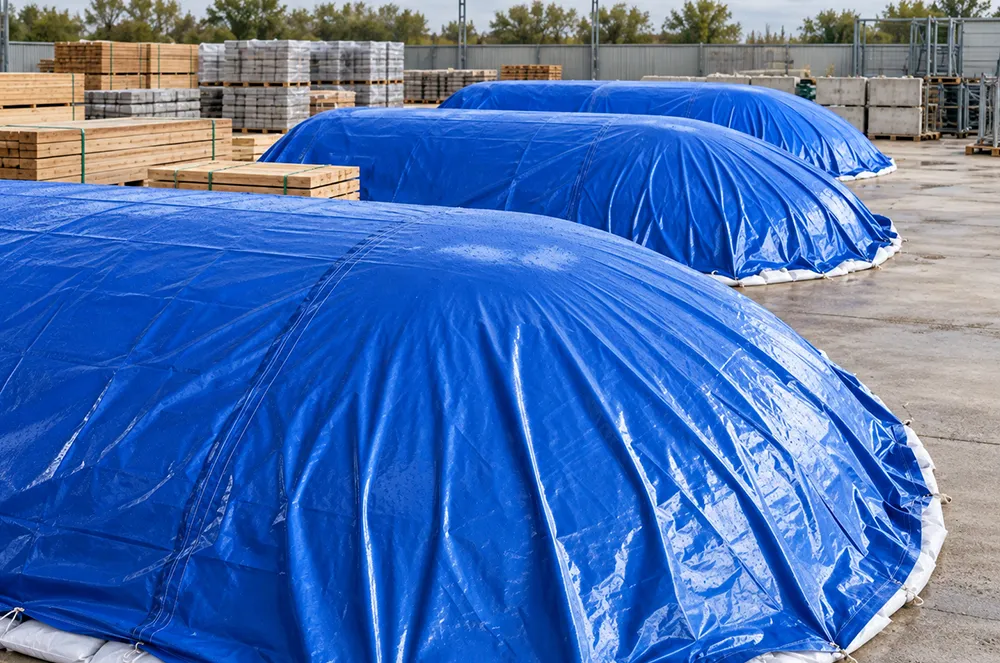
In these applications, the main risks usually include UV exposure, rain, temperature changes, water pooling and wind movement. The cover may stay outside for long periods, so the finished design must suit both the material and the installation method.
Waterproof material does not solve water pooling by itself. If the cover is installed flat and water collects on top, the fabric, seams and fixing points may face extra stress. Shape, slope, drainage and fastening all matter.
For outdoor storage, buyers should consider how long the cover will remain outdoors, whether water can drain away, whether the tarp will face strong wind, and whether the covered goods have sharp edges.
If the cover needs a special shape, equipment-specific dimensions, reinforced fixing points or a more controlled installation method, a custom vinyl tarp may be more suitable than a standard sheet.
VI. What Changes From One Vinyl Tarp Application to Another?
Different applications require different finished tarp designs. The material may look similar, but the risks and fabrication details can change.
This is why buyers should avoid choosing a vinyl tarp only by fabric weight or a general “heavy duty” label.
A tarp for transport may need strong fixing points. A tarp for equipment may need a custom shape. A warehouse curtain may need stable hanging and repeated movement. An outdoor storage cover may need weather resistance and good drainage.
The application changes the finished product.
VII. What Should Buyers Confirm Before Ordering?
Before ordering a vinyl tarp for a specific application, start with the use conditions.
The most useful questions are simple:
- What needs to be covered?
- Will the tarp be used indoors, outdoors or during transport?
- What finished dimensions are required?
- How will the tarp be fixed or installed?
- How often will it be installed, removed or folded?
You do not need a complete technical specification before the first discussion. Start with the application, finished size, fixing method and how the tarp will be used.
These answers help the supplier understand whether the product should be a flat cover, fitted cover, curtain, reinforced transport tarp or another custom finished design.
Conclusion: Choosing the Right Vinyl Tarp Application
Vinyl tarps are used in many commercial and industrial applications, but the finished product should match the job it needs to do.
Truck covers, equipment covers, construction tarps, warehouse curtains and outdoor storage covers may all use PVC-coated vinyl fabrics. The difference is in the finished size, seams, edges, fixing points, reinforcement and installation method.
These are some of the top applications for waterproof vinyl tarps, but the right design still depends on how the cover will be used.
If you need a vinyl tarp for a specific application, share what you need to cover, the finished size, installation method and estimated quantity. LonaTarp can recommend a suitable finished-tarp structure, including material weight, reinforcement, fixing details and custom fabrication options.
Custom finished tarp orders have a 30-piece MOQ.
VIII. Frequently Asked Questions
Are Vinyl Tarps Suitable for Long-Term Outdoor Use?
They can be. The actual performance depends on the material grade, UV exposure, temperature, finished construction and installation method.
For long-term outdoor use, buyers should review not only the fabric surface, but also seams, edges, fixing points and drainage.
Can the Same Vinyl Tarp Be Used for Different Applications?
Sometimes, but only when the applications have similar requirements.
Truck covers, fitted equipment covers and warehouse curtains may use similar PVC-coated fabric, but they often need different finished designs. The fixing method, edge construction and handling conditions can change the product.
Are Waterproof Vinyl Tarps Suitable for Every Covering Job?
No. Waterproofing is only one requirement.
Handling weight, abrasion resistance, breathability, attachment design and installation method may all affect the final choice. In some situations, another material or a different finished design may be more suitable.