What is a batter’s eye? It is a dark, uniform visual backdrop in or beyond center field, aligned with the hitter’s view toward the pitcher, so the baseball is easier to pick up against a clean background. The batter’s eye in baseball may be a permanent wall, a planted background, a dark windscreen, or custom mesh panels on an existing fence. For facility teams, the choice affects sightline approval, material selection, panel fabrication, wind exposure, and whether a simple mesh-panel order is enough or a full structural design is needed.
This article explains the term from a facility and procurement point of view. If you only need the definition, the short answer is simple: a batter’s eye creates a controlled visual field behind the pitcher. If you need to build or replace one, the useful question is different: what kind of background can your field safely support?
I. The Batter’s Eye Meaning Is a Sightline Background, Not One Fixed Product
The practical batter’s eye meaning is not “a screen behind center field” in every case. It means the area that gives the batter a stable, low-distraction background while tracking the pitched ball. The term is used because the background serves the batter’s eye line: it protects the hitter’s ability to see the ball clearly from release to approach.
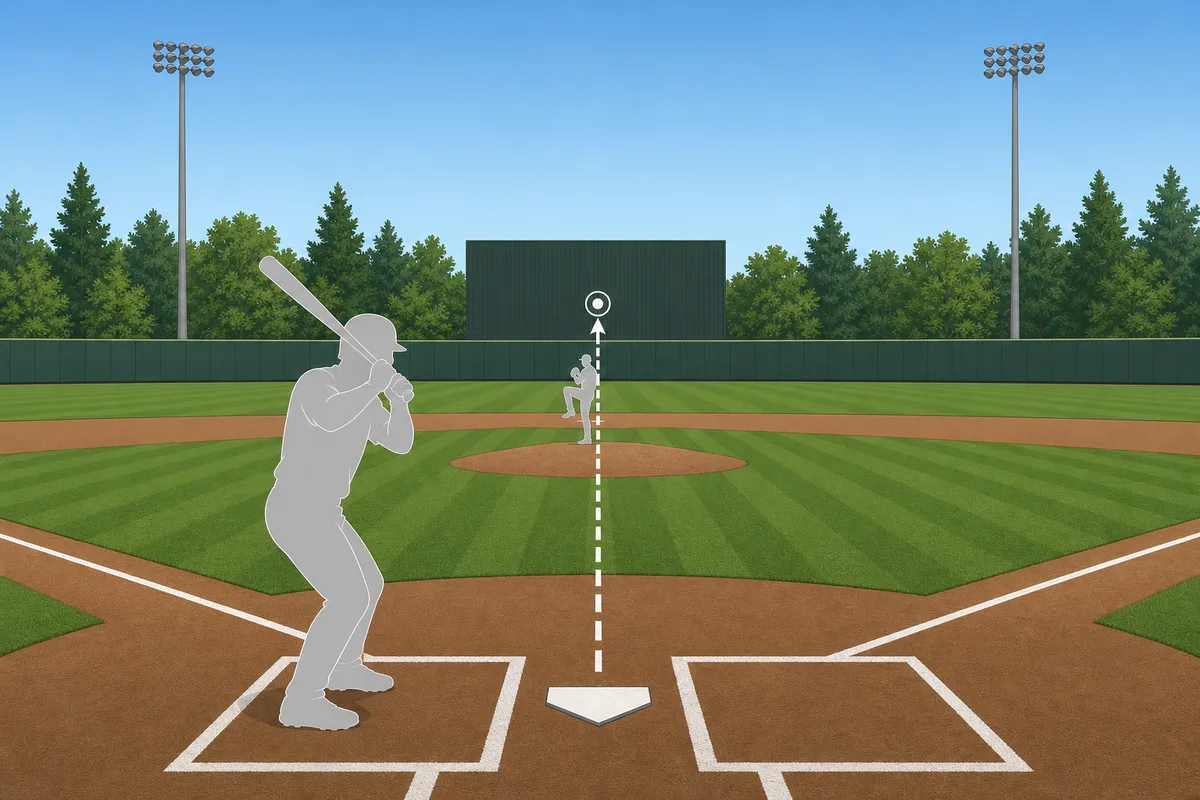
That is why the first decision is visual, not material. A facility should identify the hitter’s sightline, the background behind the pitcher, and any distractions such as spectators, light gaps, signs, trees, scoreboards, vehicles, or mixed-color fencing. After that, the team can decide whether the background should be permanent, seasonal, fabric-based, or part of a larger field structure.
For a supplier, this distinction matters. If a buyer sends only the phrase “batter’s eye,” we usually ask whether they are referring to a wall, a landscape area, a fence-mounted visual screen, or a full engineered system. Each option changes the drawing, material choice, attachment method, inspection responsibility, and quotation scope.
II. Where the Outfield Batter’s Eye Sits on a Baseball Field
An outfield batter’s eye is normally planned in the center-field direction, behind the pitcher’s release area from the hitter’s point of view. On some fields it sits beyond the outfield fence. On other fields, an existing fence, wall, scoreboard face, planted area, or stadium structure becomes part of the visual background.
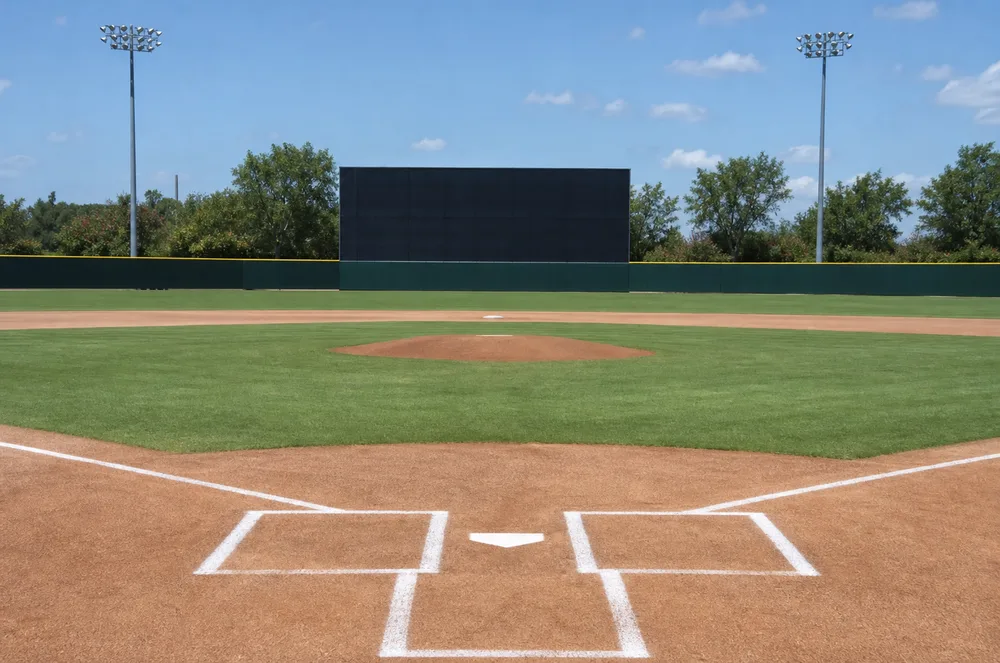
The exact position should be checked from the batter’s box, not only from a site plan. A background that looks wide enough on a drawing may still leave bright gaps, angled distractions, or mixed surfaces inside the hitting sightline. For school, club, municipal, or professional facility work, the approval process should involve the field owner, contractor, and any league or project consultant responsible for playability and safety.
For LonaTarp’s scope, this location check tells us whether a PVC-coated mesh panel can be considered. If the field already has a sound fence or frame in the visual area, a dark mesh panel may help create the uniform background. If there is no suitable support, or if the screen would significantly change wind load or structural behavior, fabric selection is not the first step.
III. A Batter’s Eye Wall, Landscape Background, and Mesh Screen Solve the Same Visual Problem Differently
A batter’s eye wall is a permanent solid background. It can create a very clean visual field, but it belongs to the building, civil, or stadium-structure side of a project. Wall height, foundation, impact exposure, drainage, access, maintenance, and local approval are not fabric-supply questions.
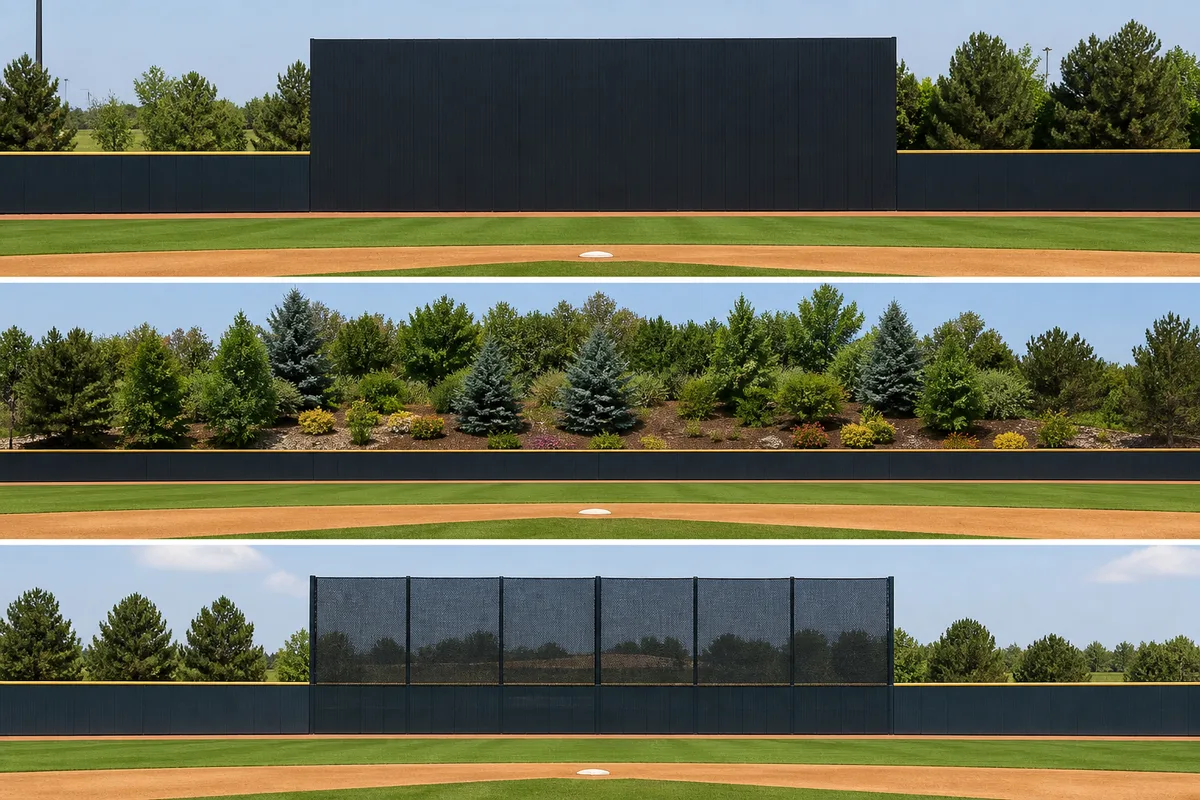
Landscaping can also work when a facility has enough depth, control, and year-round visual consistency. Trees or plantings may soften the field appearance, but they can introduce seasonal color changes, gaps, movement, shadows, or maintenance issues. A planted background is usually a site-planning decision before it is a procurement item.
A mesh screen is more flexible. Dark PVC-coated mesh or a windscreen-style panel can be fabricated to match existing fence bays, folded for shipping, replaced in sections, and removed seasonally when the project is designed that way. The tradeoff is that the supporting fence or frame must be suitable, the visual area must not show distracting joints, and the attachment pattern must be confirmed before production.
| Background type | What it does well | Procurement or project risk | LonaTarp supply boundary |
|---|---|---|---|
| Permanent wall | Strong, consistent visual surface | Requires structural design, civil work, approvals, access and maintenance planning | Not a default LonaTarp fabric-panel scope |
| Landscape background | Natural visual screen when well maintained | Seasonal gaps, shadows, movement and site-maintenance uncertainty | Not a fabric product; useful only as site context |
| PVC-coated mesh panel | Custom dark backdrop on a suitable fence or frame | Wind exposure, panel joints, attachment layout and visual uniformity must be checked | Can be reviewed as custom mesh panels after structure and sightline are confirmed |
IV. When PVC-Coated Mesh Panels Can Be Used on an Existing Fence
are worth considering when the facility already has a stable fence, frame, or support line in the approved visual area. The fence should have enough height, post strength, support spacing, and attachment access for a dark screen panel. The project team should also check whether a more closed visual background will affect wind behavior or maintenance.
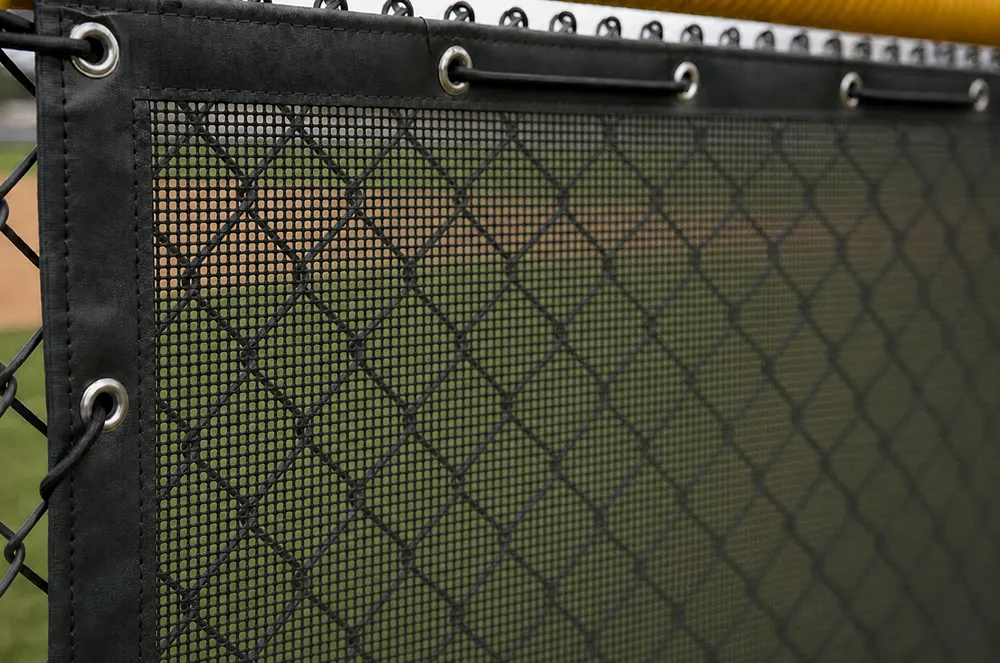
From a fabrication point of view, the panel schedule is just as important as the material. Each panel should have a finished width, finished height, edge construction, eyelet or lacing plan, color, optional print area, label code, and packing method. For repeat orders, those details prevent replacement panels from being matched only by memory or a rough field name.
Mesh selection should be confirmed from the field condition. A darker or heavier fabric is not automatically better. The mesh opening, shade level, coating, yarn structure, color, edge reinforcement, and attachment method all affect visibility, airflow, handling, and service risk. In production, we prefer to approve a material sample and one finished panel before bulk manufacturing, especially when the project involves a new color, print, or edge layout.
V. When the Project Needs Engineering Before Fabric Selection
Some batter’s eye projects should not start with a fabric quote. If the field needs new posts, a freestanding frame, a large solid wall, retractable equipment, major height changes, or installation in a high-wind area, the first owner should be the engineer, contractor, or system supplier responsible for the structure.
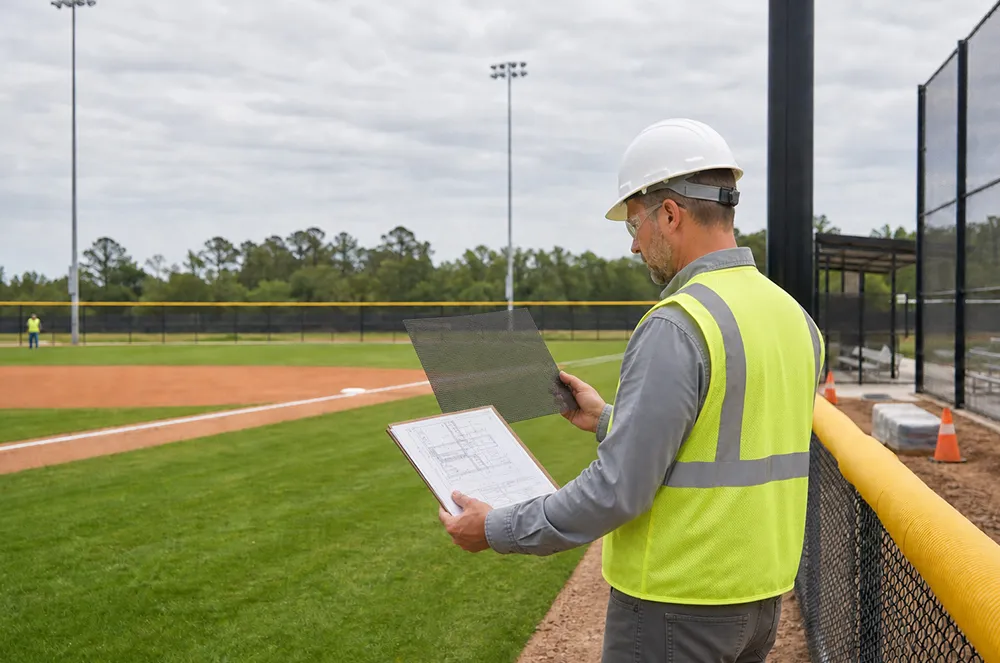
This is also true when the facility asks for a complete structural system, ball-impact protection, code compliance, or league-specific approval. Fabric panels may become part of the final solution, but they should not be used to imply that the whole system has been engineered. A mesh panel can be specified only after the support, attachment, exposure, dimensions, and acceptance method are clear.
For a useful RFQ, send the field photos, center-field elevation, visual target area, existing fence or frame details, required color, panel split, edge preference, attachment method, quantity, target market, and any project standard or consultant requirement. If the commercial page for custom batter’s eye screen panels is live when this article is uploaded, it should be used as the next step for detailed panel specification and quotation. Until then, keep the URL as a future internal-link opportunity, not an active link.