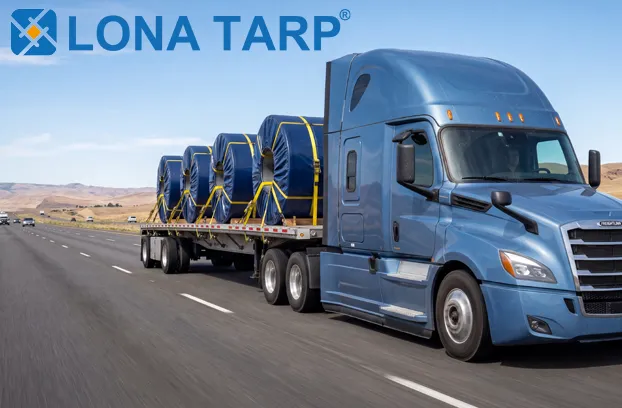
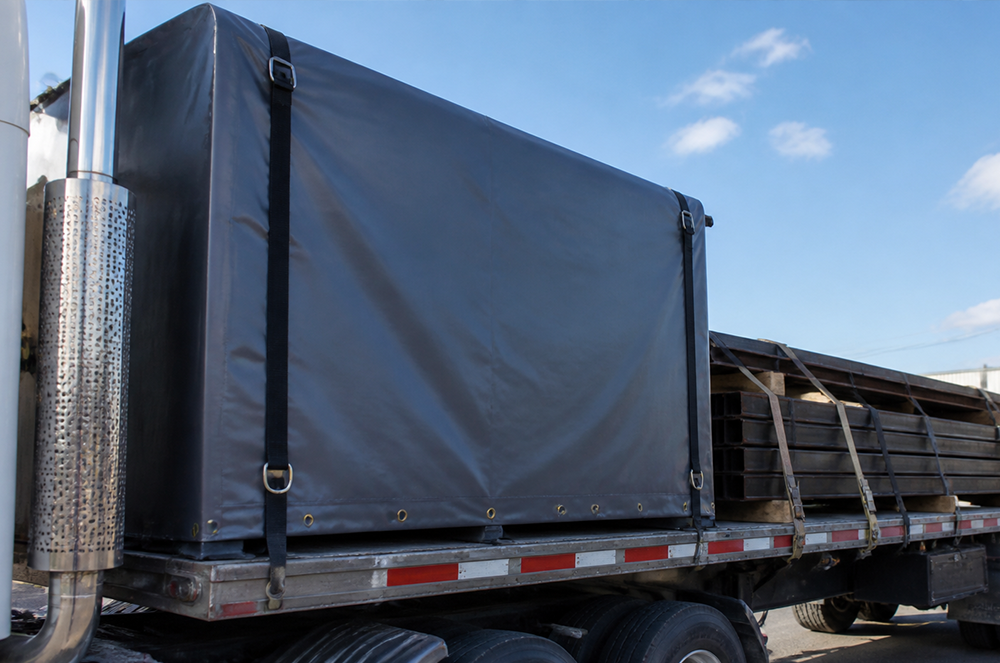
 Maintaining product quality and lowering transportation risks in the freight transportation sector depend on shielding cargo from weather, road debris, and exhaust exposure. The flatbed smoke tarp is one of the most popular protection options for flatbed trucks. Smoke tarps are made especially to protect the front portion of cargo loads from wind, rain, dirt, and smoke produced during highway transportation.
Smoke tarps are a practical choice for many kinds of freight since they are smaller and simpler to install than steel or full-sized timber tarps. When goods need partial protection rather than full enclosure, they are frequently utilized in flatbed transportation operations.
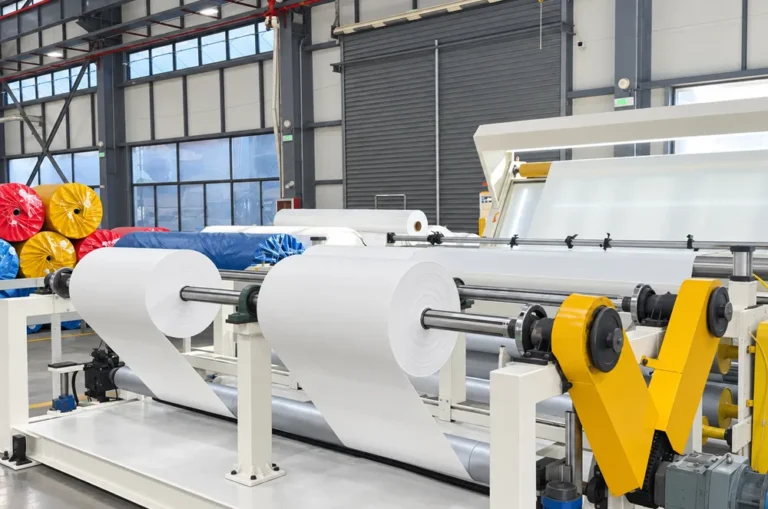
PVC-coated textiles, which offer superior waterproofing, tear resistance, and long-term durability, are commonly used in the production of modern smoke tarps. Smoke tarps are already typical equipment in the shipping and logistics sector due to their affordability and usefulness.
I. How Truck Smoke Tarps Protect Cargo on the Road
Cargo is continuously subjected to road conditions and environmental factors during freight transit. The front portion of a load is the region most directly exposed to wind, dirt, and exhaust particles produced by the vehicle.
Protection Against Smoke, Dirt, and Road Debris
Preventing smoke and exhaust residue from landing on carried cargo is one of a flatbed smoke tarp’s main purposes. Airflow from the tractor can force exhaust fumes and airborne particles directly toward the cargo during long-distance transport.
This helps reduce contamination from dust, soot, and road debris, maintaining product cleanliness and reducing post-transport cleaning costs. It also protects cargo from small stones, insects, and dirt during highway driving.
Weather Resistance During Transportation
During freight transportation, weather conditions can change quickly. A flatbed smoke tarp helps protect cargo from rain, snow, and high winds.
PVC-coated smoke tarps are fully waterproof, preventing moisture penetration. Reinforced hems and secure fastening systems help keep the tarp stable during high-speed travel, preventing flapping and tearing.
Improving Transportation Efficiency and Safety
Smoke tarps are easier and faster to install compared to full-size tarps, improving loading efficiency. They also reduce the risk of cargo damage claims and rejected deliveries, helping maintain service quality for logistics operations.
II. Why PVC Materials Are Commonly Used for Smoke Tarps
PVC-coated polyester fabric has become the industry standard for smoke tarp production due to its durability and performance.
 Excellent Durability and Tear Resistance
Flatbed transport environments are harsh, with constant exposure to wind, sunlight, moisture, and friction. PVC-coated smoke tarps provide strong tensile strength and abrasion resistance, making them suitable for heavy-duty use.
The polyester base provides structure, while the PVC layer adds protection against weather and wear.
Waterproof and Weatherproof Performance
PVC smoke tarps offer excellent waterproof protection, keeping cargo dry in all weather conditions. They also resist mold, mildew, and chemical exposure, making them easy to maintain and clean.
Flexibility and Ease of Maintenance
PVC tarps remain flexible even in low temperatures, making handling and installation easier for drivers. Dirt and road residue can be easily washed off, extending service life and reducing maintenance costs.
III. When to Use Flatbed Smoke Tarps in Freight Transport
Smoke tarps are widely used in various transport scenarios where partial protection is required.
Transporting Sensitive or Finished Products
Smoke tarps are ideal for protecting packaged goods, machinery, aluminum materials, and finished steel products from contamination during transit.
Long-Distance Highway Transportation
For long-haul routes, smoke tarps provide essential front-end protection against wind, dust, and road debris without the need for full coverage tarping systems.
Partial Load Protection Applications
In many cases, only the front section of cargo requires protection. Smoke tarps offer a cost-effective solution for partial coverage, especially in industrial and construction logistics.
IV. Common Features of Heavy-Duty Smoke Tarps
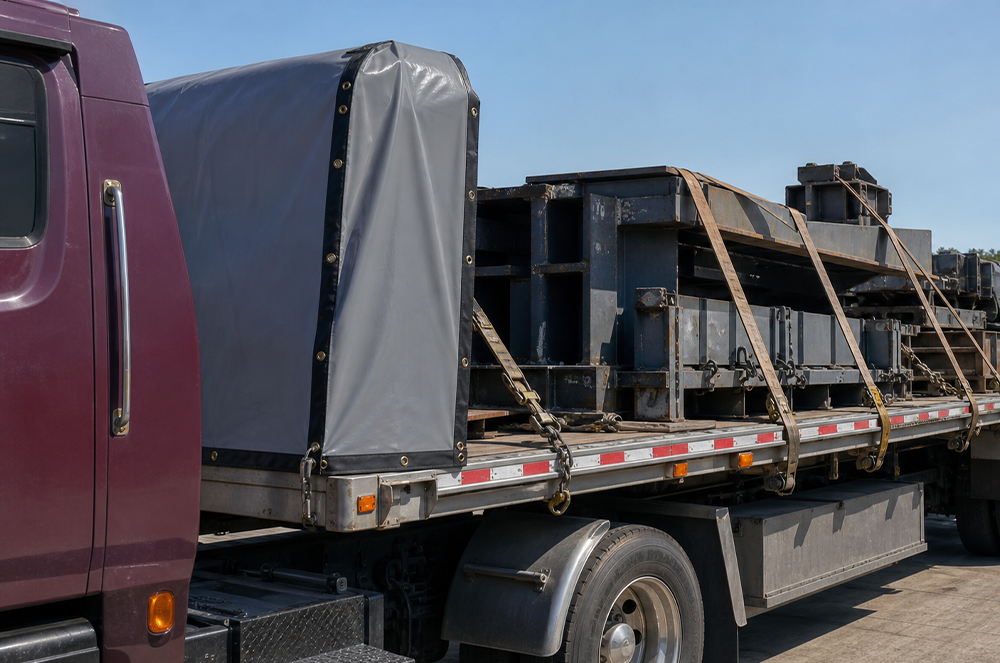
Heavy-duty smoke tarps are designed for demanding transportation environments.
Reinforced Corners and Hems
Double-stitched seams and reinforced edges help prevent wear and extend tarp lifespan under high tension and wind pressure.
Strong Grommets and D-Rings
Rust-resistant grommets and heavy-duty D-rings ensure secure fastening during transport, reducing movement and wind damage.
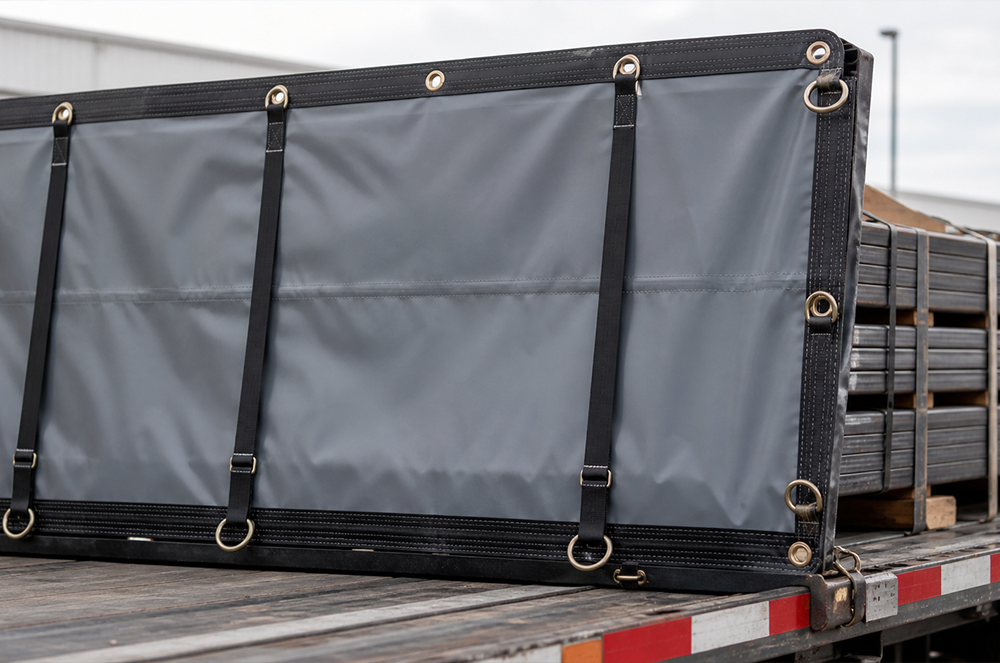 Heavy PVC Fabric Construction
Premium smoke tarps typically use 18–22 oz PVC-coated polyester fabric for enhanced strength, waterproofing, and abrasion resistance.
UV Resistance and Long Service Life
UV-resistant coatings protect the tarp from sun damage, extending service life and reducing replacement frequency.
V.Conclusion
The flatbed smoke tarp is an essential protection tool in modern freight transportation. It helps protect cargo from smoke, debris, weather, and environmental exposure while improving transport efficiency.
Thanks to durable PVC-coated materials, smoke tarps offer long-lasting performance with easy maintenance and reliable protection. They remain a cost-effective and essential solution for professional logistics and flatbed trucking operations.