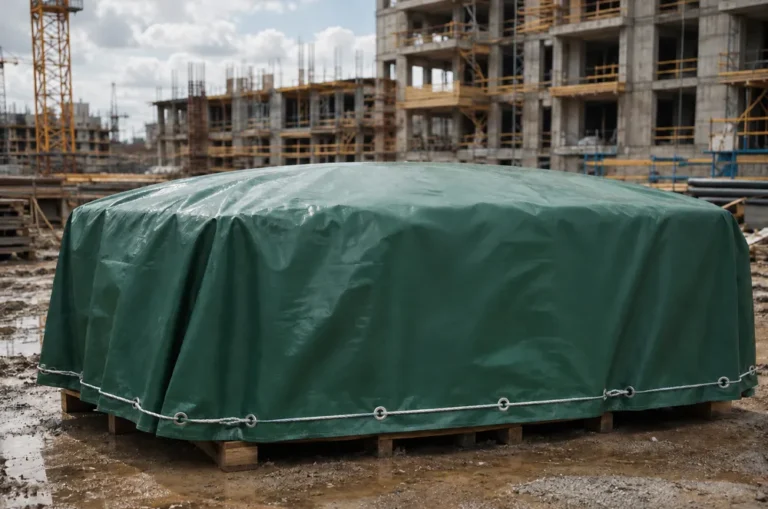
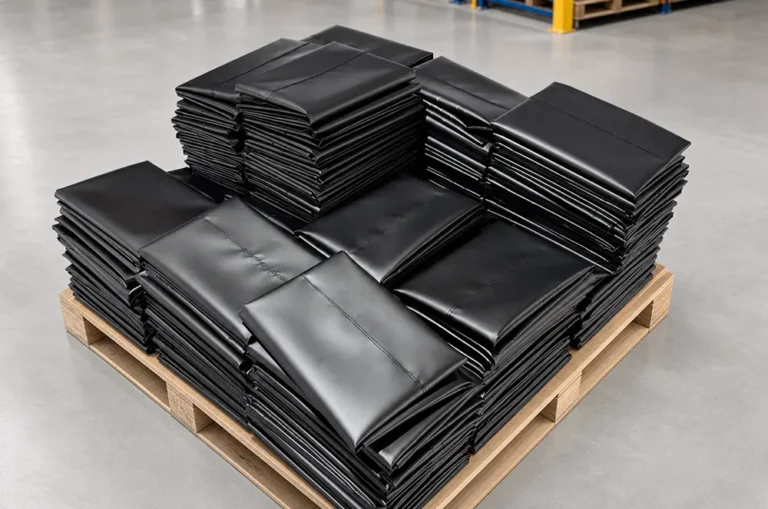
Buying tarpaulins for one truck is simple. Buying for a fleet of 50—or 500—requires a different approach.
I’ve worked with B2B buyers who got burned by suppliers that couldn’t deliver consistent quality. I’ve seen orders arrive with wrong specifications, missed deadlines, and materials that didn’t match samples. The difference between a smooth bulk purchase and a supply chain headache comes down to knowing what to ask for and who to buy from.
This guide covers everything you need to buy heavy duty tarpaulins in bulk with confidence: specifications, pricing, supplier evaluation, and negotiation tactics.
I. Understanding Heavy Duty Tarpaulin Specifications for Business
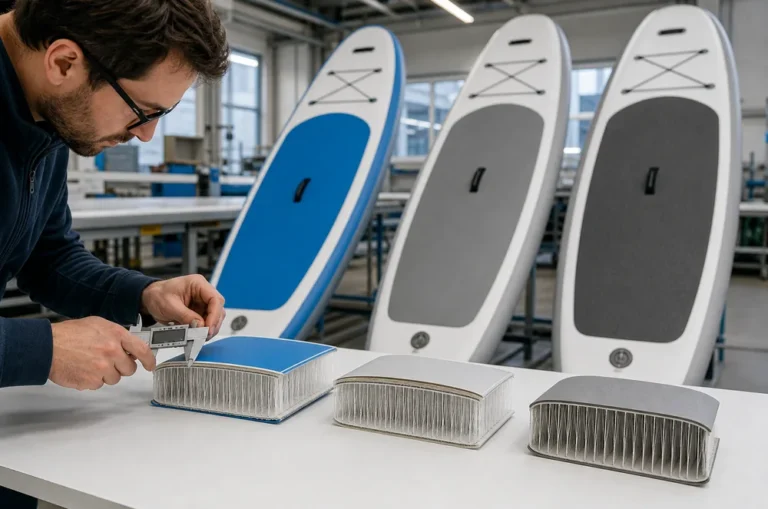
Before you contact a single supplier, know your specifications. This isn’t optional—it’s how you avoid receiving material that doesn’t meet your actual requirements. Heavy duty tarpaulin specifications define every aspect of performance—get them right, and your bulk purchase succeeds. Get them wrong, and you’re stuck with material that doesn’t work for your application. Reviewing tarpaulin specifications before you buy tarpaulin in bulk ensures you receive exactly what you need.
Core Specifications to Define
1. Material Type
- Heavy duty PVC tarpaulin for most industrial applications
- Mesh PVC for applications requiring ventilation (side curtains, debris nets)
- Specialized formulations for flame retardant, anti-static, or chemical-resistant requirements
2. GSM (Weight)
- 450-550 GSM: Standard heavy duty for general commercial use
- 550-650 GSM: Heavy duty for dump trucks and demanding applications
- 650+ GSM: Extreme duty for mining, construction, and permanent installations
3. Base Fabric Construction
- Denier (D) of base yarn: Higher denier = stronger base fabric
- Weave density: Affects tear resistance and dimensional stability
- Fabric weight vs. total weight: Some manufacturers quote fabric GSM without coating
- If you are not familiar with what base fabric is, you can take a look at this blog post.
4. Coating Details
- PVC coating weight (gsm)
- Treatment type: Lacquered, acrylic, PVDF
- Surface finish: Glossy, matte, anti-slip
5. Reinforcement
- Edge reinforcement: Required for grommet attachment
- Corner reinforcement: Essential for high-stress applications
- Webbing straps: Integrated tie-down points
6. Certification Requirements
- ISO 9001: Manufacturer quality system
- REACH/RoHS: Chemical safety compliance
- Flame retardancy: NFPA 701, EN 13501-1, or regional standards
- Industry-specific: Mining, food-grade, or other certifications
Requesting Technical Data Sheets
Any serious heavy duty tarpaulin wholesale supplier will provide technical data sheets for their products. Request these before ordering samples. Key data points to verify:
- Tensile strength (N/5cm warp and weft)
- Tear resistance (N)
- Adhesion strength (N/5cm)
- Temperature range
- UV stability hours
- Chemical resistance chart
- Flame retardancy test reports
If a supplier can’t or won’t provide technical documentation, move on. You can’t verify quality without data.
II. How to Buy Heavy Duty Tarpaulin in Bulk: Step by Step
When you buy tarpaulin in bulk, the process requires more preparation than a single-unit purchase. Most businesses that struggle with bulk procurement haven’t invested enough time in understanding their actual requirements. This section walks you through each step of the process to buy tarpaulin in bulk with confidence.
Step 1: Audit Your Actual Requirements
Before contacting suppliers, document:
- Quantity per order — Annual usage and per-order quantities
- Size range — Standard sizes vs. custom dimensions
- Specification list — GSM, material type, reinforcement requirements
- Delivery schedule — Bulk delivery or scheduled releases
- Storage capacity — Can you receive full container loads?
When you buy tarpaulin in bulk, understanding these variables prevents costly mistakes. A clear specification list is essential—the more specific your requirements, the more accurate your quotes and the better your results when you buy tarpaulin in bulk from manufacturers.
Step 2: Identify Qualified Suppliers
When you buy tarpaulin in bulk, supplier selection determines your success. Look for heavy duty truck tarpaulin suppliers that meet these criteria:
Manufacturing capability:
- Own production facility (not just trading company)
- Minimum 5 years in heavy duty tarpaulin production
- Capacity to handle your order volume
- Custom fabrication capability
The best suppliers when you buy tarpaulin in bulk are manufacturers who understand heavy duty tarpaulin specifications and can customize formulations for your specific requirements.
Quality assurance:
- ISO 9001 certification
- Consistent batch-to-batch quality
- Available samples matching production quality
- Testing capability for incoming inspections
B2B experience:
- Established export processes
- English-speaking account managers
- Clear communication on lead times and MOQ
- References from similar industries
Step 3: Request Samples
Never order bulk without samples first. Request:
- 2-3 meter samples of each specification you’re considering
- Confirm the sample matches production material (not just a prototype)
- Test samples under your actual conditions before bulk order
Step 4: Define Terms Before Ordering
Lock in these terms before any purchase:
Pricing:
- Price per square meter at your target volume
- Volume pricing tiers
- Currency and payment terms
- Minimum order quantity price vs. above-MOQ pricing
Delivery:
- Lead time from order confirmation
- Shipping terms (FOB, CIF, DDP)
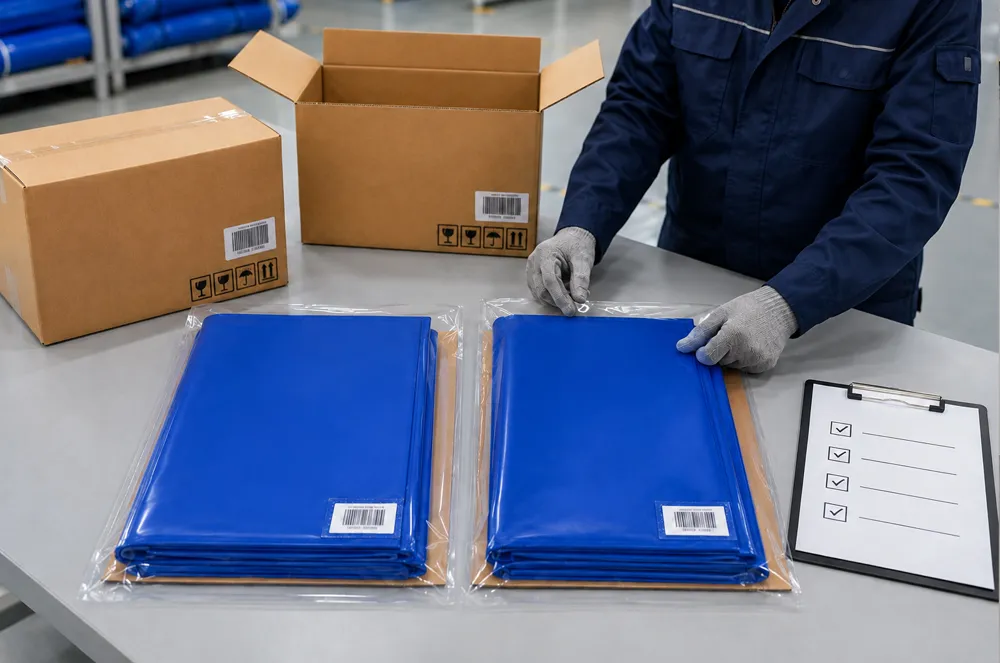
- Packaging standards (rolls, folded, palletized)
- Labeling requirements (your PO number, specs, batch number)
Quality:
- Inspection rights before shipment
- Acceptance criteria for defects
- Claim process and resolution timeline
- Warranty terms
III. Industrial Tarpaulin Bulk Purchasing Guide: Pricing and MOQ
Understanding Heavy Duty Tarpaulin Price Per Square Meter
Tarpaulin pricing varies widely based on specifications. Here’s a general framework for 2026 pricing:
PVC Tarpaulin (standard colors):
- 450-500 GSM: $0.50-0.90/sqm
- 550-600 GSM: $1.00-$1.70/sqm
- 650+ GSM: $1.80-$3.50/sqm
PVC Mesh Tarpaulin:
- 250-350 GSM: $0.60-$1.00/sqm
- Custom formulations: Quote required
Factors affecting price:
- Order volume (larger = lower per-sqm cost)
- Custom specifications (colors, treatments, formulations)
- Certification requirements
- Packaging and labeling
- Shipping destination
MOQ (Minimum Order Quantity) Expectations
Most heavy duty tarpaulin wholesale suppliers operate with these MOQ structures:
| Specification Type | Typical MOQ | Lead Time |
|---|---|---|
| Standard colors, standard sizes | 5,000 sqm | 2-3 weeks |
| Standard colors, custom sizes | 5,000 sqm | 2-3 weeks |
| Custom colors | 5,000+ sqm | 2-3 weeks |
| Custom formulations (flame retardant, etc.) | 5,000+ sqm | 2-3 weeks |
| Fully custom (size, color, specs) | 5,000+ sqm | 2-3 weeks |
Understanding MOQ helps you plan inventory. Most heavy duty tarpaulin manufacturers set MOQ at 5,000 square meters. Plan your orders accordingly to minimize carrying costs while meeting your project requirements.
IV. Heavy Duty PVC Tarpaulin for Construction: Specifications That Matter
Construction applications demand specific performance characteristics.
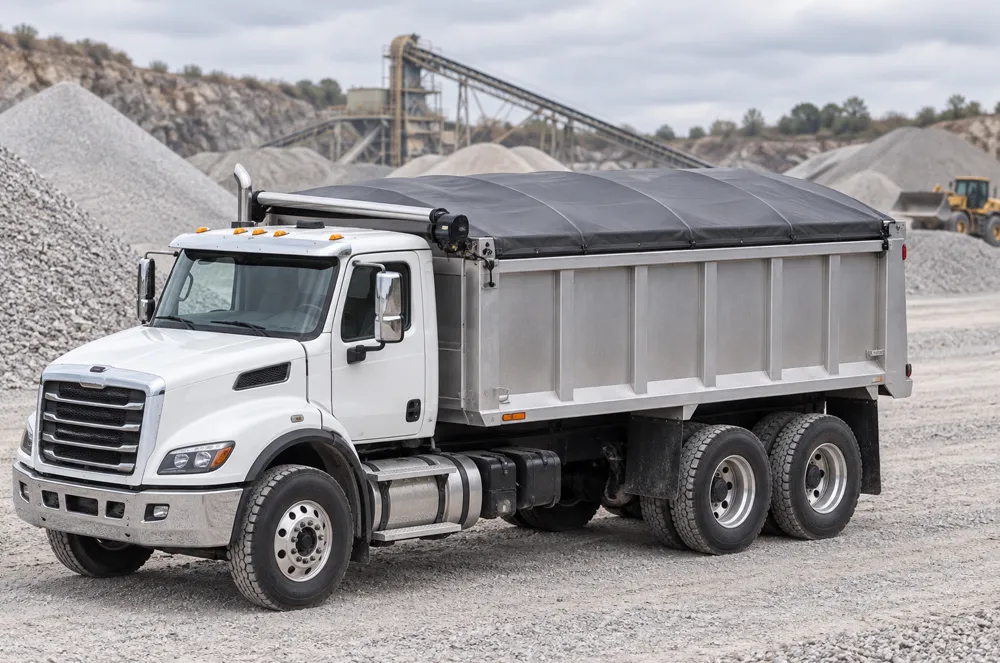
Dump Truck Tarpaulin Specifications
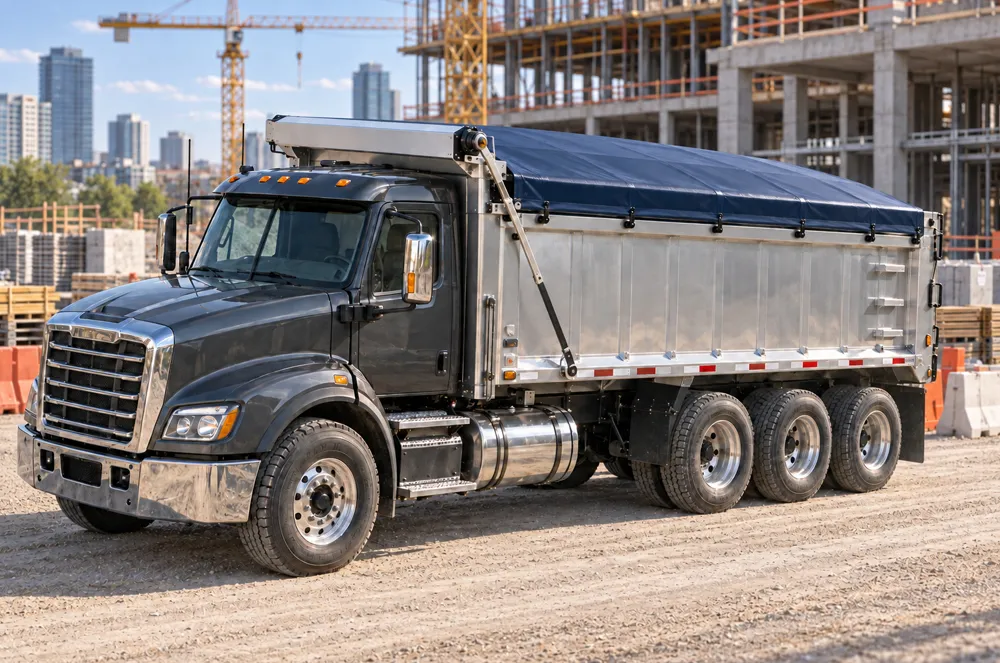
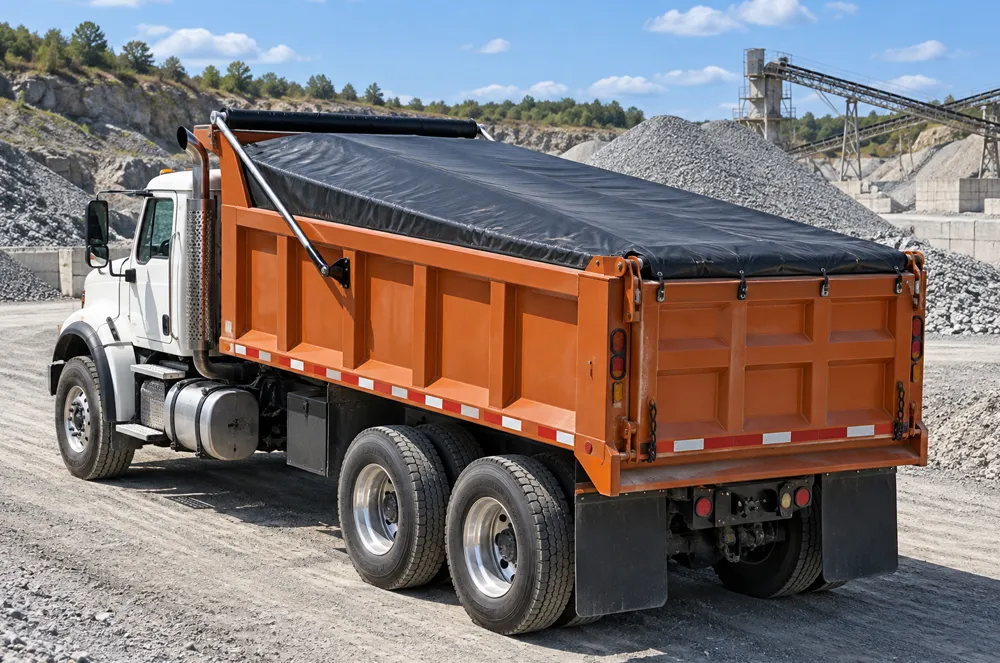
For dump trucks carrying aggregate, sand, gravel, and demolition debris:
Recommended specifications:
- Material: Heavy duty PVC tarpaulin
- GSM: 550-650
- Base fabric: 1000D polyester minimum
- Temperature range: -30°C to +70°C
- UV stabilization: 500+ hours
- Edge treatment: Welded reinforced edges with grommets every 30-50cm
- Accessories: Buckle straps, tensioning system compatible
Performance requirements:
- Tensile strength: 2500+ N/5cm
- Tear resistance: 250+ N
- Abrasion resistance: 10,000+ cycles (Wyzenbeek)
Side Curtain Specifications
For flatbed trailers with mesh or solid side curtains:
Recommended specifications:
- Material: PVC mesh (for ventilation) or solid PVC
- GSM: 300-450 (mesh) / 450-550 (solid)
- Mesh pattern: Diamond or rectangular
- Eyelets: Reinforced metal or PVC
- Attachment: Snap hooks, straps, or rail system compatible
Construction Enclosure Specifications
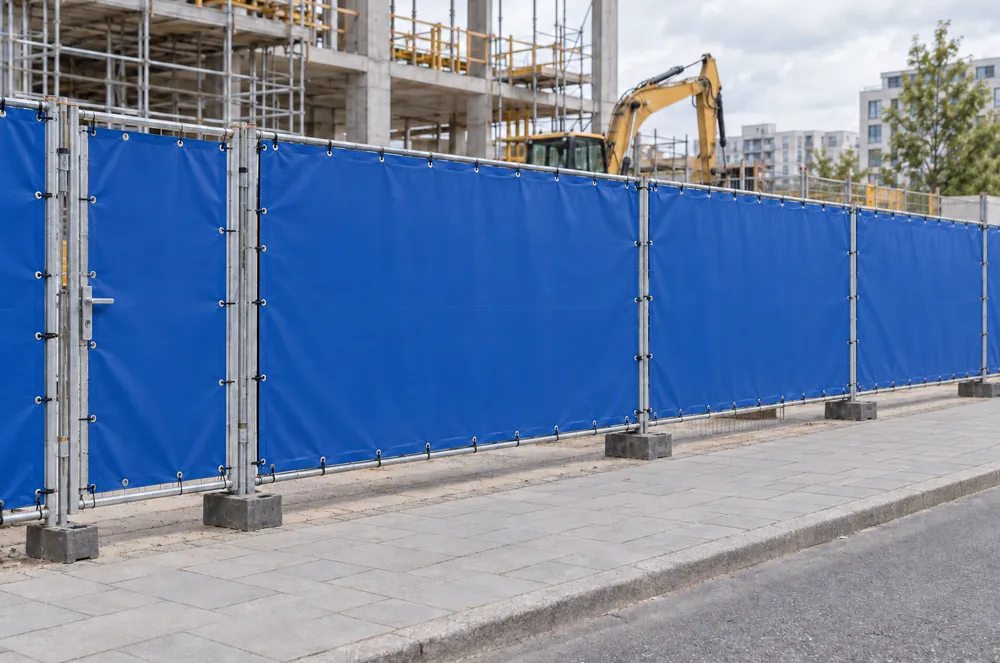
For scaffolding enclosures, temporary structures, and site barriers:
Recommended specifications:
- Material: PVC tarpaulin (flame retardant often required)
- GSM: 350-500
- Flame retardancy: NFPA 701 or EN 13501-1 as required
- UV stabilized
- Reinforced edges with integrated grommets
- Optional: Windows, doors, ventilation panels
V. Heavy Duty Tarpaulin for Dump Truck Manufacturers: Working with OEM Suppliers
If you’re a dump truck manufacturer or a fleet operator sourcing at OEM scale, the supplier relationship changes.
What Manufacturers Need
- Consistent specifications — Every piece must meet the same standard
- Traceability — Batch tracking for quality control and defect investigation
- Volume commitments — Annual volume agreements in exchange for better pricing
- Certification packages — Full documentation for each batch
- Responsiveness — Fast turnaround for replacement orders and urgent requests
Building OEM Relationships
I’ve seen manufacturers lock themselves into single suppliers with no backup. That’s risky. Build a primary supplier relationship with 1-2 qualified backup suppliers. This gives you leverage on pricing and ensures you can meet production schedules if your primary supplier has issues.
Key actions:
- Provide annual volume forecasts
- Negotiate quarterly pricing reviews
- Establish clear quality standards with acceptance criteria
- Set up joint quality audits
- Develop contingency plans for supply disruptions
Custom Heavy Duty Tarpaulin Manufacturers
Custom tarp manufacturers can produce to your exact specifications:
Common customizations:
- Non-standard colors (your brand colors, camouflage, high-visibility)
- Integrated tie-down systems
- Cut-to-size panels
- Pre-installed hardware (buckles, straps, D-rings)
- Printed logos or identification markings
- Special treatments (anti-graffiti, anti-icing, thermal reflective)
Lead times for custom manufacturing are longer—typically 4-8 weeks for custom colors and treatments. Build this into your inventory planning.
VI. Heavy Duty Tarpaulin B2B Buying Tips: Lessons from the Field
After years of working with B2B buyers on tarpaulin procurement, here are the lessons that matter most:
Tip 1: Don’t Buy on Price Alone
The cheapest heavy duty tarpaulin wholesale supplier isn’t always the best value. A 20% price savings means nothing if the material fails in half the expected time.
Calculate true cost:
- Expected lifespan × replacement frequency
- Labor cost for installation and replacement
- Downtime cost when tarps fail
- Quality issues and customer complaints
A $2.00/sqm tarp that lasts 5 years beats a $1.50/sqm tarp that lasts 1.5 years.
Tip 2: Verify, Then Trust
Even with established suppliers, verify quality on every batch. I’ve seen reputable suppliers deliver off-spec material when they’re stretched thin. Don’t assume—inspect.
Inspection checklist:
- GSM matches order specification
- Color matches approved sample
- Grommet spacing and reinforcement as specified
- No visible defects (tears, delamination, coating irregularities)
- Technical data sheet matches physical material
Tip 3: Negotiate Volume Pricing
Most suppliers offer tiered pricing. If you’re not negotiating based on committed volume, you’re leaving money on the table.
Example structure:
- 5,000 sqm: Base price
- 5,001-10,000 sqm: 5-8% discount
- 10,001-20,000 sqm: 10-15% discount
- 20,001+ sqm: 15-20% discount + dedicated account management
Commit to realistic volumes and get the pricing to match.
Tip 4: Plan Lead Times
International shipping for heavy duty tarpaulins can take 3-6 weeks depending on destination. Don’t order reactively—build a procurement schedule that accounts for manufacturing and shipping time.
Recommended approach:
- Quarterly orders minimum for steady consumption
- 4-6 week buffer stock for critical applications
- Express orders for urgent needs (expect 20-30% premium)
Tip 5: Build Supplier Relationships
Treat your tarpaulin supplier as a partner, not just a vendor. Suppliers who know your business can:
- Proactively flag quality issues
- Suggest specification improvements
- Accommodate urgent requests
- Provide better pricing in tight situations
VII. Heavy Duty Truck Tarpaulin Supplier Recommendations: What to Look For
Finding the right supplier matters more than most buyers realize. Here’s what to evaluate:
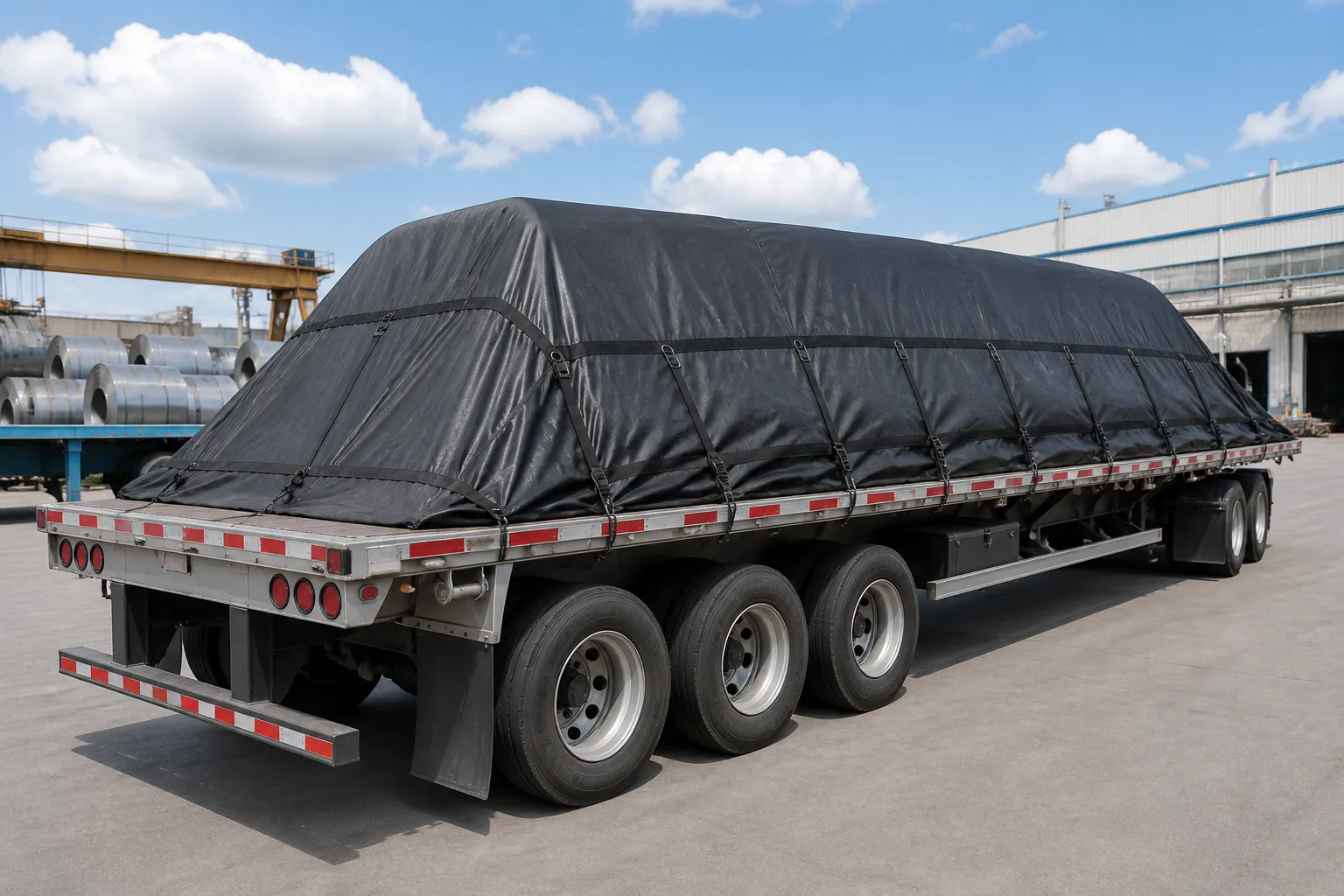
Red Flags in Supplier Evaluation
⚠️ No physical factory — Trading companies can’t control quality or lead times
⚠️ Reluctant to share samples — Quality concerns they don’t want you to see
⚠️ Prices too low — If it seems too cheap to be true, the quality is likely compromised
⚠️ No export experience — Heavy duty tarpaulins require specialized logistics
⚠️ Poor communication — Slow or evasive responses before ordering means worse after ordering
Green Flags in Supplier Evaluation
✅ Clear communication — Responsive, direct answers to technical questions
✅ Quality documentation — Technical data sheets, test reports, certifications
✅ Factory visit welcome — Confident in their operations
✅ Reasonable MOQ — Aligns with market standards
✅ Established export process — Experienced with international shipping and documentation
✅ Referenceable clients — Can provide contacts in similar industries
VIII. Working with Wholesale Suppliers: The Practical Process
Standard B2B Order Process
- Inquiry — Send specification sheet, request pricing and MOQ confirmation
- Sample — Review physical samples matching production quality
- Quote — Receive formal quote with specifications, pricing, lead time, terms
- PO — Issue purchase order with full specification and delivery requirements
- Order confirmation — Supplier confirms order and provides production schedule
- Production — Manufacturing, quality inspection, documentation preparation
- Shipping — Dispatch, documentation (commercial invoice, packing list, COO)
- Delivery — Receipt, inspection, and acceptance or claim resolution
Common B2B Payment Terms
| Order Type | Typical Terms |
|---|---|
| First order | 30% deposit, 70% before shipment |
| Established relationship | 30% deposit, 70% against BL copy |
| Long-term partner | Net 30 from delivery |
| Large orders | Letter of Credit |
FAQ: Heavy Duty Tarpaulin B2B Purchasing
1. How do I find reliable heavy duty tarpaulin wholesale suppliers?
Look for suppliers with their own manufacturing facilities, ISO 9001 certification, and documented experience supplying similar industries. Request samples before committing to bulk orders. Verify quality on the first batch before establishing long-term relationships. Trade shows (like Canton Fair, Bauma, or industry-specific events) are excellent places to meet suppliers and inspect their operations directly. When you’re ready to buy tarpaulin in bulk, having established relationships with verified suppliers gives you leverage on pricing and priority allocation.
2. Where can I buy tarpaulin in bulk directly from manufacturers?
The most cost-effective approach to buy tarpaulin in bulk is sourcing directly from manufacturers rather than through trading companies or distributors. Direct manufacturer relationships when you buy tarpaulin in bulk typically offer 10-20% lower pricing, better customization options, and more responsive support. Look for manufacturers with documented export experience, clear tarpaulin specifications on their data sheets, and the capacity to meet your volume requirements. When you buy tarpaulin in bulk from manufacturers, you also gain access to their technical expertise for optimizing specifications to your actual application needs.
3. How to buy tarpaulin in bulk for my business?
To buy tarpaulin in bulk effectively, start by defining your exact requirements: quantity, specifications (GSM, material type, reinforcement), size range, and delivery schedule. Next, identify 3-5 qualified manufacturers and request quotes with full tarpaulin specifications included. Before placing orders to buy tarpaulin in bulk, always request samples and verify they match production quality. Lock in pricing tiers based on committed volumes—this is where businesses save the most when they buy tarpaulin in bulk. Finally, establish clear quality acceptance criteria and inspection processes before your first bulk shipment arrives.
4. What specifications should I provide when I buy tarpaulin in bulk?
When you buy tarpaulin in bulk, your specification sheet must include: material type (PVC recommended for most applications), GSM weight (450-650 for heavy duty), base fabric denier and weave, coating weight and type, reinforcement details (edge treatment, grommet spacing), temperature range requirements, UV stabilization hours, and any certifications required. Clear tarpaulin specifications prevent misunderstandings and ensure the material you receive when you buy tarpaulin in bulk actually meets your operational requirements.
5. What is the minimum order quantity for heavy duty tarpaulins?
MOQ for heavy duty tarpaulins is typically 5,000 square meters for standard specifications, and 5,000+ square meters for custom colors, sizes, or formulations. Some suppliers offer smaller MOQs but typically charge a premium per square meter.
6. How should I specify heavy duty tarpaulin for business use?
Define: material type (PVC recommended for most applications), GSM (450-650 for heavy duty), base fabric specification (denier, weave), reinforcement requirements (edges, corners, grommet spacing), temperature range, UV stabilization hours, and any required certifications (flame retardant, chemical resistance).
7. What does heavy duty tarpaulin cost per square meter?
Heavy duty PVC tarpaulin typically ranges from $1.20-$3.50 per square meter depending on GSM, formulation, and order volume. Bulk orders of 5,000+ sqm typically receive 10-20% discounts. Custom specifications, certifications, and specialized treatments add to the base price.
8. How long does it take to manufacture and deliver bulk tarpaulin orders?
Standard orders of 500-1,000 sqm typically require 2-3 weeks manufacturing plus 2-4 weeks shipping (international). Custom specifications can extend lead times to 6-12 weeks. Plan orders with a 6-8 week total lead time buffer for safety.
9. What certifications should I require from heavy duty tarpaulin suppliers?
ISO 9001 for quality management is baseline. For specific applications: REACH/RoHS for chemical safety, flame retardancy certifications (NFPA 701, EN 13501) for construction and mining, and any industry-specific standards relevant to your operation. Request test reports, not just certificates.
10. How do I evaluate the quality of heavy duty tarpaulin before purchasing?
Request physical samples and verify: GSM matches specification, tensile and tear strength from technical data sheets, coating adhesion, UV stabilization claims, and actual performance in your application conditions. For bulk orders, consider third-party inspection services or request pre-shipment photos and test reports.
Conclusion: Smarter Bulk Purchasing
Buying heavy duty tarpaulins for business use isn’t complicated—but it requires preparation. Know your specifications before you contact suppliers. Verify quality before committing to bulk orders. Calculate true cost of ownership, not just purchase price.
The best B2B buyers treat tarpaulin procurement as a strategic function. The materials protect your equipment, your cargo, and your people. Getting it right—with the right supplier, the right specifications, and the right terms—pays dividends in reduced downtime, lower replacement costs, and fewer supply chain surprises.
Whether you run a fleet of five trucks or five hundred, the principles are the same: specify accurately, verify quality rigorously, and build supplier relationships that last.
Need a head start on finding the right supplier? Our B2B team supplies heavy duty tarpaulins to fleet operators, construction companies, and logistics providers worldwide. We can provide samples, technical consultation, and custom fabrication for your specific requirements.