Polyvinyl chloride fabric is a textile, usually woven polyester, coated or laminated with flexible PVC. Its advantages are a waterproof, weldable surface and high tear and tensile strength. Its disadvantages are that it stiffens in cold, does not breathe, is heavy for its area and performs only as well as its formulation.
This guide pairs each advantage with its condition and each disadvantage with the formulation choice or test that controls it, so you can write both into a purchase specification. If you already know the construction you need, go straight to our coated and laminated PVC fabric rolls.
I. What Is Polyvinyl Chloride Fabric?
Polyvinyl chloride fabric is a composite: a textile base carries the load, and a PVC layer seals it. PVC is itself a plastic. Plasticizers make it flexible enough to be coated or laminated onto a base fabric, which is usually polyester. For constructions, types and terminology in depth, see our guide to what PVC/vinyl fabric is and how it is built.
Is PVC textile the same as PVC fabric?
Yes. Polyvinyl chloride fabric is the full chemical name, PVC fabric and PVC textile are the short forms, and vinyl fabric is the common trade name. All four refer to the same family of materials.
None of these names tells you the construction. A quote for “PVC textile” can mean a knife-coated polyester, a laminated polyester, an open mesh or a clear film. Ask for the base fabric, the PVC construction and the finished weight before you compare prices.
Which PVC fabrics this guide covers
This guide covers reinforced industrial roll materials: PVC-coated and PVC-laminated polyester. Open PVC mesh and unreinforced clear PVC film behave differently and are mentioned only where they are the better choice. The same polymer is also used for faux leather, upholstery vinyl and clothing. Those products are outside our production range and outside this article.
II. PVC Fabric Advantages and Disadvantages at a Glance
The advantages of PVC fabric come from its two-part construction. Some of its disadvantages can be reduced by formulation; others, such as weight and lack of breathability, come with the material.
| Property | Advantage | Disadvantage or limit | What controls it |
|---|---|---|---|
| Water | A continuous PVC layer blocks water; seams can be welded | Cut edges can wick water into the base fabric | Anti-wicking construction, seam design |
| Strength | The polyester base carries high tensile and tear loads | Heavy for its area | Base fabric denier and density, coating weight |
| Sun and weather | Can be stabilized for outdoor exposure | UV protection is not in every formulation | UV absorber package, top coat |
| Fire | Can be formulated flame retardant and tested to a named standard | Not every grade is flame retardant; burning PVC gives off dense smoke | Flame-retardant formulation, smoke suppressants |
| Temperature | Flexible at normal working temperatures | Stiffens in cold, softens with heat | Plasticizer system |
| Air and moisture | Blocks wind and rain | Does not breathe; condensation can form underneath | Vent design, or mesh instead of solid fabric |
| Surface | Smooth and wipe-clean; printable grades available | Plasticizer can migrate if the formula is poorly matched | Plasticizer choice, top coat |
| Compliance | Non-phthalate formulations are available | Must be specified and tested for each market | Named regulation and test report |
III. Advantages of Polyvinyl Chloride Fabric
The main advantages of PVC fabric are waterproofing, strength, weather resistance, optional flame retardance, easy cleaning and weldability. Each one comes with a condition worth knowing before you order.
Waterproof surface and sealed seams
PVC fabric is waterproof because the PVC layer on each face is continuous and absorbs almost no water. Panels can be welded instead of stitched, so the seam adds no needle holes.
The weak point is the edge. The polyester yarns inside can draw water in from a cut edge or a punched hole, a process called wicking. If the product holds water or sits in it, ask for anti-wicking construction when you order. Our guide on whether PVC fabric is waterproof explains wicking and how to specify waterproofing.
Strength, abrasion and puncture resistance
The strength of reinforced PVC fabric comes from its polyester base, not from the PVC. The woven or warp-knitted base carries tensile and tear loads, and the coating protects the yarns from abrasion, puncture and weather.
As one example, a 900 g/m² (about 26.5 oz/yd²) double-side-coated construction on a 1000D base shows typical values of 2,950 / 2,356 N/5 cm in tensile strength and 449 / 368 N/5 cm in tear strength (warp / weft). These are medians from our 2023–2025 production test records; each order is tested and reported on its own.
Weight is not a measure of strength. Two fabrics with the same weight in grams per square meter (GSM) can use different base fabrics, so compare tensile, tear and coating-adhesion results.
Weather, UV and mildew resistance
PVC fabric can be formulated for outdoor exposure, but that protection is an option, not a given. UV absorbers slow the embrittlement, fading and strength loss that sunlight causes. Under price pressure, they are not added to every fabric on the market.
An outdoor order should state the climate and exposure period and ask for a UV-stabilized formulation; see our UV-resistant PVC tarpaulin options. Anti-mildew agents are also an additive, used for tents, pool liners and other damp applications. Chemical resistance varies by grade, so tell your supplier the substance, concentration and temperature.
Flame retardance, when it is formulated and tested
PVC resin itself resists burning: it is 56.8% chlorine by weight, and the Vinyl Institute’s review of PVC fire properties notes that it typically stops burning once the heat source is removed. PVC-coated fabric does not inherit that automatically. The plasticizers and oils that make the coating flexible are combustible, and so is the polyester base fabric, so a standard grade can burn. A flame-retardant grade adds flame retardants to the PVC so that the fabric is hard to ignite or self-extinguishes once the flame is removed, and it is formulated to the standard your market requires.
We hold flame-retardant test reports to NFPA 701 and DIN 4102 B1 on polyester-reinforced roll constructions. A report applies to the construction that was tested, so name the standard and the grade before sampling, and we will test a trial sample against it before bulk production. A B1 or NFPA 701 result means flame retardant, not fireproof. See our fire retardant vinyl fabric range.
Easy cleaning and low maintenance
The PVC surface is smooth and wipes clean. A top coat improves on this. We apply acrylic and PVDF top coats in-house; they add scratch and weather resistance, make it harder for dirt to stick and help block plasticizer migration to the surface.
Top-coated fabric needs an adjusted welding temperature and speed, so tell us how you join the material. Our lacquered PVC tarpaulin page shows the top-coat options.
Weldable and made to specification
PVC softens with heat and fuses under pressure, so panels can be joined by high-frequency, hot-air or hot-wedge welding into continuous, watertight seams. That is a practical advantage over fabrics that can only be sewn. Our PVC fabric welding guide explains each method.
Weight, width, color, surface finish and functional additives can all be specified. We wind rolls up to 3.2 m (126 in) wide in standard lengths of 50 m or 100 m. Cost follows the specification, so compare quotes on the same construction; our PVC tarpaulin price guide explains what drives the price per square meter.
IV. Disadvantages of Polyvinyl Chloride Fabric
The disadvantages of PVC fabric are cold stiffening, no breathability, weight, heat sensitivity, plasticizer compliance questions and smoke in a fire. Each one tells you what to specify, or where to choose a different material.
It stiffens and can crack in the cold
PVC fabric becomes stiffer as the temperature falls, and a stiff coating can crack when it is folded. Plasticizers keep PVC flexible by lowering its glass transition temperature, so how cold is too cold depends on the plasticizer system.
For our conventional cold-resistant range, we use −30°C (−22°F) as a practical benchmark. At that temperature, a fixed installation such as a tent that stays up all winter is a practical use. Repeated folding or tight rolling is not recommended without extra validation. Ask for a cold-bend report on the exact grade, for example to ASTM D2136 or ISO 4675. The test is pass/fail at a stated temperature and does not necessarily show the lowest temperature at which the material can be used. Our guide to PVC fabric in cold weather covers this in detail.
It does not breathe
A continuous PVC layer stops water vapor as well as rain. Under a closed cover, moisture from the cargo or the ground can condense on the inside. This is why PVC fabric suits covers and enclosures better than clothing.
Design vents into the cover, or use an open PVC mesh where airflow matters more than keeping water out.
It is heavy, and firmer than PU-coated textiles
PVC fabric is heavy for its area. A 900 g/m² fabric puts 90 kg (about 198 lb) into a 100 m² cover before hems and hardware, which affects handling, shipping and frame loads. Next to a lightweight PU-coated textile, it also feels firmer.
Hand feel is adjustable. A higher plasticizer level gives a softer, more supple fabric at a higher cost, and a knife-coated construction has a softer hand than a laminated one.
Heat softens it, and plain grades hold static
PVC is a thermoplastic, so the property that makes it weldable also means it softens when it gets hot. Keep covers away from exhaust components and other hot surfaces.
Heat and sun can also make a poorly matched formulation feel tacky as plasticizer moves to the surface; see why PVC fabric turns sticky in the sun. Ordinary PVC surfaces can build up static, which attracts dust. Where sparks or dust matter, as in mine ventilation ducting, specify an anti-static PVC grade.
Plasticizers, compliance and end of life
Plasticizers are what most buyers are really asking about when they ask whether PVC fabric is safe or eco-friendly. Some phthalate plasticizers are restricted in sensitive uses. In the United States, for example, CPSC rules on phthalates prohibit children’s toys and child care articles that contain more than 0.1% of any of eight listed phthalates.
Non-phthalate plasticizers such as DOTP are available, and the related test reports can be reviewed. “Eco-friendly” is not a specification, though. Name the market, the product use and the test list, such as 6P (a panel of six phthalates) or REACH SVHC, and say whether a third-party report is required. For phthalate-free orders near the minimum quantity, we take test samples from the end of the production run, where carry-over from earlier runs is lowest. Our plasticizer guide explains the options.
At end of life, specialist recycling routes exist for some coated fabrics and PVC films. Whether a given product is accepted depends on the material and on the collection and processing route available.
Smoke and gases if it burns
PVC fabric that burns gives off dense, toxic smoke, and its decomposition can release hydrogen chloride. A flame-retardant grade resists ignition; it does not change what the material gives off once it burns. Smoke suppressants can be added to the formulation to reduce the smoke.
For enclosed or public spaces, check which fire and smoke requirements apply before you choose the material. Our fire-retardant tarpaulin specifications guide explains how to state them in an order.
V. Is PVC a Good Fabric? Where It Fits and Where It Does Not
PVC is a good fabric for products that must keep water out, carry load and be welded. It is a poor choice where breathability, very low weight or skin comfort comes first.
| Use | Fit | What to specify or use instead |
|---|---|---|
| Truck covers and side curtains | Good fit | Cold flexibility for winter routes; abrasion at contact points |
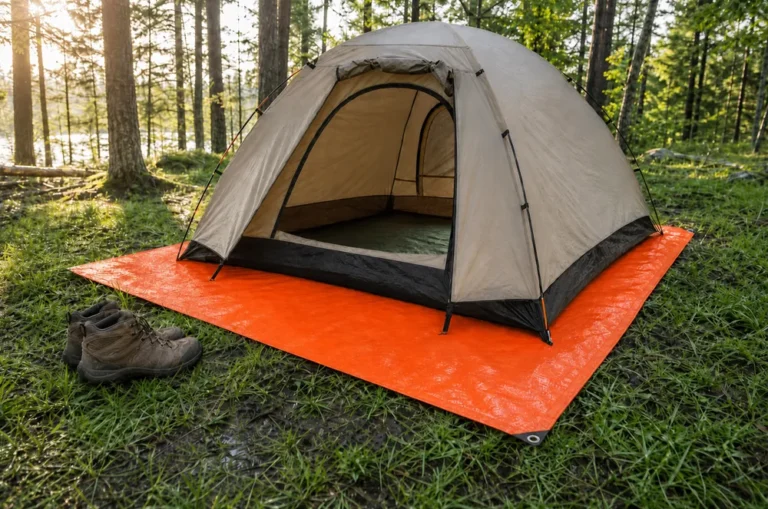
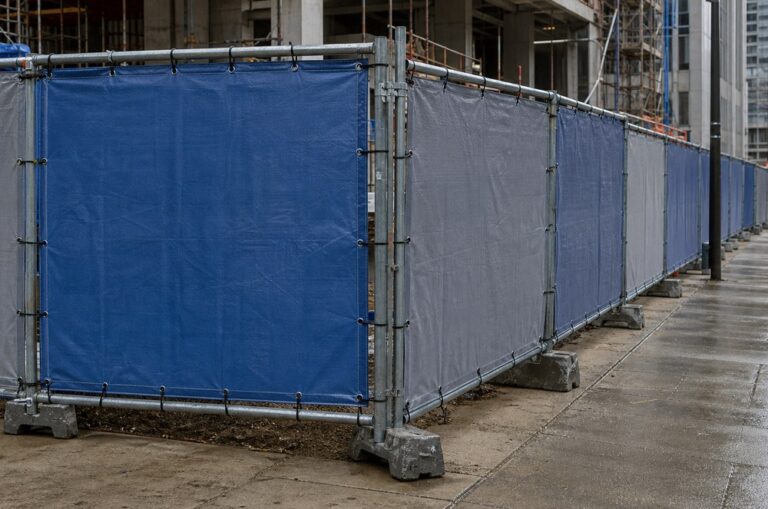
| Tents, shelters and industrial partitions | Good fit | Flame retardance to the local standard; UV package |
| Boat covers and equipment covers | Good fit | UV package; vents against condensation |
| Flexible water tanks and pond liners | Good fit with the right grade | Anti-wicking construction; welded seams |
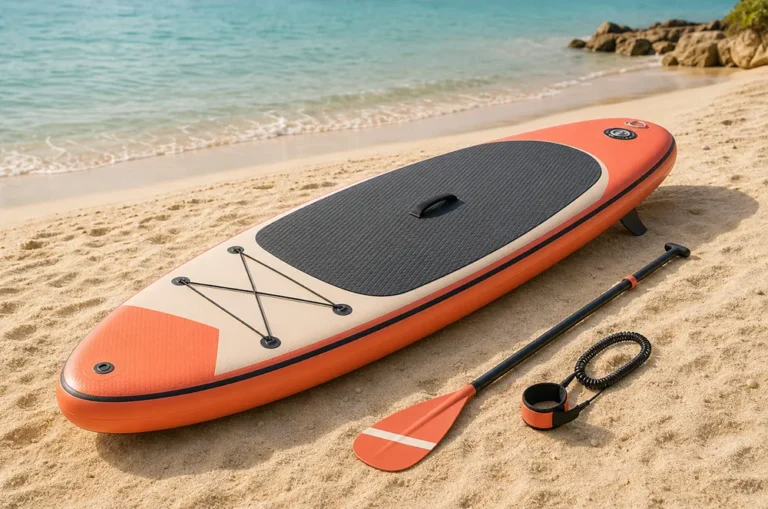
| Inflatable products | Good fit with the right grade | Laminated construction for air retention |
| Long-term architectural covers | Fits with a specified grade | UV-stabilized formulation and PVDF top coat |
| Ventilated screens and shade | Use mesh instead | Solid PVC fabric does not pass air |
| Clothing and skin-contact products | Poor fit | Not breathable; outside our range |
| Repeated folding in extreme cold | Needs validation | Application-specific cold-flex testing |
For how requirements change from one product to the next, see PVC coated fabric applications.
VI. How Long Does PVC Coating Last?
There is no single lifespan for a PVC coating. A correctly specified commercial-grade fabric can remain serviceable for several years, and the real figure depends on exposure and handling.
Inside the material, three things matter: the UV stabilizer package, a low-volatility plasticizer system and a top coat that shields the surface. Outside it, abrasion at contact points, flapping in the wind and folding along the same crease can end service life before UV aging becomes visible.
For how to compare weathering evidence and what shortens the life of a finished cover, see our guide on how long vinyl tarps last.
VII. How to Write the Disadvantages Into Your Specification
The disadvantages that formulation and construction can control should each become a line in the specification, with evidence attached. Weight, breathability and smoke cannot be specified away; they decide whether PVC fabric is the right material at all.
| Limitation | Line to add to the specification | Evidence to request |
|---|---|---|
| Cold stiffening | Lowest service temperature; fixed or repeatedly folded | Cold-bend report on the exact grade |
| UV aging | Climate, exposure period and color | UV-stabilized formulation; property retention after an agreed weathering cycle |
| Fire | The standard your market requires | Test report for the construction you are buying |
| Wicking | Whether cut edges meet standing water | Anti-wicking construction; an agreed water-penetration test |
| Plasticizer compliance | Market, product use and test list | Third-party report where required |
| Hand feel and weight | Target weight, thickness and hand | Approved sample; tensile and tear results |
| Welding | Joining method; top coat or not | Welding trial on the approved sample |
We match the formulation to these lines and confirm it on a trial sample before bulk production. Our minimum order for roll material is 5,000 m² per specification. Production usually takes about 15 days after the specification is confirmed, and we confirm the schedule for each order.
To quote, send us the end product, the joining method, the target weight and base fabric, width and roll length, color and surface finish, required functions and test reports, your target market and the order quantity.
VIII. FAQ
Is polyvinyl chloride waterproof?
Yes. Polyvinyl chloride forms a continuous layer that blocks water and absorbs almost none. A finished product also depends on its seams, edges and fittings, and open PVC mesh is not waterproof.
Is PVC better than polyester?
They are not alternatives. Polyester is the fiber in the base fabric, and PVC is the layer applied to it. Uncoated woven polyester lets water through the gaps between its yarns. PVC-coated polyester is waterproof and weldable but heavier.
What does PVC mean in fabric?
PVC stands for polyvinyl chloride, the plastic used in the coating or film. “PVC fabric” means a textile coated or laminated with it, and vinyl fabric is another name for the same family.
Is PVC fabric safe?
It depends on the formulation and the use. Ask which plasticizer and stabilizer system is used, and request a test report against the regulation that applies to your product and market. A general “eco-friendly” or “non-toxic” label is not evidence.