The best vinyl tarp for a commercial buyer is the one that fits the job, the installation and the agreed acceptance requirements. A heavier sheet can still fail when the base fabric, seams, edges or fixing points do not suit the loads. A lighter construction may be easier to handle, but only if it meets the conditions that matter to the finished cover.
This guide helps you compare viable tarp designs for a defined use. If you are preparing dimensions, accessories, packaging and quotation terms, use the Vinyl Tarp Buying Guide and RFQ checklist.

Define “best” by the failure you need to prevent
Start with the consequence of failure. Wind may pull at the perimeter of a truck cover. A machinery cover may wear where it touches a corner. An outdoor storage cover may collect water if the support and slope are wrong. A warehouse curtain may fail around hanging or moving points long before the center panel is damaged.
Write the operating conditions before comparing products:
- what the tarp will cover and whether it must fit a fixed shape;
- indoor, outdoor or transport use;
- wind, rain, sunlight, temperature and contact with oil, salt or other substances;
- how often people install, remove, fold or move the tarp;
- where pulling, rubbing, puncture or standing water can occur; and
- which performance classifications or documents the project actually requires.
These conditions narrow the field. They do not create one universal “best” GSM, thickness or material grade.
Use a condition-and-trade-off matrix
| Operating situation | Priority to confirm | Trade-off to review | Useful evidence |
|---|---|---|---|
| Truck or cargo cover under repeated tension | Tear behaviour, perimeter design and attachment layout | Finished mass versus repeated handling | Proposed material data plus a representative edge and fixing-point sample |
| Fitted equipment cover | Fit, contact-point protection and required access | Close fit versus ease of removal | Drawing, fitted sample and confirmation of openings or closures |
| Construction or rough-use cover | Protection at abrasive or sharp contact points | Added reinforcement versus flexibility and bulk | Contact-risk review and sample reinforcement detail |
| Longer outdoor exposure | Relevant weathering requirements, drainage and secure fixing | Exposure requirement versus weight, handling and cost | Applicable material evidence and a complete installation plan |
| Frequently moved curtain or partition | Hanging areas, edge stability and repeated movement | Strength versus opening effort | Movement trial and inspection of the proposed suspension details |
The same PVC-coated fabric can behave differently after it is cut, joined and fitted with hardware. Selection therefore has to cover both the material and the fabricated product.
Compare the construction behind the label
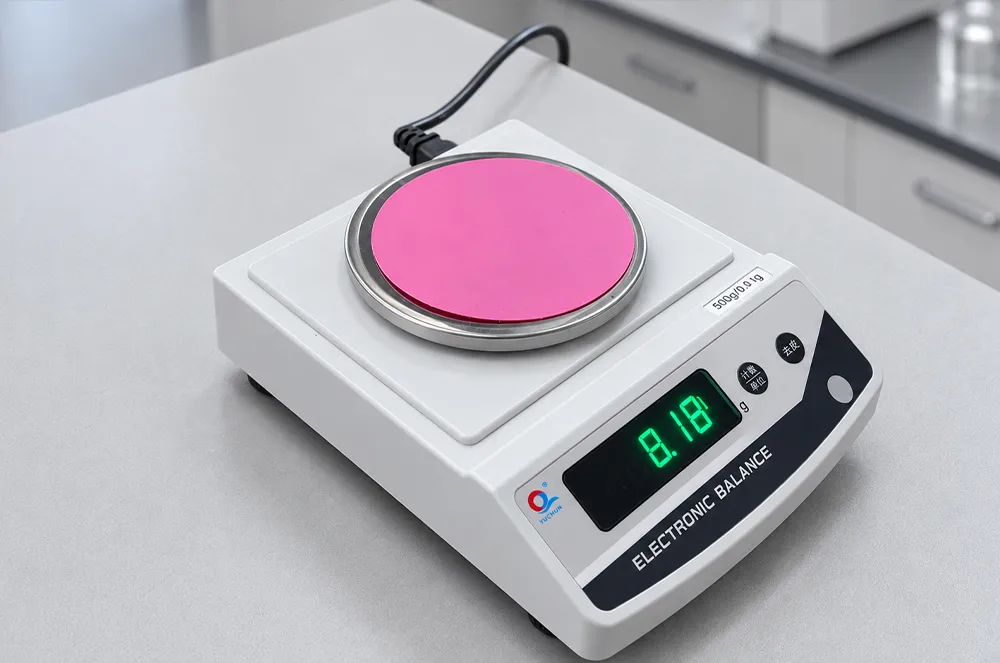
GSM and thickness are useful identifiers, but neither explains the complete construction. Ask what reinforcement, PVC structure, formulation and surface treatment sit behind the number. Compare the properties linked to the expected failure, such as tear results for an edge risk, adhesion for coating separation concerns, or low-temperature flexibility for a cold-use requirement.
Then review the finished design. Seam method, overlap, hems, webbing, corner patches and hardware spacing determine how loads enter the tarp. If leakage is critical, assess the complete joined product rather than relying on a waterproof sheet description.
Eliminate options that miss a mandatory requirement
An option should leave the shortlist when it cannot meet an essential condition. Typical reasons include the wrong finished size, an unsuitable fixing layout, missing documentation for a required classification, a fabrication route that cannot produce the necessary shape, or a sample that does not match the agreed construction.
Claims such as “heavy duty,” “all weather” or “industrial grade” do not replace measurable requirements. Where flame retardancy, weathering, cold flexibility or chemical contact matters, define the relevant standard, method, conditions and acceptance result before treating the claim as evidence.
When two options work, compare the practical differences
Once both candidates meet the mandatory requirements, compare how each affects the complete product:
- installation effort and the number of people or tools required;
- ease of removal, folding and storage;
- finished weight, fit and access to the covered equipment;
- panel layout, seams, reinforcement and repair approach;
- appearance, printing and other market requirements; and
- repeat-order control for material, dimensions, color and hardware.
This comparison may favour different designs for two buyers who use similar material. The decision follows the operating conditions and acceptance priorities, not a general ranking.
Confirm the choice with a finished sample
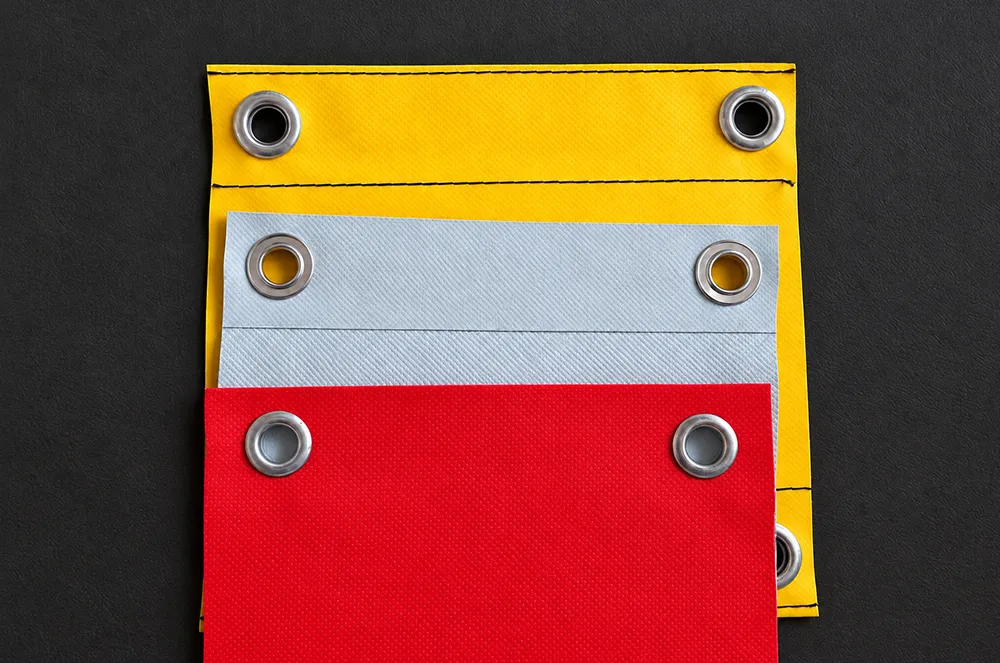
A flat swatch can confirm color, surface and some material properties. It cannot show fit, seam construction, corner reinforcement or hardware position. For a custom commercial tarp, approve a representative finished or pre-production sample when those details affect use.
Check that the sample uses the proposed material and matches the drawing, dimensions, seams, reinforcement, fixing points and accessories. Test the installation and handling steps that matter to the buyer. Record the approved details so bulk production and repeat orders can be inspected against the same reference.
Move from selection to a purchase-ready specification
After choosing the suitable design, document it before comparing final quotations. The Vinyl Tarp Buying Guide covers drawings, fabrication details, quotation comparison, sample approval and the RFQ checklist. Buyers ready to discuss made-to-order covers can also review our bulk vinyl tarp supply page. Custom finished tarps start from 30 pieces; the final specification, sample route and delivery terms are confirmed for the order.