Multiple Tarpaulin Material Solutions
Bulk Custom Manufacturing · No Retail Sales
Quality Products, Competitive Prices
We Look Forward to Becoming Your Supplier
Made in China
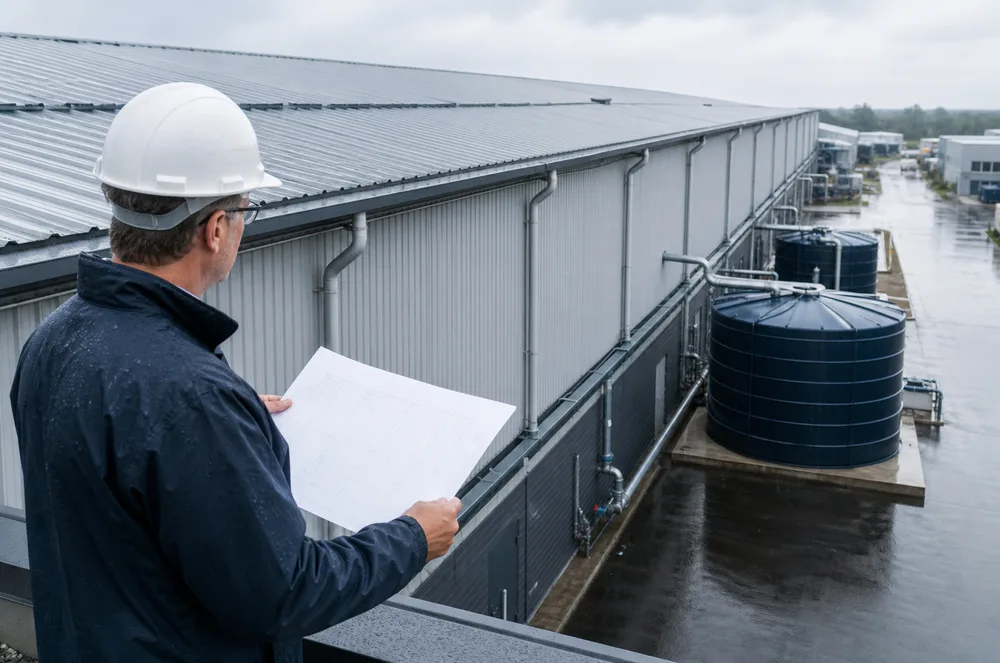
Rainwater Tank Sizing Calculator for Commercial and Project Use
Rainwater tank sizing means balancing collectible roof runoff, the timing of rainfall, and the project’s non-potable water demand to find a workable storage volume. Multiplying annual rain by roof area only estimates supply; it does not show whether the tank will empty in a dry month or overflow through a wet season.
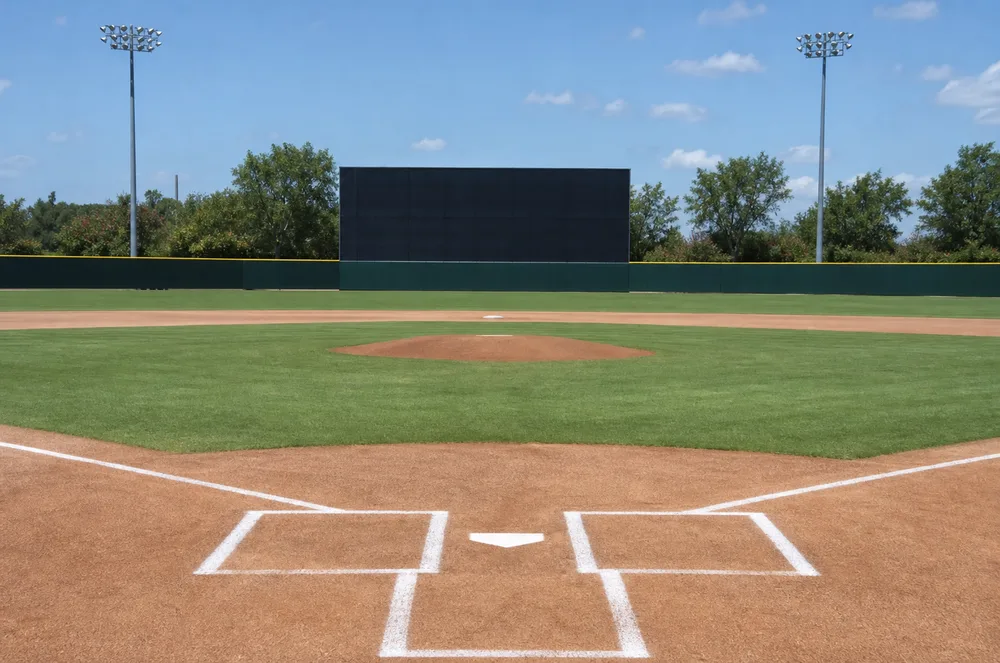
What Is a Batter’s Eye? A Facility Guide to Baseball Backdrops, Walls, and Mesh Screens
What is a batter’s eye? It is a dark, uniform visual backdrop in or beyond center field, aligned with the hitter’s view toward the pitcher, so the baseball is easier to pick up against a clean background. The batter’s eye in baseball may be a permanent wall, a planted background, a dark windscreen, or custom mesh panels on an existing fence.
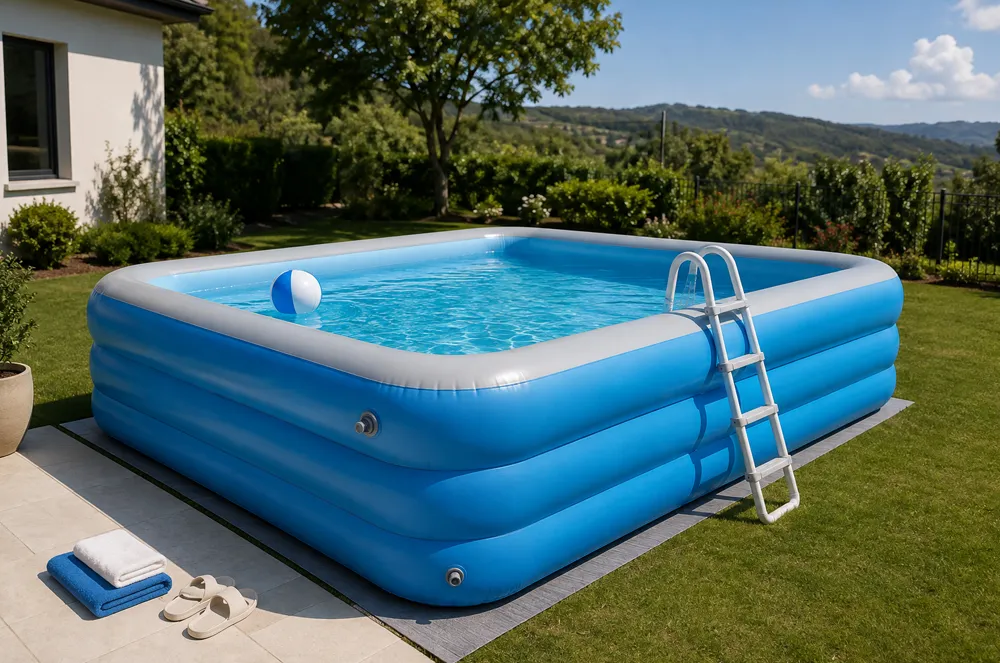
What to Check Before Ordering Wholesale Inflatable Pools
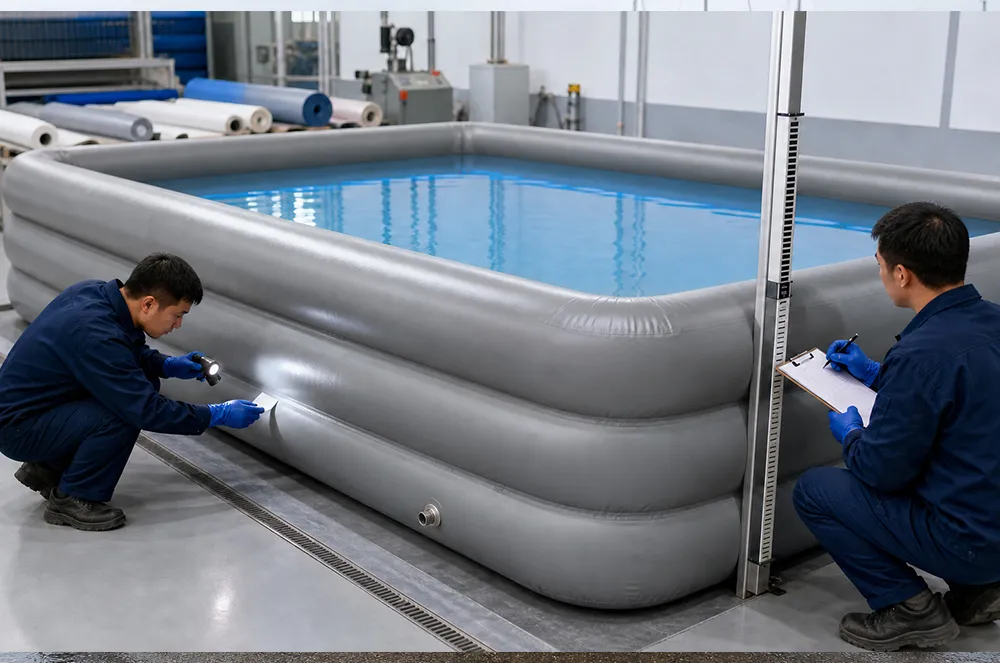
Ordering wholesale inflatable pools is not just a price comparison. A qualified OEM buyer needs to confirm buyer type, SKU range, PVC material route, welding, sample approval, private-label packing, factory QC, and bulk shipment controls before turning a sample into a repeatable order.
What Material Should Be Used for Custom Inflatable Pools?
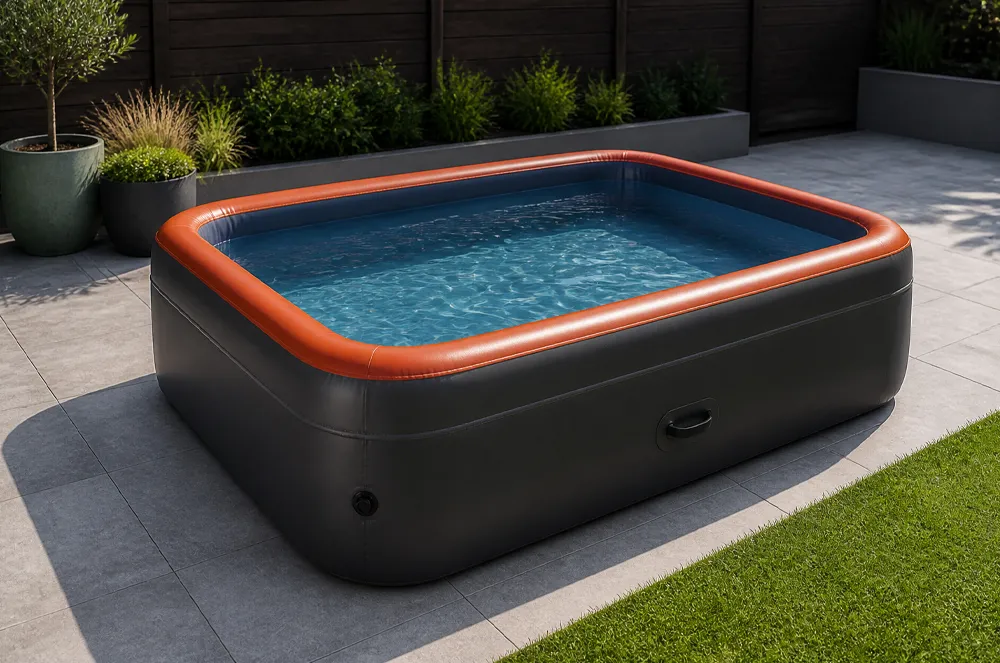
Choosing the right inflatable pool material is a manufacturing decision, not a label choice. OEM buyers need to connect PVC coated fabric, reinforced PVC, drop-stitch fabric, welding, valves, air retention, water-holding checks, and packing behavior to the actual custom inflatable pool they want to produce.
Drop Stitch Pool vs Traditional PVC Inflatable Pool for OEM Buyers
A drop stitch pool and a traditional PVC inflatable pool may both hold air and water, but they do not solve the same OEM problem. A drop stitch pool uses an internal textile structure to create a flatter, more rigid inflated wall or panel, while a traditional PVC inflatable pool usually relies on round air chambers, reinforced PVC fabric, and welded seams.
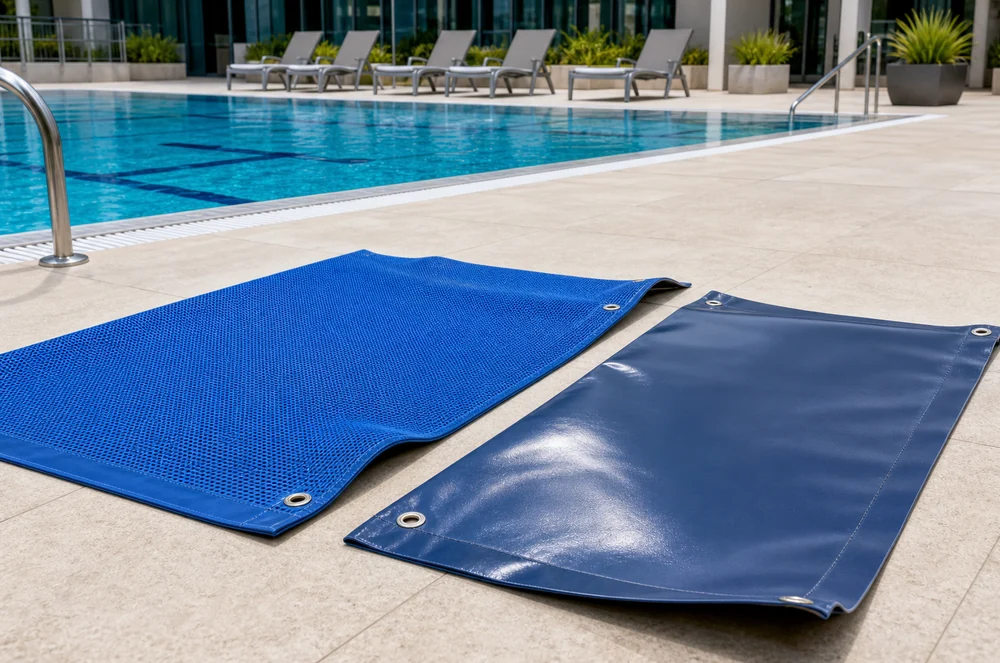
Pool Cover Material for Commercial Pools: Mesh, Solid PVC, and Safety Cover Options
For commercial projects, the right pool cover material is not simply the thickest fabric or the cheapest roll. A hotel, school, municipal pool, resort, or pool contractor usually needs to balance drainage, debris control, sunlight blocking, handling weight, welded seams, edge reinforcement, storage, and any safety-related system requirement.
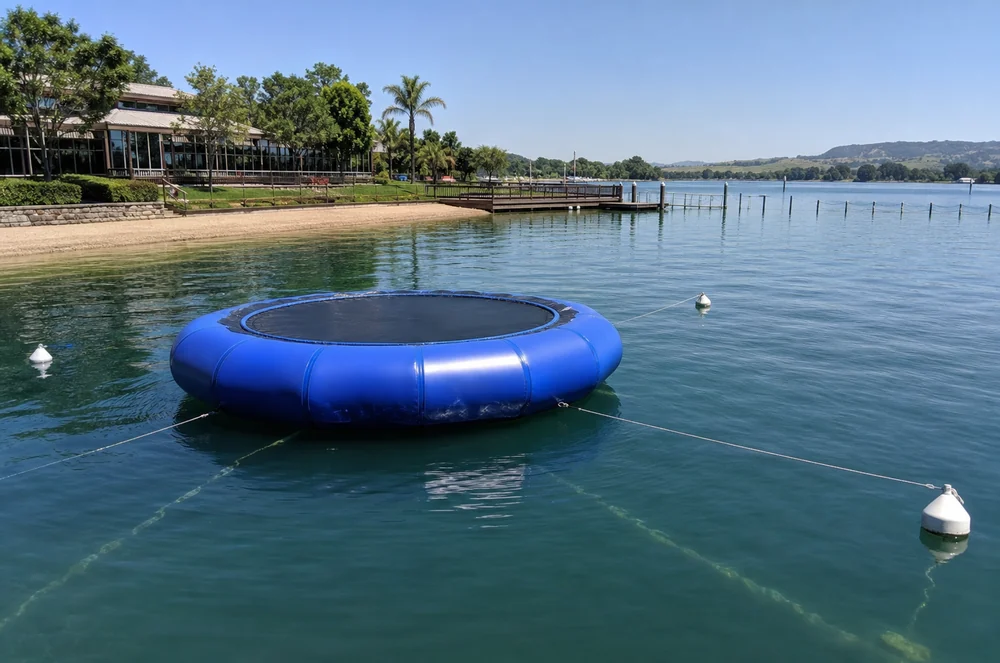
A water trampoline anchor decision should start with the site, not with a single anchor weight. For resorts, camps, rental operators, and commercial lake projects, anchoring depends on water depth, lakebed type, wind, wave exposure, product size, user load, swim-zone layout, seasonal removal, and local safety responsibility.
How to Choose Pool Liner Thickness for Commercial Pools
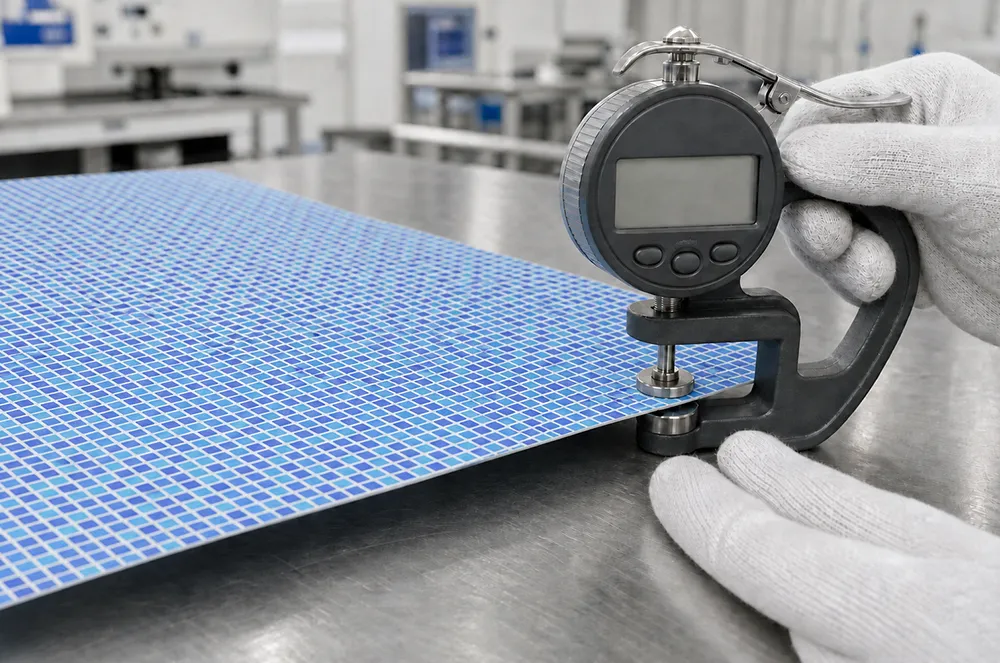
Pool liner thickness matters, but it should never be selected as a number alone. For commercial pools, the liner has to resist water pressure, cleaning traffic, chlorine exposure, surface abrasion, corner stress, and welded-seam movement.
Mesh vs Solid Pool Covers: Selection Guide for Commercial Pool Projects
For a mesh vs solid pool cover decision, commercial buyers should start with the job the cover must do, not only the material name. Mesh is usually easier to handle and allows rainwater to drain through. Solid fabric blocks more debris, sunlight, and dirty water, but it needs a drainage plan and stronger handling during installation.